

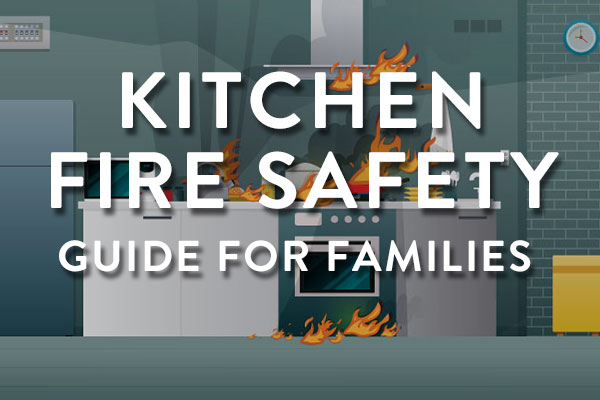
The kitchen is one of the most important rooms in a home. It is also one of the areas of the home with the most risk factors for fire outbreaks. To keep every family as safe and healthy as possible, it is important to practice fire safety in the kitchen. Cooking fires are the leading cause of home fires in the United States with a staggering 158,400 occurrences, on average, every year between 2017 and 2021., Kitchen fire safety measures are not just precautions for protecting our property; they are also preventive measures to protect the lives of the family. Ranging from unattended stoves to grease accumulation and defective appliances, the mishaps that lead to kitchen fires are many but manageable. Discussing these risks and cooking safety best practices with our families is important in working together to maintain a safe and healthy home.
Essential Kitchen Safety Guidelines for Teens
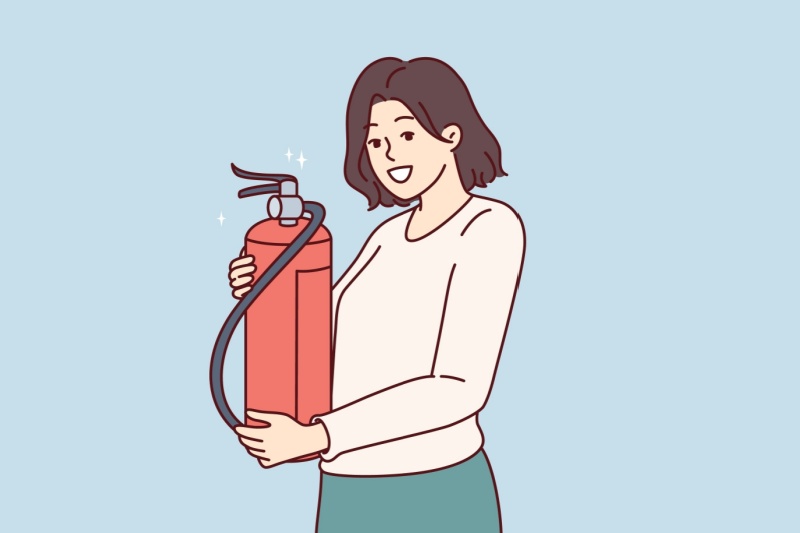
1. Familiarize yourself with fire extinguisher locations
-
Fire extinguishers should be placed at appropriate places and a multiple-purpose extinguisher should be located near the kitchen area.
- Understand the labeling system: Choose extinguishers labeled as A-B-C, as they are versatile and effective in extinguishing different types of fires, including those involving fats and oils used in cooking.
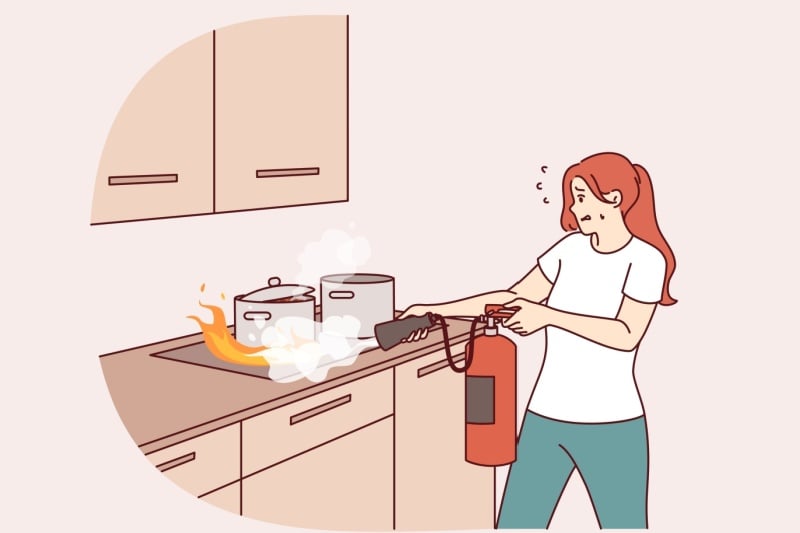
2. Master fire extinguisher operation before emergencies arise
-
Learn and practice the PASS technique: Pull the pin, Aim the nozzle, Squeeze the handle, Sweep it left and right. This method ensures the extinguisher is used properly when it is most needed.
- Perform outdoor drills. This can help in making the safety lessons more interesting and constructive for kids and teens. It is also advised to use an expired extinguisher to practice using them without the added pressure and stress of a fire emergency.

3. Adopt fundamental cooking safety practices
-
Never put aluminum foil inside the microwave; doing so leads to sparking and may cause a fire. Only microwave-safe items should be used in the microwave.
-
Cooking should not be left unattended at any one time, even when using a microwave. Remain in the kitchen when using the fryer, grill or broiler, and stay attentive to food that is boiling, baking or roasting.
-
Turn pot handles toward the inside to avoid spilling. This small change can save residents from severe burns and significant fire risks, particularly in large kitchens.
-
When cooking, ensure that clothing sleeves are well fitted. Loose clothing is more likely to come in contact with open flames accidentally.
-
Avoid placing kitchen towels, oven mitts, and curtains close to heat sources, such as the stove or oven. Create a ‘safe zone’ around the stove to limit the probability of an accidental fire outbreak.
-
Be careful with hot liquids, so as not to cause burns. Wear oven mitts and avoid moving hot pots and pans from one place to another without protection.
- Install a smoke detector in or near the kitchen and ensure they are well maintained. Check them monthly and change batteries as needed.
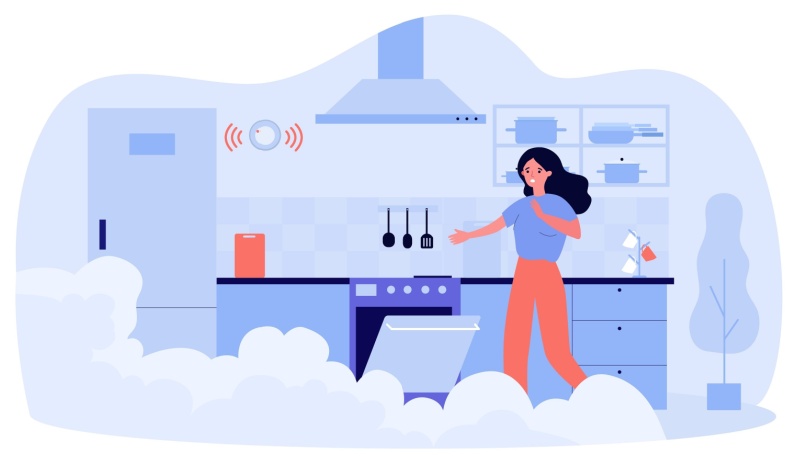
4. Develop a kitchen fire response plan
-
Never use water to extinguish a grease fire. Instead, use a Class K fire extinguisher, baking soda, or a fire blanket.
-
In the event of an oven fire, don’t open the oven door; the heat source should be turned off to deny the fire oxygen. It can also help to create a safe environment where the fire can be left to burn out.
-
If a fire starts on the stove, switch off the burners. If possible, douse the flames with a lid from a pot or a fire blanket. Do not transfer the burning pot or pan around; this may cause the fire to spread.
-
In case of an uncontrollable fire, dial emergency services before attempting to use the fire extinguisher. Time is of the essence during a fire disaster.
-
If the fire cannot be controlled, evacuate the building and wait for the firefighters to arrive. Make and rehearse a home evacuation plan with your family.
- Even if the fire was put out, do not leave the area, assuming it is safe to do so; keep watch in case the fire reignites again. If unsure, consult a fire department to determine who needs to be evacuated.
General Fire Safety Tips
-
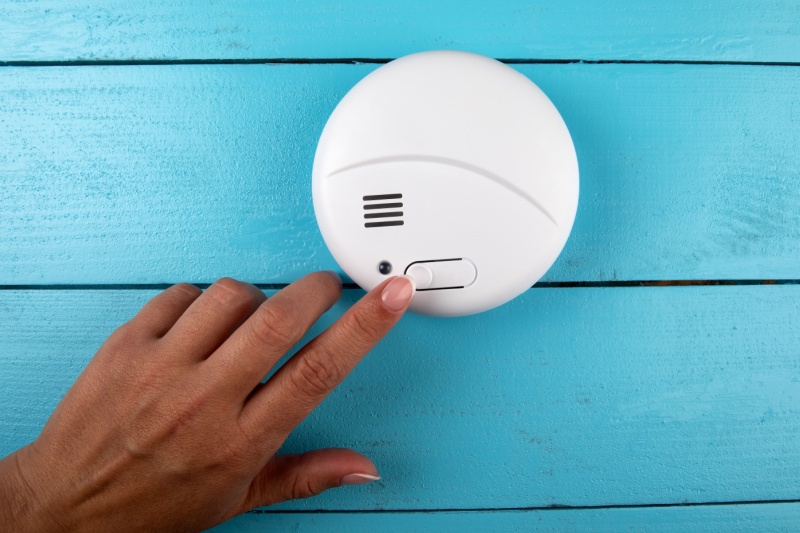
Install smoke detectors on every floor of your home and check them once a month
-
Develop and rehearse an emergency evacuation plan, identifying at least two exits.
-
Ensure that fire extinguishers are placed in conspicuous places, including in the kitchen area.
-
Cigarette smoking should not be done while sleeping or even when one is tired.
-
Do not overload electrical outlets.
-
Replace any frayed cords.
-
Keep flammable liquids in approved containers and away from sources of heat.
-
Matches and lighters should be placed where children cannot access them to prevent burns.
-
Ensure that heating equipment and chimneys are checked professionally regularly
- Do not leave candles burning unattended, and ensure that they are placed at a safe distance from inflammable materials.
Fire Pit Safety & Accessories
- Outdoor Fire Pits
- Fire Pit Covers
- Fire Pit Wind Guards
- Fire Pit Lids
- Fire Pit Tank Enclosures
- Fire Pit Glass
- Lava Rocks & Fire Stones
- Electric Patio Heaters
- All Patio Heaters