
Understanding
Cattle Breeds &
Their Beef Quality
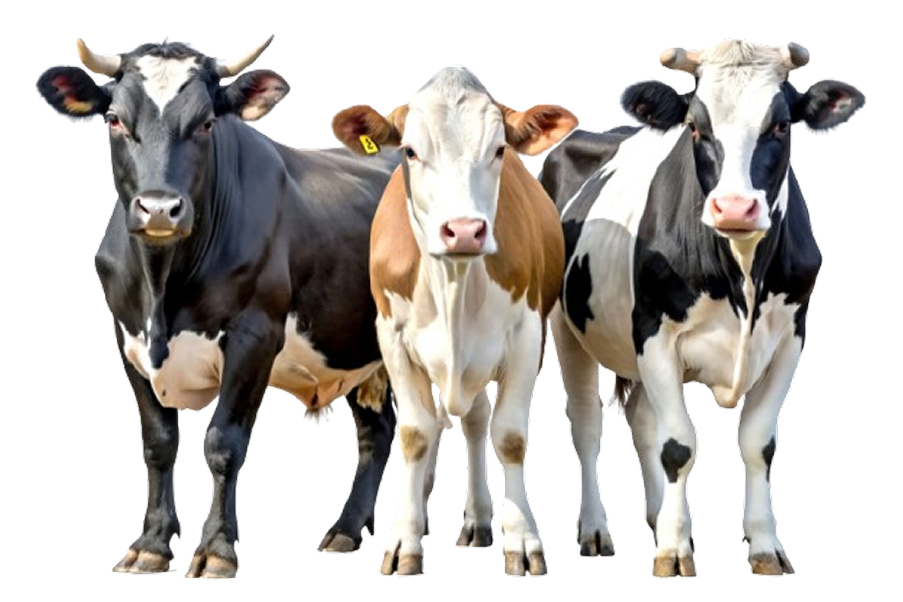
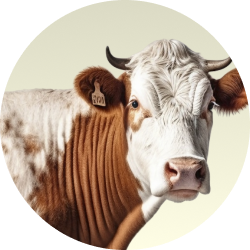
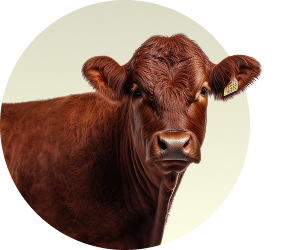
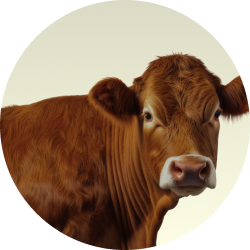
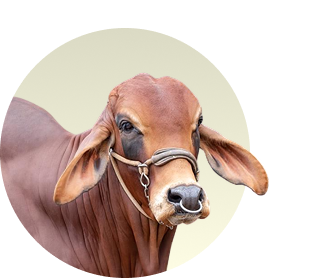
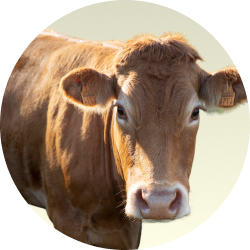
Not all beef is created equal. Whether you’re a professional chef, a caterer, or someone who loves grilling a perfect steak on a sunny weekend, the breed of cattle behind your cut matters more than you might think.
Different cattle breeds produce beef with noticeably different qualities, including:
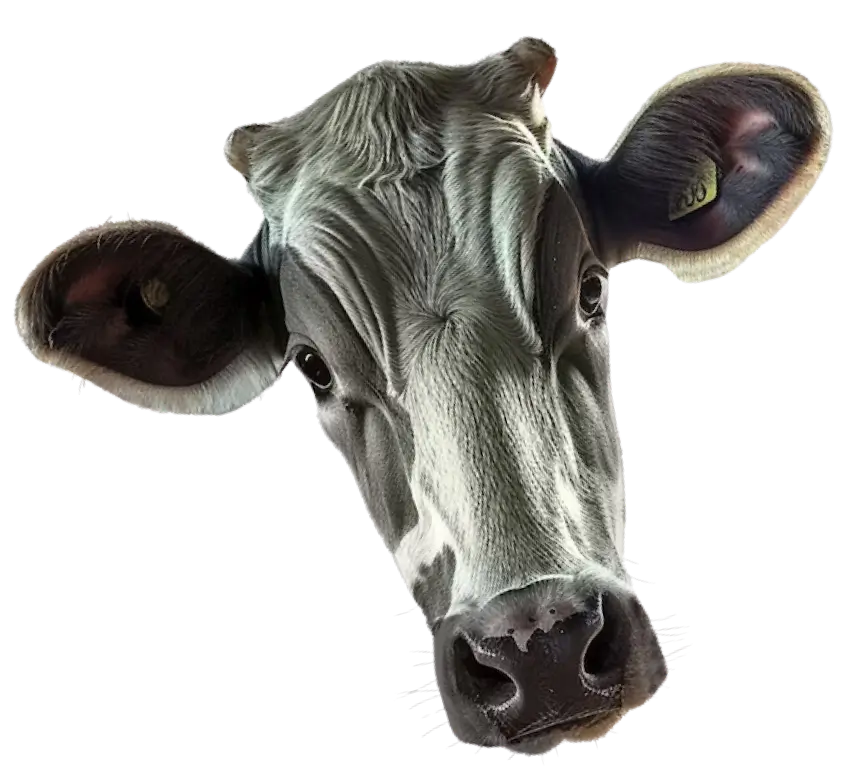
The Impact of Cattle Breed on Beef Quality
1. TASTE | 2. TEXTURE | 3. Tenderness | 4. Marbling
Over time, most people tend to develop a preference for a specific quality that they’re looking for and will usually associate that quality with a particular breed. Take Angus beef, for instance. This breed has a solid reputation for having superior marbling, whereas you might want a different breed if you want something slightly leaner.
Having said that, the quality of the beef isn’t entirely a product of the breed itself but something that’s actually influenced by a bunch of different factors.
grass fed

Diet
Primarily grass
Marbling
Generally less marbled
Tenderness
Slightly less tender
Taste
More distinct flavor
grain fed

Diet
Primarily grass
Marbling
More marbled
Tenderness
Usually more tender
Taste
Milder flavor
Diet, for example, tends to play a pretty significant role here as a cow that’s fed, say, grains is usually going to produce more marbled and tender meat – grass-fed cattle, on the other hand, usually have a slightly leaner cut and a more distinct taste.
Aside from this, the environment in which the cattle are raised, whether that’s the climate or the pasture quality, are going to have an impact on some of the meat’s characteristics. Same goes for genetics, both through breed selection and crossbreeding, as here you’re able to optimize certain traits you’re looking for like muscle development or fat distribution.

the most popular breeds
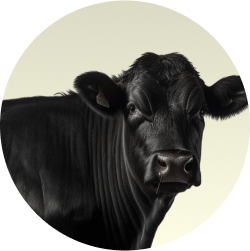
ANGUS

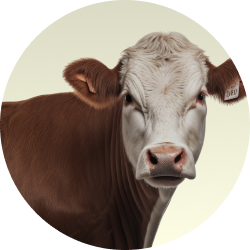
Hereford

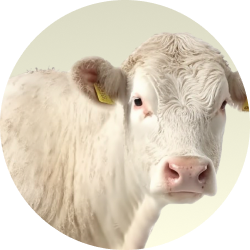
Charolais

Generally speaking, though, there are a handful of breeds that tend to dominate beef production, with breeds like Angus, Hereford, and Charolais far and away being the most popular.
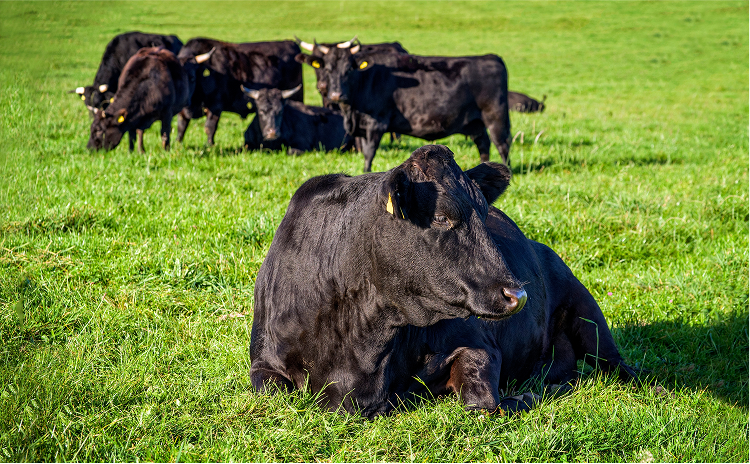
Japanese Wagyu – luxurious breed
That said, you’ve also got more luxurious (and therefore pricier) breeds like the Japanese Wagyu, which is usually characterized by its highly marbled beef.
Overview of
Cattle Breeds &
Classification
Understanding Cattle Breeds & Their Beef Quality
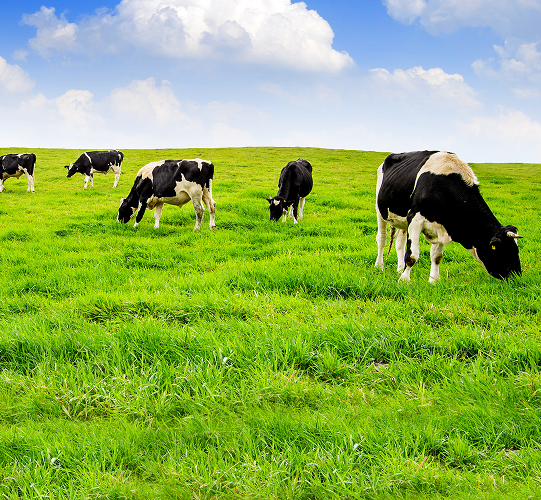
Ultimately, every kind of breed has a distinct characteristic that you might not see with other breeds, so that’s why it’s so important as a consumer – however serious you take grilling or beef production in general – to know breed selection impacts the final product that you’re looking for.
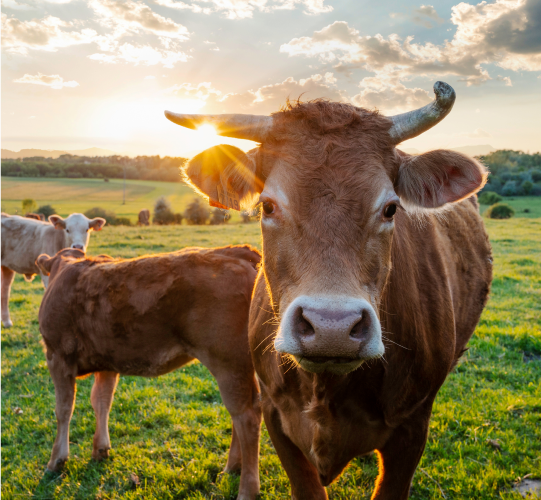
Let’s break this down in a bit more detail now
Types of cattle
Bos taurus vs. Bos indicus
Broadly speaking, we can divide cattle into two main types, ‘Bos Taurus’ and ‘Bos Indicus,’ and these each come with their own traits and general suitability when it comes to different climates and purposes.
Starting with Bos taurus, this usually pertains to slightly more temperate environments, so this is where you’ll see some of the most well-known beef cattle breeds. In addition, it’s a group that is generally characterized by its ability to produce high-quality beef that’s not only rich but tender, too – hence why you’ll see it being the preferred type in most developed countries.
Some of the more common Bos taurus breeds out there include breeds like
Bos taurus breeds
1. Angus | 2. Hereford | 3. Charolais

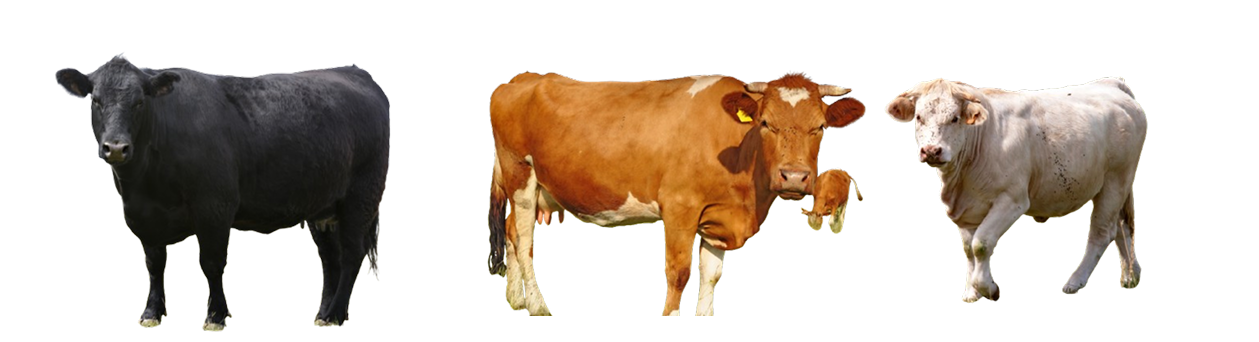
As for Bos indicus (which you’ll also often see referred to as Zebu cattle), on the other hand, these breeds are generally found in slightly more tropical regions – they’re also a lot more heat-tolerant and resistant to parasites, so that’s why they’re able to thrive in these harsher climates.
That said, Zebu cattle, Brahman, for instance, are not traditionally known for having the same level of beef quality in comparison to Bos taurus. It might be slightly less marbled and leaner, and while this would typically result in the beef having a much tougher texture, modern breeding practices have generally improved the tenderness and overall quality of Bos indicus beef.
Here’s a comparison table highlighting the key differences between Bos taurus and Bos indicus
| Feature | Bos Taurus | Bos Indicus |
|---|---|---|
| Environment | Temperate regions | Tropical regions |
| Heat Tolerance | Lower heat tolerance | High heat tolerance |
| Parasite Resistance | Lower resistance | High resistance to parasites |
| Beef Quality | High-quality, tender, well-marbled | Generally leaner, tougher texture |
| Common Breeds | Angus, Hereford, Charolais | Brahman |
| Dairy Production | Good for high-quality milk | Generally lower milk production |
| Usage | Primarily for beef production | Beef and draught purposes |
Beef cattle vs. Dairy cattle
Aside from species classification, we’re also able to categorize cattle based on what they’re primarily used for – beef cattle versus dairy cattle.
Beef cattle
Starting with beef cattle, breeds like Angus and Hereford are specifically bred because they’re able to produce meat with a very impressive texture and flavor. We’d typically characterize these by their muscle mass, fat distribution, and even marbling, as these are all pretty imperative when it comes to high-quality beef production.
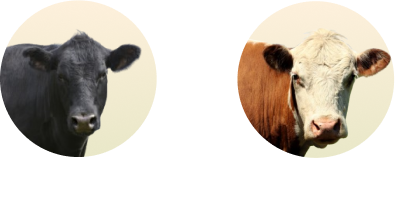
dairy cattle
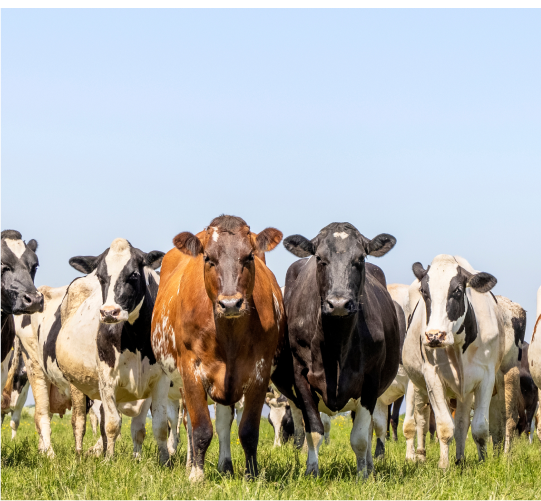
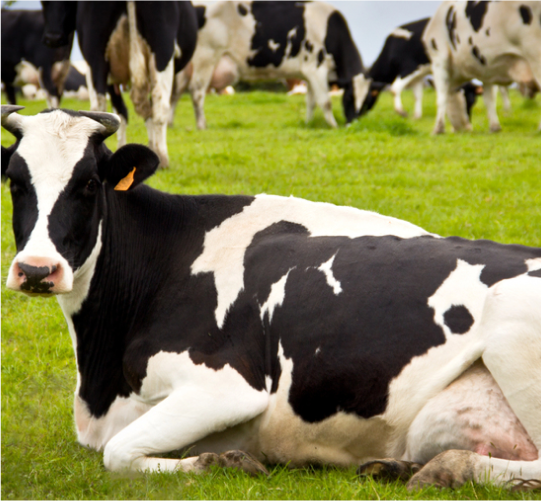
Dairy cattle, however, include breeds like Holsteins or Jerseys, and these are generally optimized for milk production. As a result, they tend to have slightly less desirable meat when it comes to both taste and tenderness, but that doesn’t mean we won’t still use them for beef after their milking years.

Understanding
crossbreeding and its impact on beef quality
If farmers want to improve the quality of beef, they can actually combine some of the more desirable traits of different breeds, like when they cross Bos taurus and Bos indicus cattle to take advantage of the heat tolerance Zebu cattle have and the superior beef of European breeds.
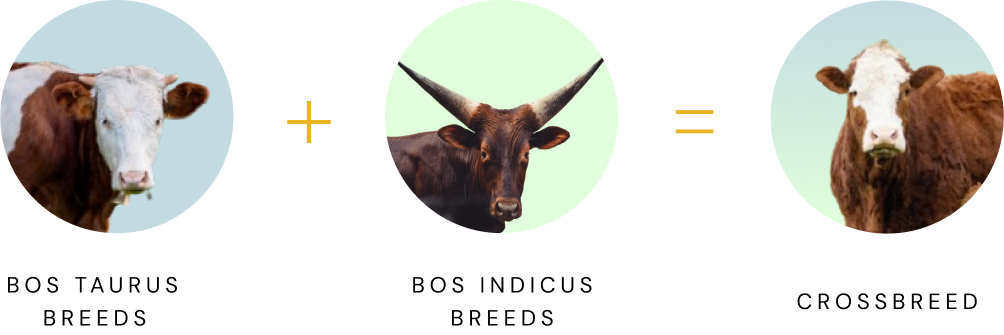
Obviously, the main reason farmers do this is to improve the final product they have, but it actually makes the cattle more resilient and productive in general, as they can adapt to far more diverse environments.
Popular Cattle
Breeds and Their
Beef Quality
Understanding Cattle Breeds & Their Beef Quality
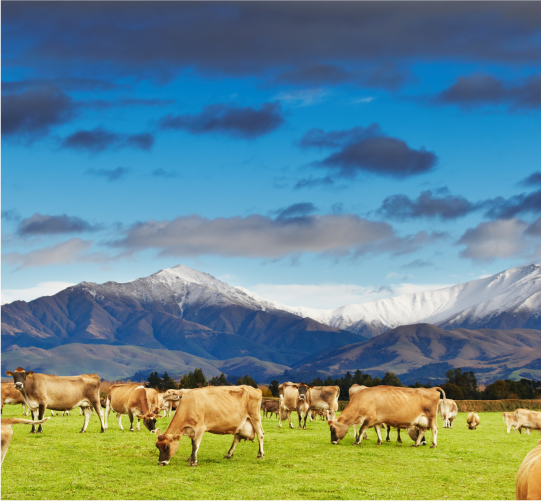
Trying to decide what breed of cattle to choose the next time you fancy a barbecue? Let’s learn a little bit more about what your options are and how the quality of beef they produce is:
01 ANGUS
| ORIGIN | KEY TRAITS | BEEF QUALITY | CROSSBREEDING | ADAPTABILITY |
|---|---|---|---|---|
| Scotland | Naturally polled, mostly black, rare red | High marbling, juicy, tender, flavorful | Crossbreeds for marbling | High adaptability globally |
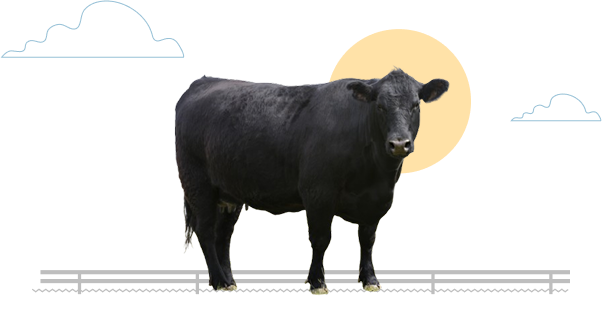
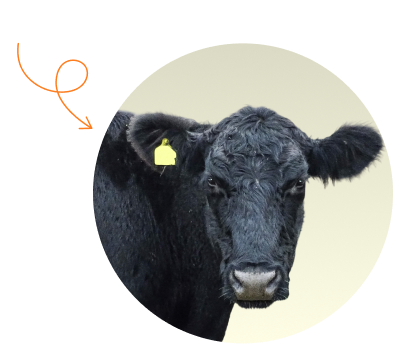
Starting with a Scottish classic, the Angus breed originates specifically from the Aberdeenshire and Angus counties and was developed back in the early 19th century. These are cattle that are naturally polled (which means hornless), and while you’ll mostly see black Angus cattle, there is still a rare red variant.
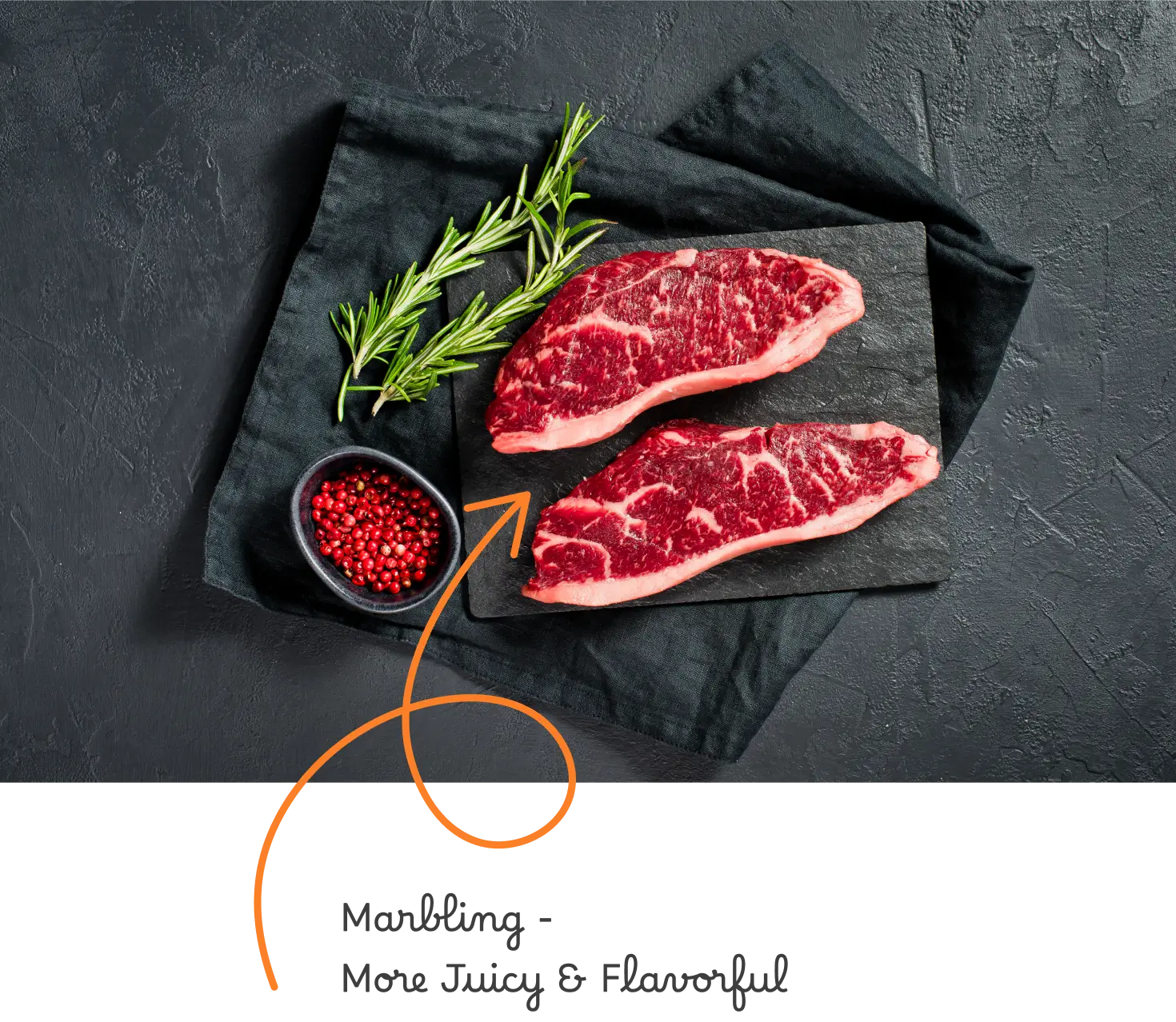
Angus beef is generally considered as the gold standard in terms of the quality, primarily due to the marbling – meaning the interspersed fat you see within the muscle tissue – as this ends up creating a much more juicy and flavorful product. Aside from that, the marbling also means that the meat stays moist while you’re cooking it so that only adds to the buttery texture, which explains why it’s such a common choice for both producers and consumers.
Again, the demand for Angus beef is typically one of the highest demands in terms of all cattle, especially in markets that tend to prioritize tenderness and flavor over anything else.
In terms of the quality grades, the United
States, for example, employs the Certified
Angus Beef (CAB) program that actually
sets pretty stringent standards for beef
from Angus cattle. This means it needs to
meet a specific level of marbling and
tenderness in order to achieve the CAB
label.
In fact, there are actually 10 different quality standards that need to be met here, like being in the upper two-thirds of the USDA Choice grade or even higher – the result, however, means there’s usually a premium price when paying for Angus beef in a restaurant or high-end grocery store.
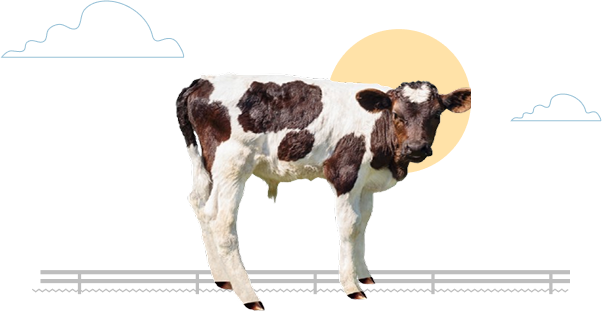
02 Hereford
| ORIGIN | KEY TRAITS | BEEF QUALITY | CROSSBREEDING | ADAPTABILITY |
|---|---|---|---|---|
| England | Red with white face, hardy and adaptable | Fine grain, leaner, milder flavor | Crossbreeds for hardiness | Thrives in hot and cold climates |
Staying in the United Kingdom, Hereford is another highly popular breed of cattle that originated from Herefordshire, England, and was developed throughout the 1700s for their ability to thrive in harsh climates while still being able to produce high-quality beef.
Hereford Cows:
Thriving Across Continents
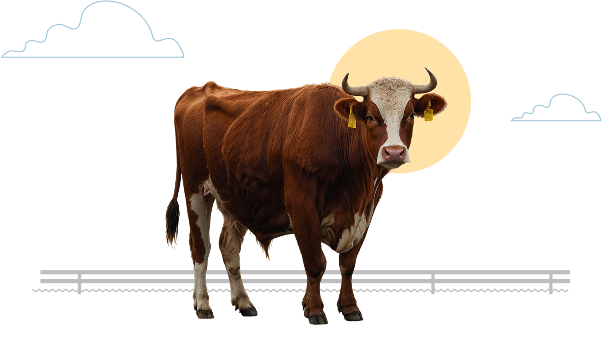
You can spot a Hereford cow by their distinctive red body and white face, and, again, they’re a fairly hardy and adaptable breed that can thrive in both hot and cold climates. As such, it’s no surprise why they’re so popular in places like North and South America, as well as Australia.

Similarly to Angus, Hereford cattle are generally prized for their marbling, and while it’s admittedly not quite as marbled as Angus beef, it’s still known for its fine grain and excellent eating qualities which makes it super popular among most beef producers.
Sticking with the comparisons to Angus, Hereford beef tends to be a little bit leaner and has a milder flavor with a more coarse texture.
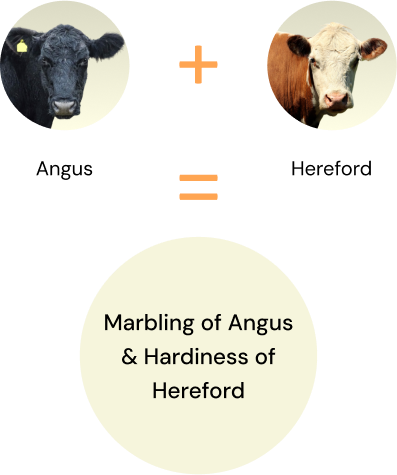
crossbreeding angus & hereford
That said, both of these breeds are still highly valued for their beef quality and going back to the earlier point of crossbreeding, many farmers breed Herefords with Angus cattle, so you get the marbling of Angus with the hardiness of Hereford. The final result, as you might expect, is cattle with not only high-quality beef but excellent adaptability across a range of different environments.
03 Charolais
| ORIGIN | KEY TRAITS | BEEF QUALITY | CROSSBREEDING | ADAPTABILITY |
|---|---|---|---|---|
| France | Large, muscular, white or cream | Less marbled, firmer texture, still tender | Crossbreeds for size and muscle | High adaptability, especially in North America |
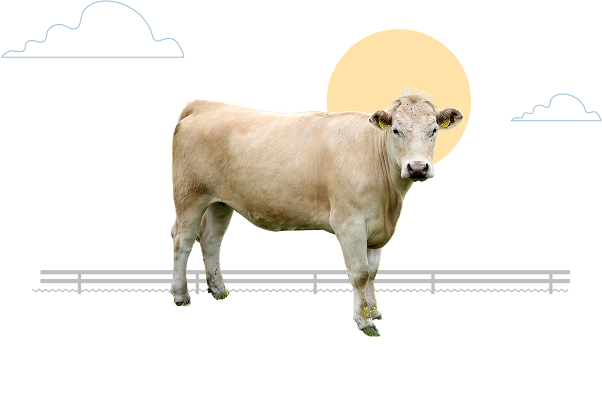
Moving further into Europe, Charolais cattle are a breed that comes from the Carolles region of France, and a few characteristics you may recognize are the large size, muscular build, and usually a white or cream color. In fact, they’re so massive and muscular that they’re generally one of the more popular choices of cattle available for beef production, not only in Europe but in North America, too.
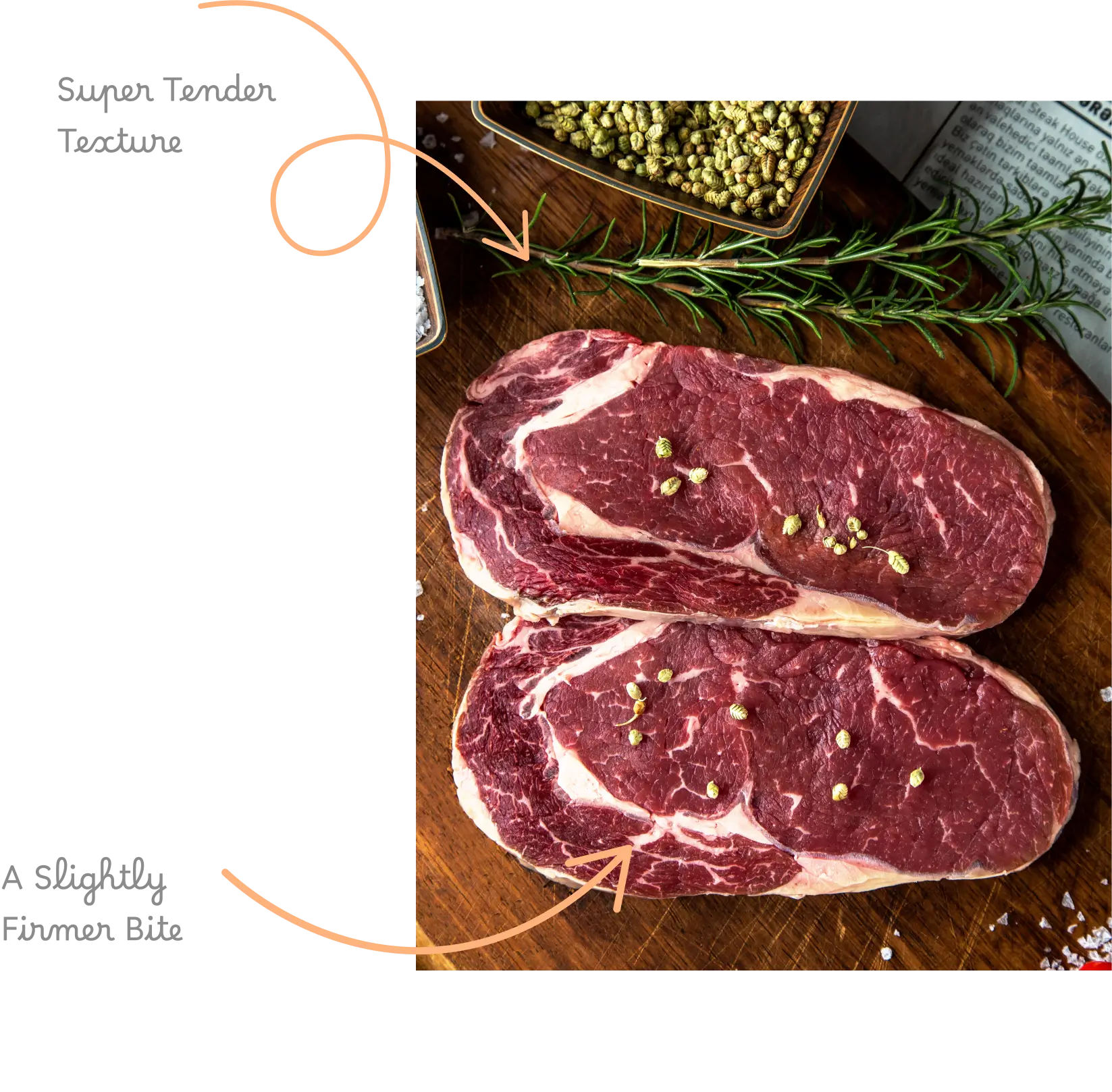
In general, these cows are highly efficient when it comes to beef production, but keep in mind that the meat is generally less marbled than that of Angus or Hereford – it still has a super tender texture if you cook it properly, though. The beef itself definitely has a slightly firmer bite than the other two options we just covered, but it’s still ideal for anyone looking for something a bit leaner that’s still quite tender.
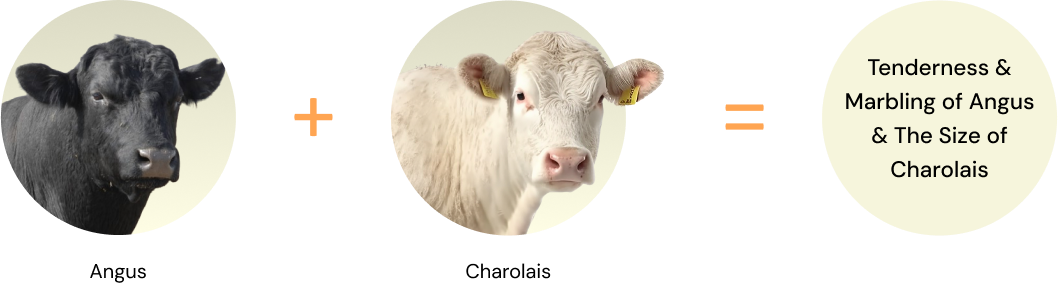
crossbreeding angus & Charolais
When it comes to crossbreeding, you’ll normally see them used in order to enhance both the size and muscle development of other breeds. For instance, it’s generally pretty common for farmers to want to breed Charolais cattle with more marbled breeds, like Angus, so that they have both the tenderness and marbling of Angus and the size of Charolais. Naturally, this makes it a huge bonus for any producers who want the meat quality to be a bit better.
04 Simmental
| ORIGIN | KEY TRAITS | BEEF QUALITY | CROSSBREEDING | ADAPTABILITY |
|---|---|---|---|---|
| Switzerland | Dual-purpose (milk & beef), red/white patches | Good balance of marbling and lean muscle | Versatile for health-conscious and flavor-rich cuts | Highly adaptable in Europe and North America |
The Simmental breed is another European breed of cattle (if you’re starting to see a theme here, it’s because the majority of in-demand breeds of cattle are Bos taurus that originate from Europe) originally from Switzerland.
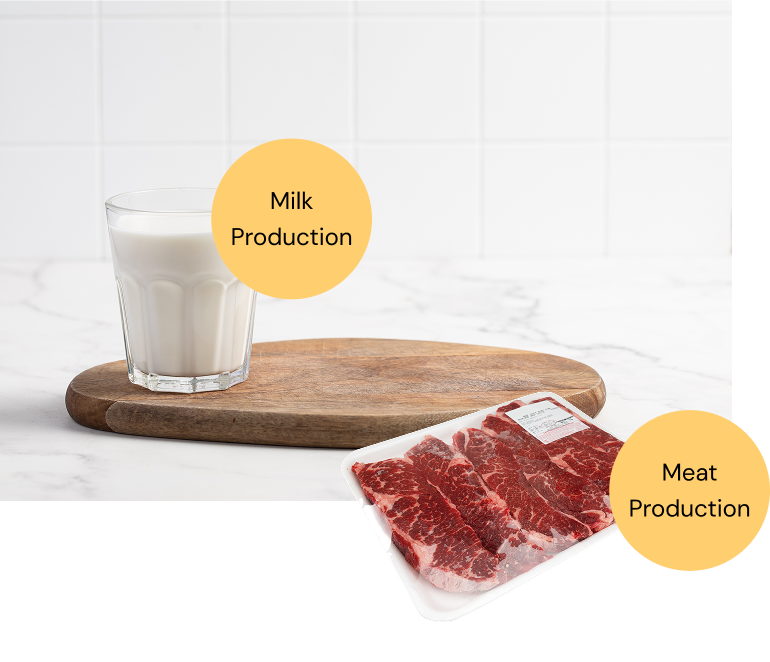
‘dual-purpose breed’
What makes this breed so special is that it’s classed as a ‘dual-purpose breed’ in that it’s used for both milk and meat production. This, along with the fact that they’ve got a good combination of muscle and fat and are highly adaptable, has led to them being widely exported across Europe and North America, where they’re now some of the most common breeds of cattle.
Simmental beef generally has a pretty good balance of marbling and lean muscle. No, it’s not quite as marbled as Angus or Wagyu, but it does still offer that lean cut that’s ideal for retaining moisture and tenderness. As such, most people find Simmental beef to be pretty versatile, as it appeals to both health-conscious consumers and people who want a flavor-rich cut.

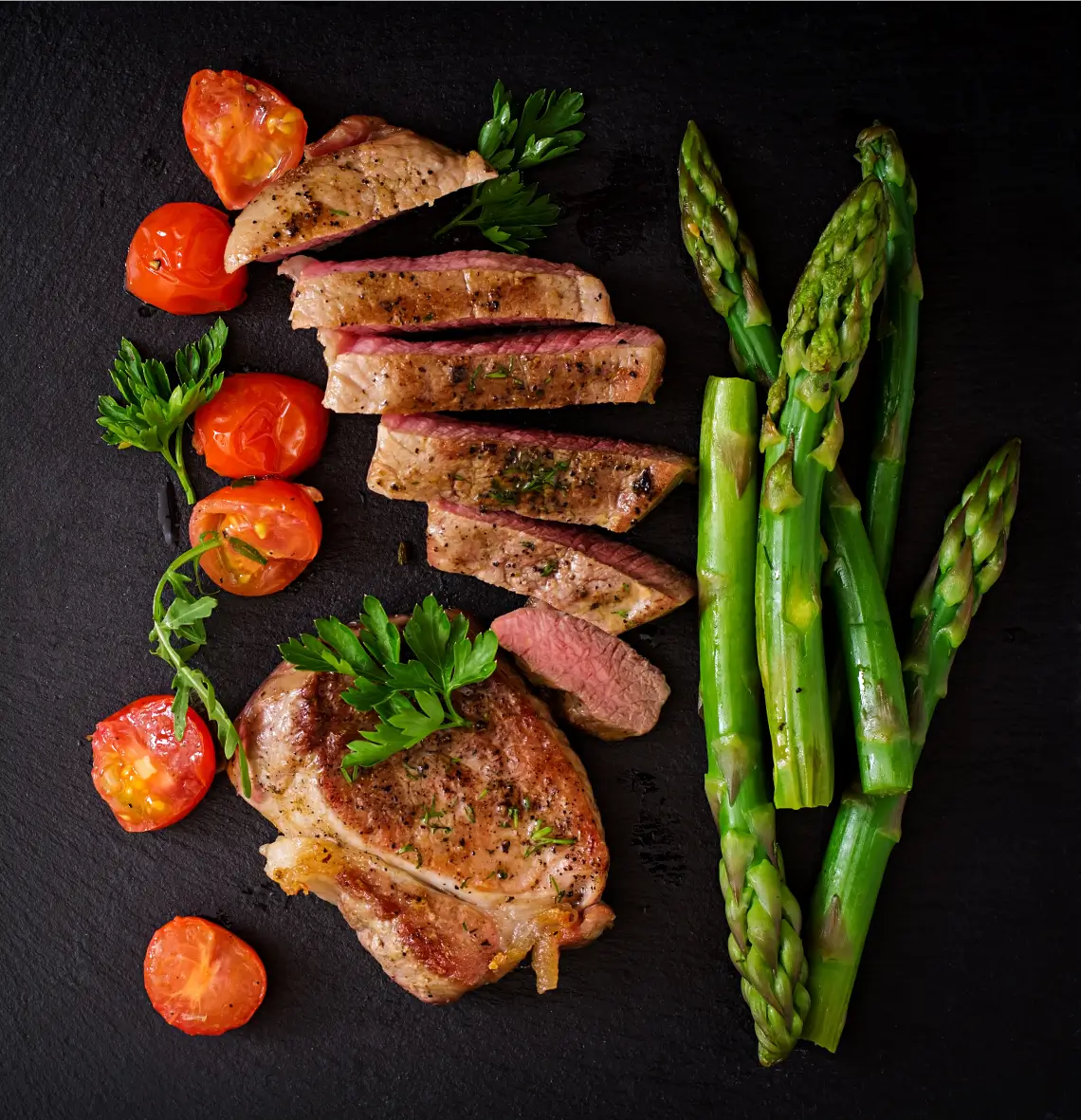
Compared to Angus and Hereford, it does tend to be a little leaner, but the best part is that it’s almost equally as tender. Just keep in mind that its dual-purpose nature sometimes means Simmental cattle aren’t as specialized for beef production as the previous two options. That said, if they’re specifically raised for beef, the quality can definitely still be high – especially when it comes to the texture and overall yield.
05 Wagyu
| ORIGIN | KEY TRAITS | BEEF QUALITY | CROSSBREEDING | ADAPTABILITY |
|---|---|---|---|---|
| Japan | Luxurious marbling, black or brown | Extremely tender, buttery, rich flavor | Crossbreeds for extreme marbling | Thrives in Japan, globally popular |
Wagyu literally translates as “Japanese cow,” and although it originated in Japan, it’s since become famous all across the world for its luxurious and highly marbled beef. Wagyu were actually initially used as draft animals, but they were eventually bred for their endurance instead, which is why we see such extreme marbling in their muscle tissue.

luxurious type of beef
Fast forward to today, and Wagyu beef is generally seen as the most luxurious type of beef you can get your hands on, so it’s naturally quite sought after – whether it’s for its exquisite taste or all-around texture.

WAGYU BEEF CHARACTERISTICS
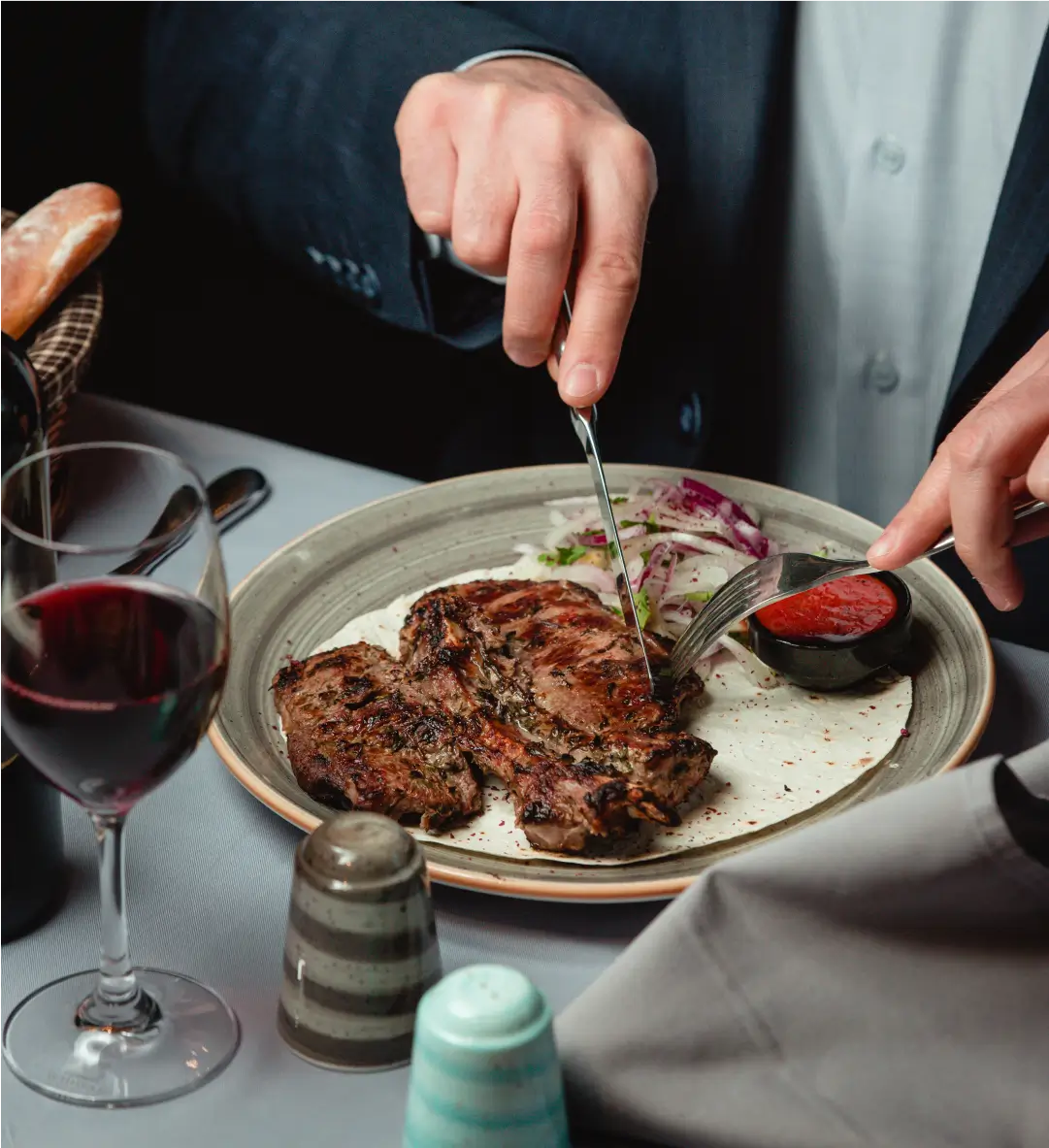
It’s this marbling that gives the meat an essentially unmatched tenderness compared to other kinds of beef, and that ends up resulting in a rich and buttery flavor. The fat in the Wagyu beef also tends to melt at a much lower temperature than other breeds of cattle, so this only further contributes to its unique taste – not to mention how the high fat content also makes it incredibly tender.
Japan’s Rigorous Grading and Superior Wagyu Beef
Generally speaking, Wagyu beef tends to be graded on an extremely rigorous scale in Japan, so only the highest grades end up making it to the market. It also has far finer marbling and flavor than its American counterpart.

That counterpart, American Wagyu, is generally just the result of crossbreeding Wagyu with Angus, and while it definitely has more marbling than pure Angus, it’s still nowhere near the same as Japanese Wagyu. That said, American Wagyu is still considered as a fairly premium beef, so it ends up commanding quite a high price overall.
06 Limousin
| ORIGIN | KEY TRAITS | BEEF QUALITY | CROSSBREEDING | ADAPTABILITY |
|---|---|---|---|---|
| France | Lean, muscular, deep red color | Lean, less marbling, tender | Efficient feed conversion, muscle development | Stronger market in Europe |
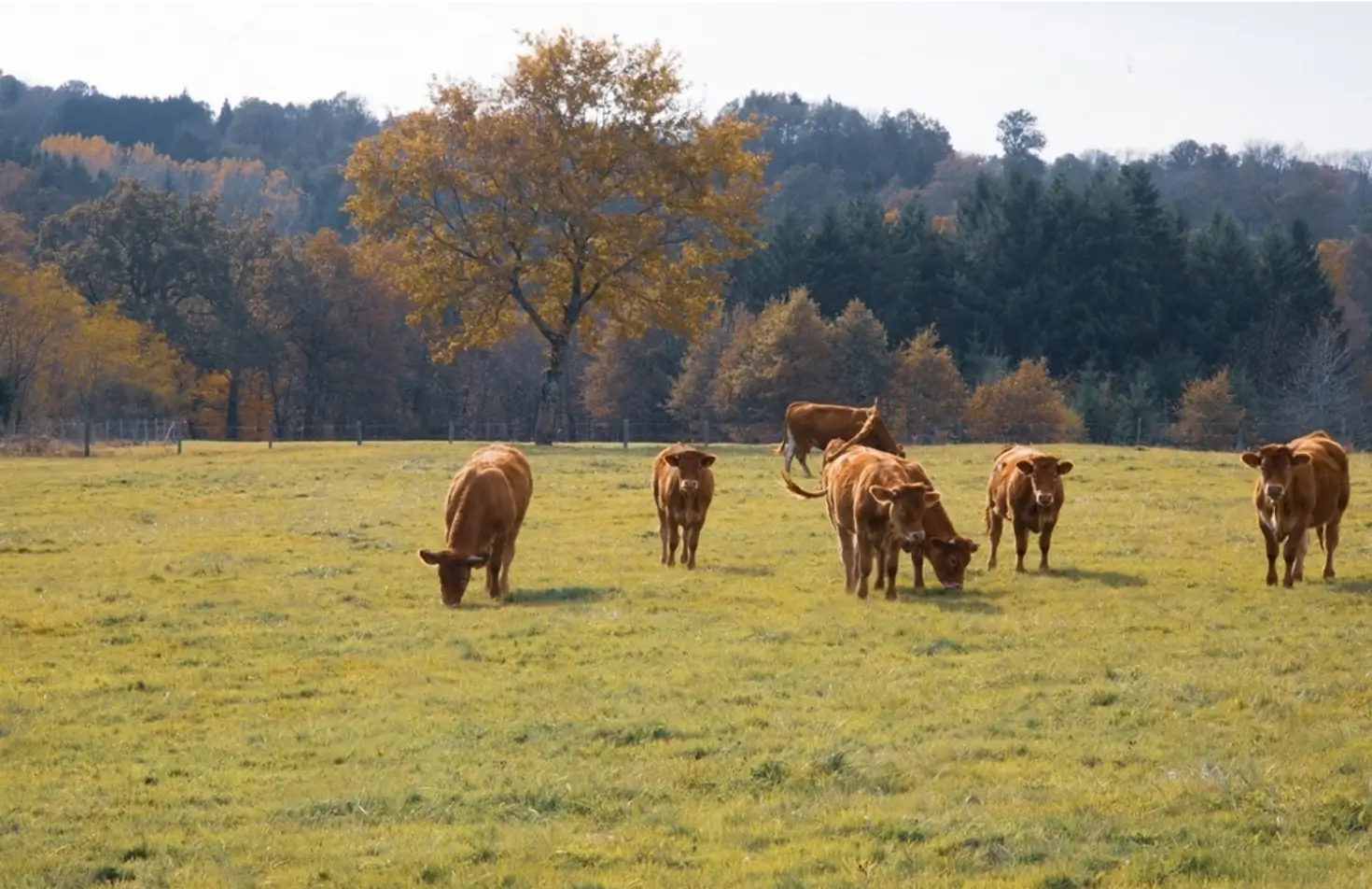
Going back to Europe, Limousin cattle are from the Limousin region of France, and, similar to Charolais cattle, they’re known for producing lean, muscular beef. As far as the appearance of Limousin cattle goes, they’re actually a bit unique compared to some of the other ones we’ve covered thus far as they’ve got a much deeper red color yet are still robust – as such, they are perfect when it comes to high-yield beef production, especially since they’re quite efficient at turning feed into muscle.
Furthermore, Limousin beef is known to be one of the most lean options available, but they’re not exactly known for having a lot of marbling. The tenderness is definitely still there, though, mainly because of their high muscle-to-fat ratio which is ideal for people wanting leaner cuts that are still tender.
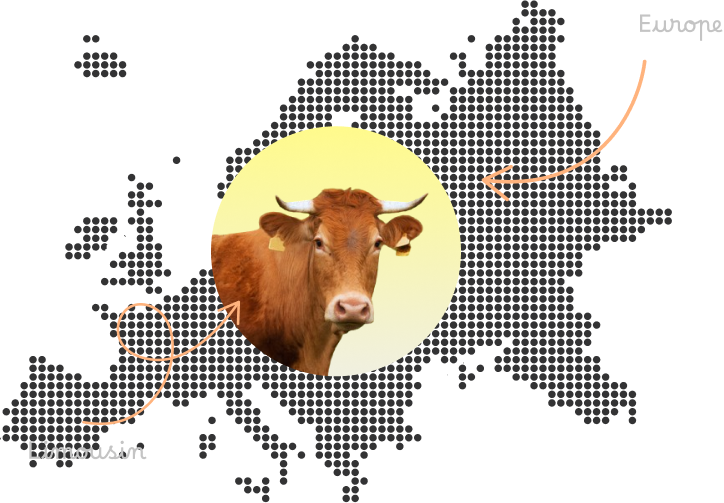
Limousin stronger
market in europe
It’s also generally perceived as a little bit healthier in comparison to more marbled cuts like Angus. Lastly, while you definitely still get this breed of cattle in places like North America, the market for Limousin beef tends to be a bit stronger in Europe.
07 Brahman
| ORIGIN | KEY TRAITS | BEEF QUALITY | CROSSBREEDING | ADAPTABILITY |
|---|---|---|---|---|
| USA (from Indian Zebu) | Distinctive hump, heat-tolerant | Lean, tougher texture | Crossbreeds for marbling and adaptability | Thrives in tropical regions |
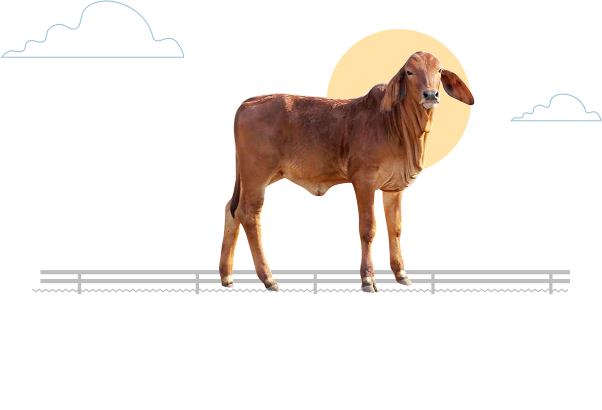
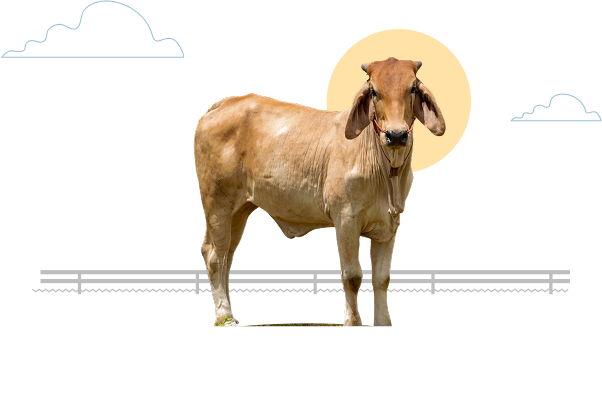
Now for the first Zebu cattle that we’ve covered so far, the Brahman breed – this is a breed that was developed in the United States, although it comes from Indian Zebu.
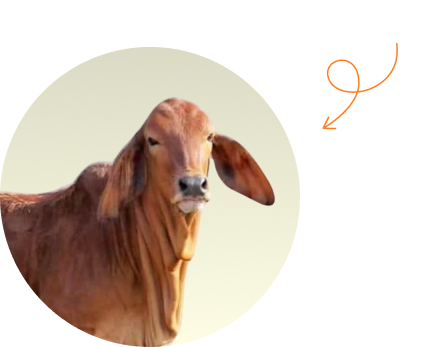
As is typical among Zebu cattle, this is a breed that’s known for its heat tolerance and overall ability to thrive in more tropical environments, which is why they’re so popular in South American countries like Brazil. It’s also a breed that’s a lot easier to tell apart from Bos taurus cattle, as they’ve got a very distinctive hump along with loose skin around the neck.
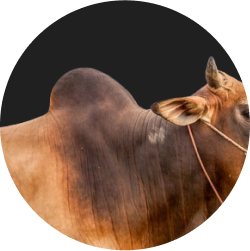
Hump
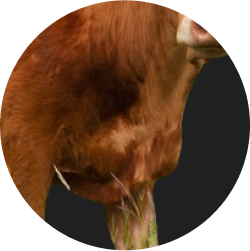
Loose Skin
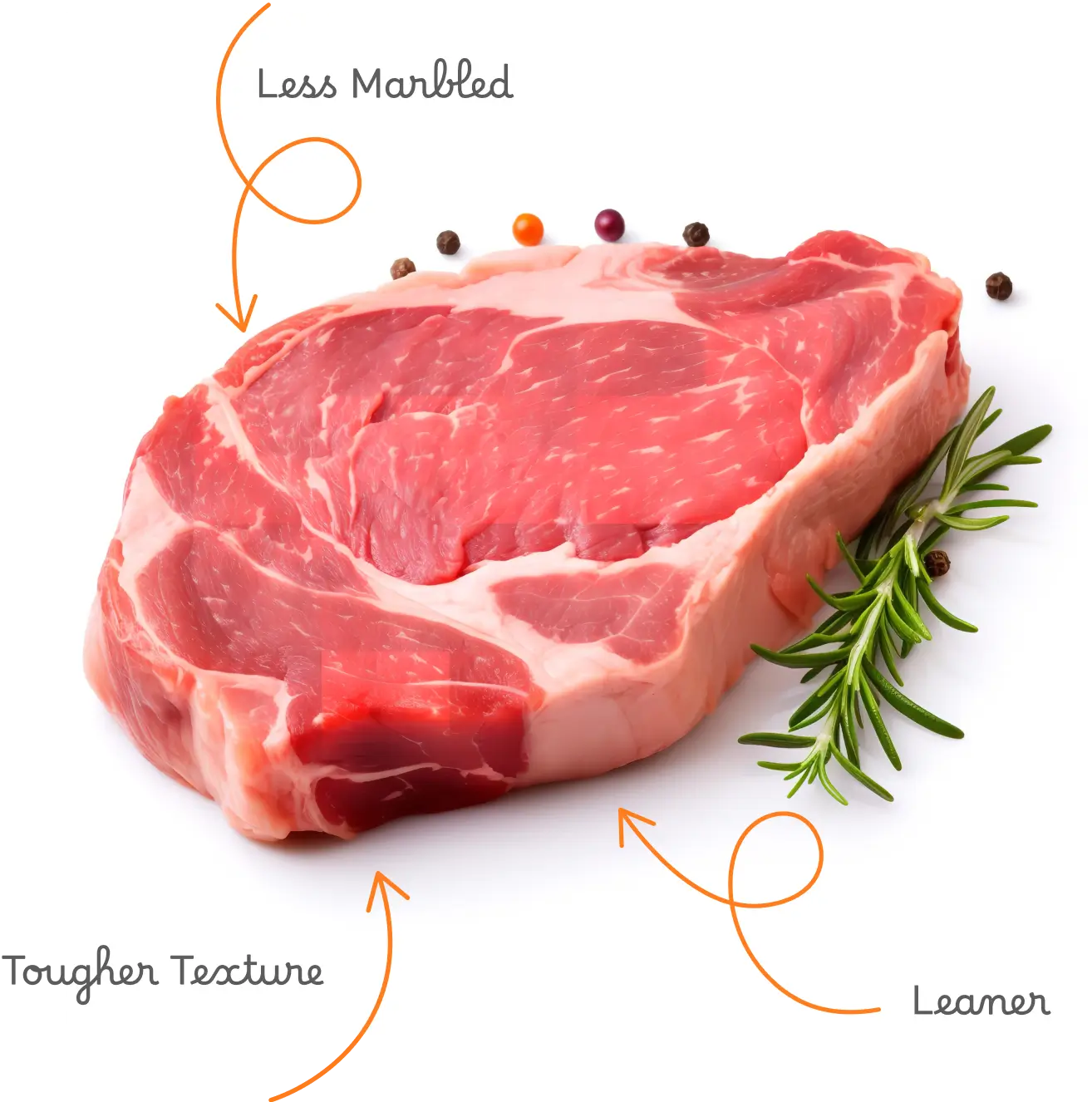
Again, it’s a common trait among Zebu cattle to have a leaner, less marbled cut than some of the other breeds we’ve covered, which results in a tougher texture, and Brahman is no different. The most appealing part of this breed, though, is generally its adaptability to more challenging climates, which makes it a pretty crucial part of the global beef industry – especially in areas where other breeds might traditionally struggle to thrive.
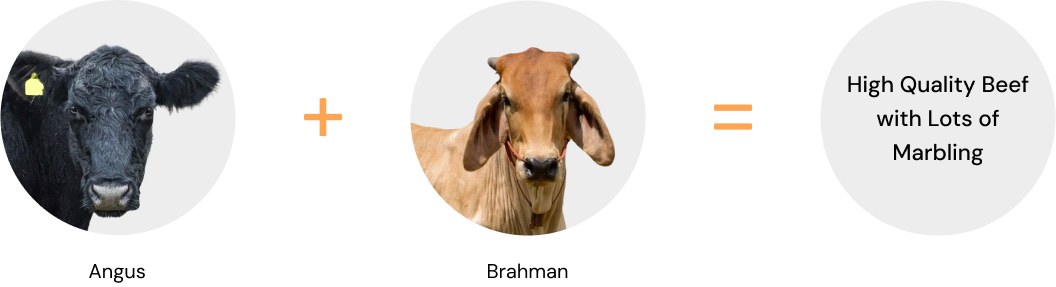
Still, for any farmers who are aiming to produce more marbled cuts, it’s not uncommon to crossbreed with breeds like Angus. The end result is a super desirable breed as it’s one that not only produces high-quality beef with a lot of marbling, but one that can thrive in pretty much any location of the world.
08 Gelbvieh
| ORIGIN | KEY TRAITS | BEEF QUALITY | CROSSBREEDING | ADAPTABILITY |
|---|---|---|---|---|
| Germany | Balanced muscle and fat, efficient feed conversion | Lean, tender, not highly marbled | Crossbreeds for muscle and fat distribution | Efficient, adaptable breed globally |
Lastly, let’s take a look at some cattle that come from Bavaria, Germany – the Gelbvieh breed. Gelbvieh cattle are generally one of the most versatile breeds when it comes to beef production, but their most common use is in crossbreeding programs so that they can enhance beef quality in other breeds, specifically when it comes to muscle development and fat distribution.
balanced combination of muscle and fat
It’s that balanced combination of muscle and fat that makes them so desirable when it comes to crossbreeding, as it produces beef that’s not only lean but tender, too. Similarly to Simmental cattle, this is also a breed that’s fairly appealing to people wanting a slightly healthier cut of meat but don’t want to sacrifice the flavor, and the fact that this breed is known for efficient feed conversion only further contributes to their reputation.
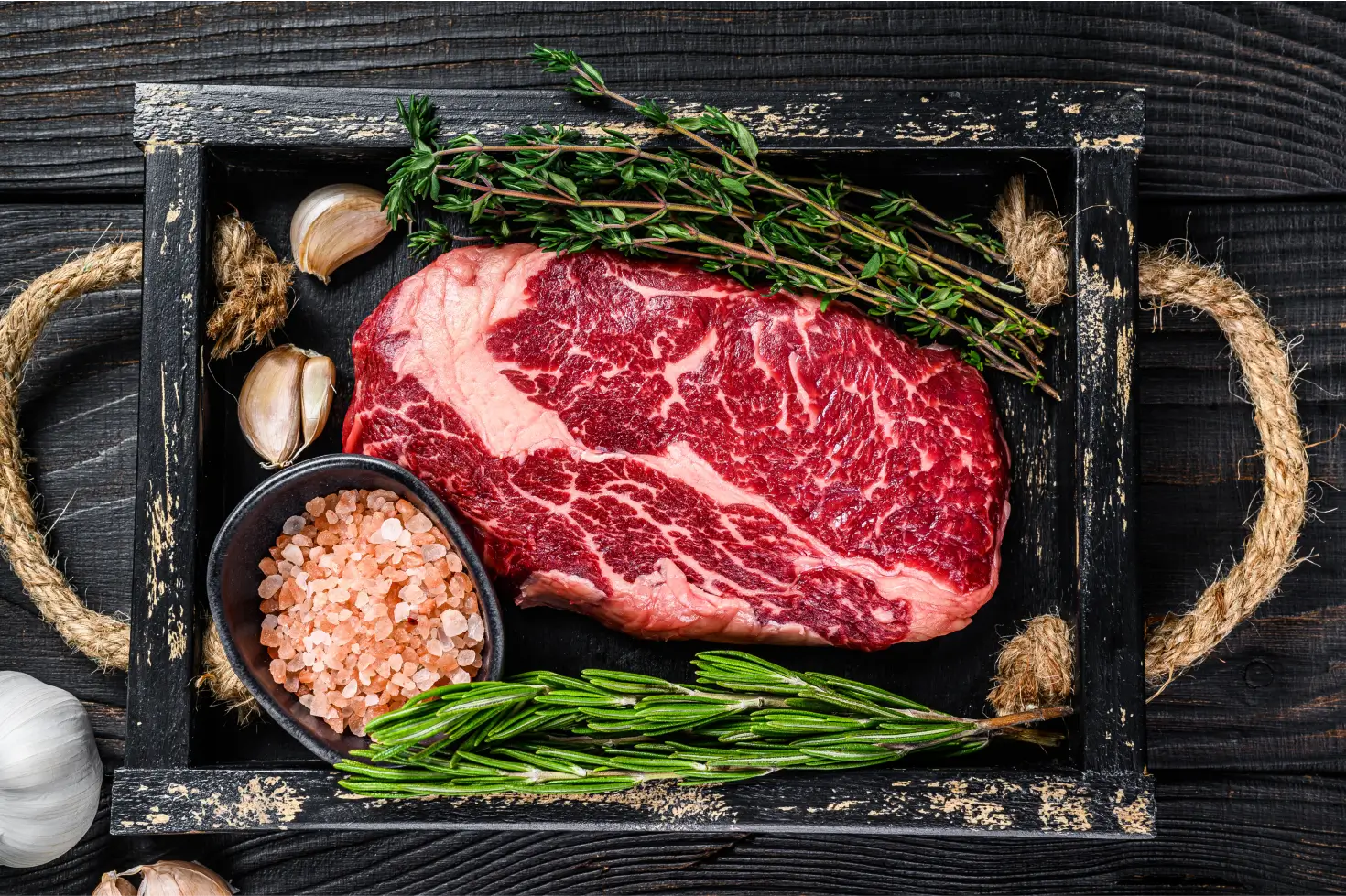
Like most other breeds of cattle, Gelbvieh beef generally doesn’t reach the same marbling levels as breeds like Angus or Wagyu, but that doesn’t mean it’s any less tender when you cook it a certain way. The same can be said in comparison to Hereford cattle – you’re getting a similar texture overall, but the marbling is not quite on the same level. That said, the fact that the Gelbvieh breed is so efficient and adaptable definitely makes it one of the more valuable breeds out there.
Beef Quality
Factors Across
Breeds
Understanding Cattle Breeds & Their Beef Quality
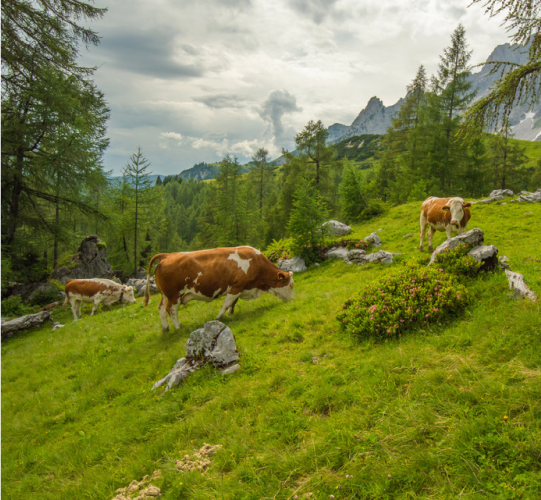
Now that you’ve got a better idea of what you can expect with the most popular breeds of cattle out there let’s dive a bit deeper into some of those terms we were using to describe them and what impact they have on the quality of beef you can expect:
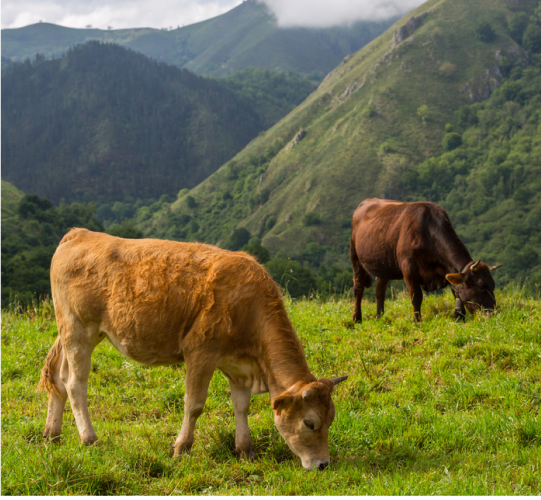
Marbling
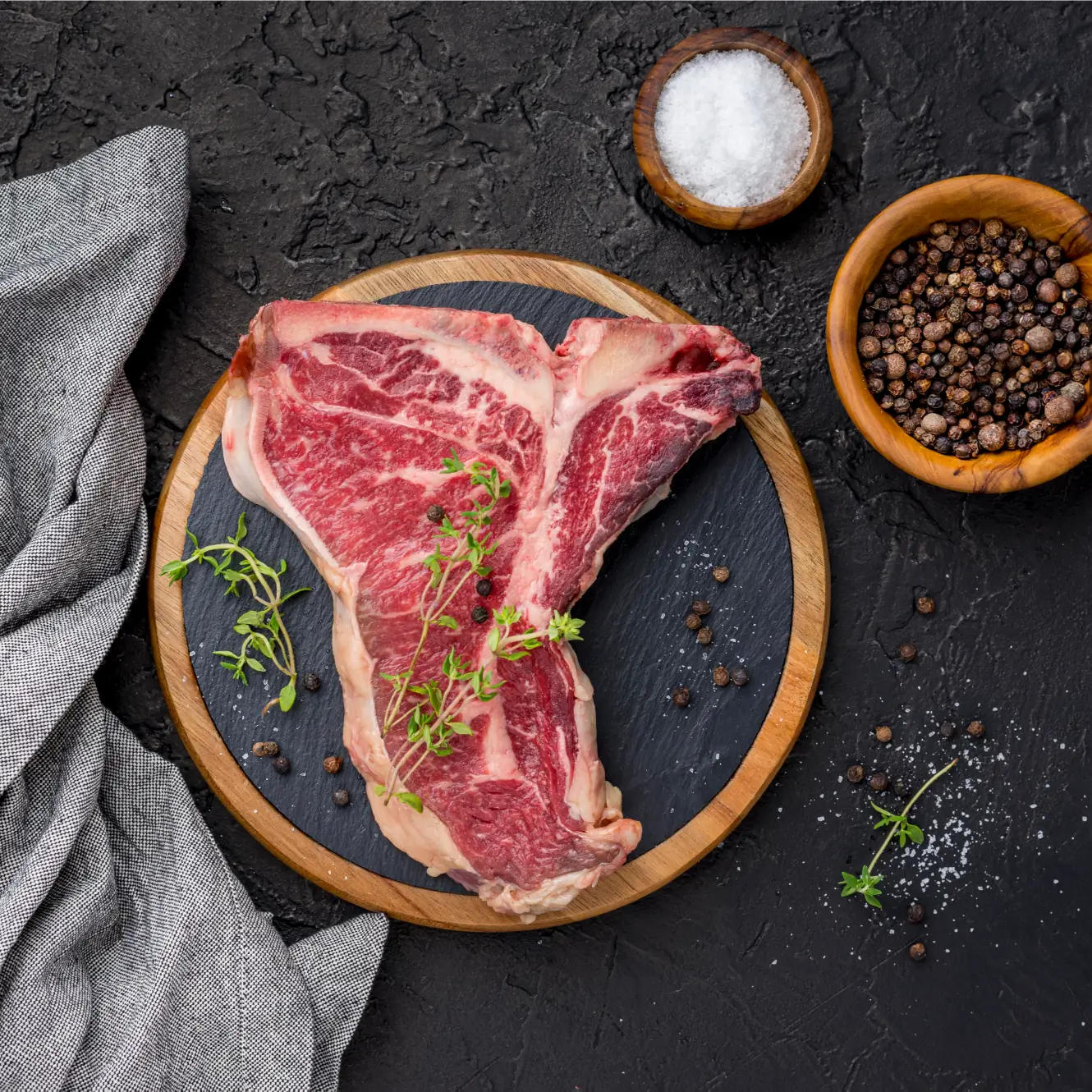
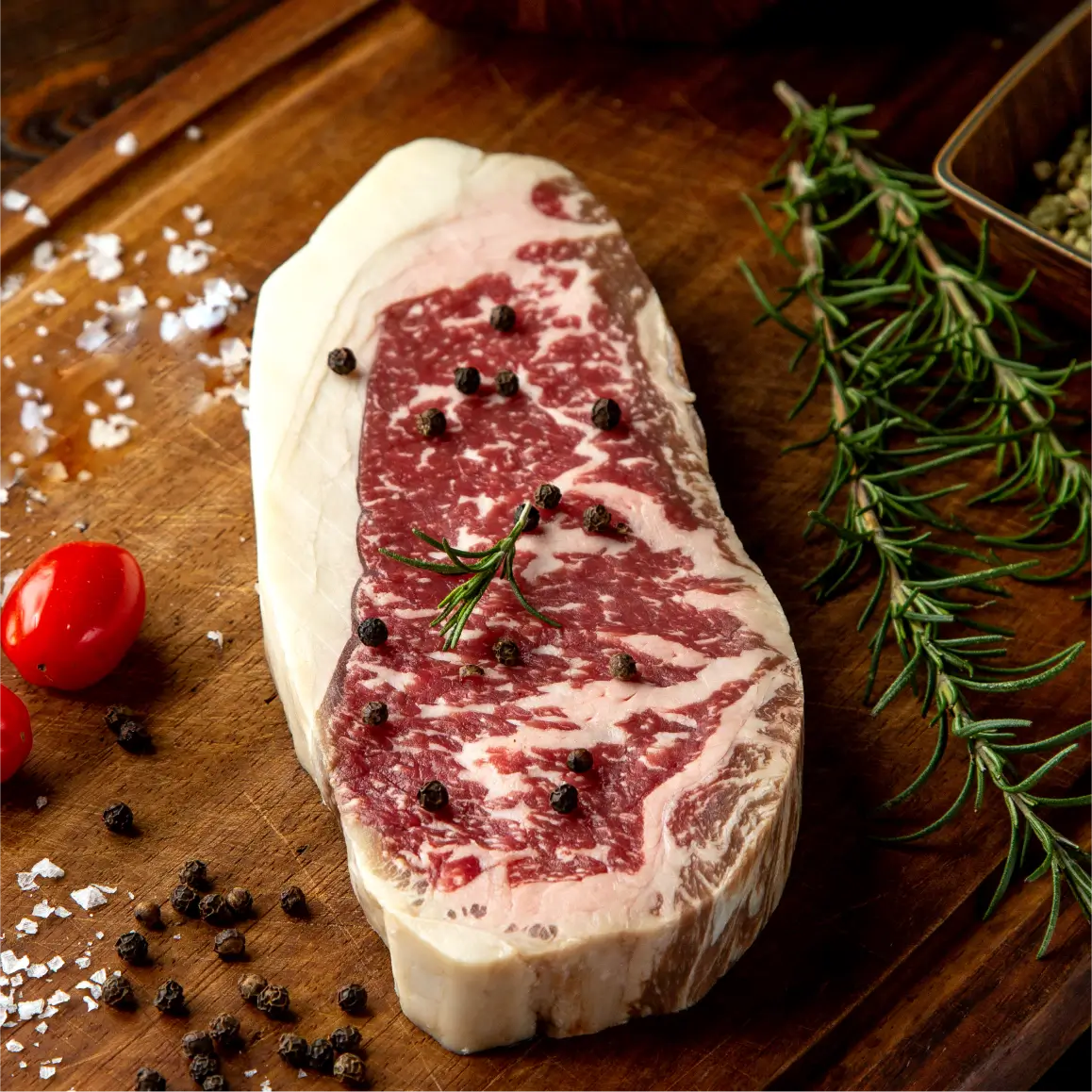
When we’re talking about ‘marbling,’ it’s essentially a reference to those fine streaks of intramuscular fat you can see within the muscle fibers of beef. This fat is distributed in thin, white lines, and it actually plays a pretty significant role in the juiciness and overall flavor of the meat you’re about to eat.
Basically, when you cook meat with high marbling, the fat you see melts into the muscle tissue, so this makes the beef even more moist and gives it a rich flavor that most people are looking for when eating meat.
Breeds Known for High Marbling
When people mention marbling, it’s hard to picture anything in your head other than classic Japanese Wagyu – with this breed, you’re getting such a high level of intramuscular fat that the beef is almost melting in your mouth.
It’s nowhere near the same level, but perhaps the next best breed in terms of marbling is Angus, especially if you’ve purchased from one of those high-grade beef programs like Certified Angus Beef.
Tenderness
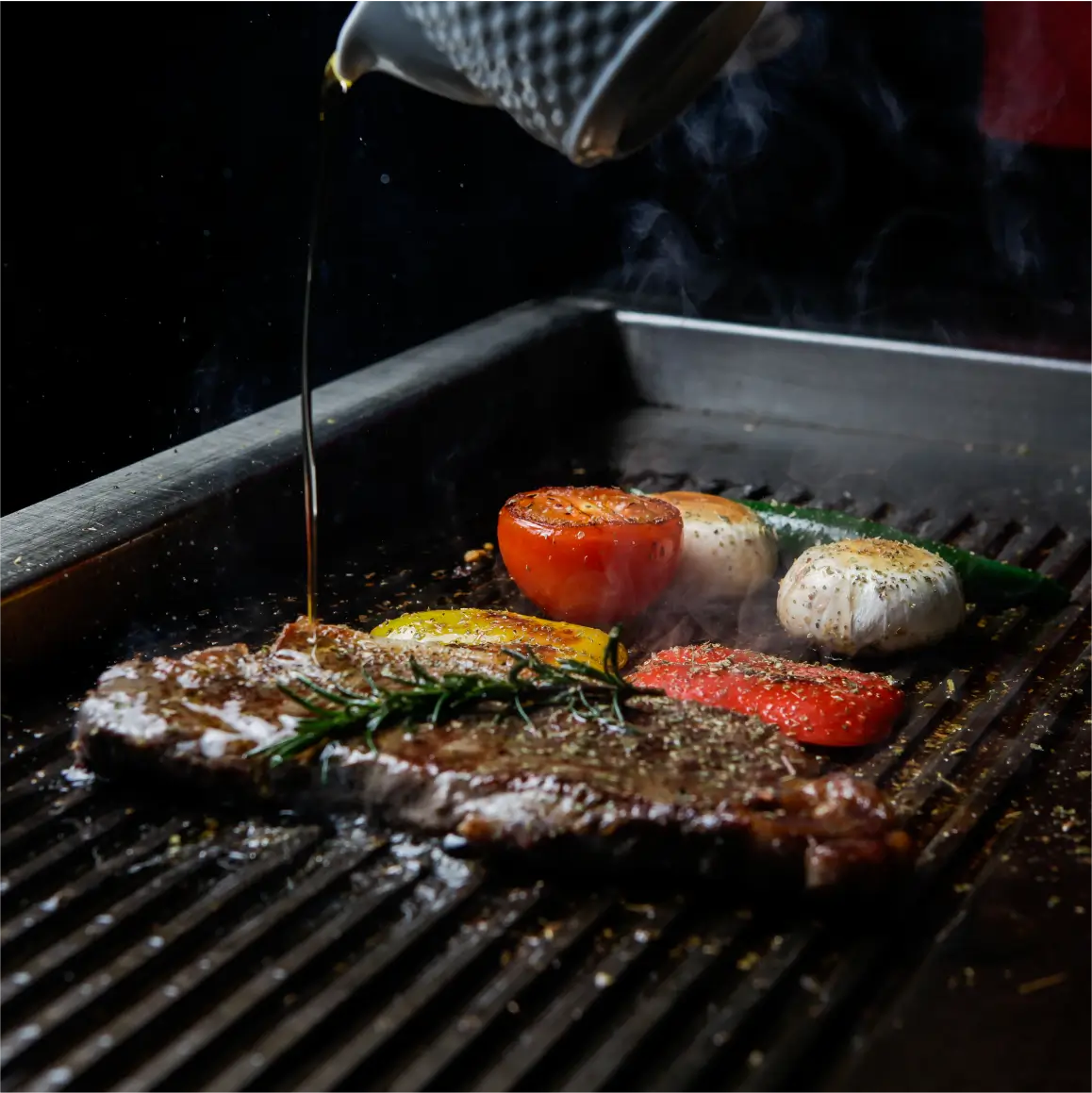
Tenderness is yet another key attribute that you should be looking for when you’re seeking high-quality beef, and it essentially just refers to how easy the meat is to chew. It’s definitely something that can be influenced by the cooking process you use – eating a very rare steak in comparison to a well-done one is obviously going to be more tender – and the aging process, but it’s massively determined by genetics and other environmental factors, too.
Impact of Genetics

Given how much of a preference people have for tender beef, quite a lot of breeds are crossbred so that they can produce a more tender cut. Hereford cattle, for example, are a breed that’s naturally super tender, mainly because of their muscle structure and fat distribution, so this is a breed you’ll often see crossbred with other cattle in order to improve their tenderness – it’s mainly down to the marbling levels, at the end of the day.
Environmental Factors & Management

Interestingly enough, things like stress can actually lead to tougher meat since it increases the production of stress hormones such as cortisol – something that negatively affects muscle fibers. Conversely, when they’re well-managed and have proper nutrition, cattle tend to produce more tender beef – especially breeds like Angus and Hereford cattle since the temperature climates they live in are usually better than more challenging environments.
Fat Content and Leanness
You’ve generally got to be pretty careful when it comes to balancing fat content in beef, as while you’ll definitely get a more tender and tasty cut when it’s got high marbling, a lot of the more health-conscious consumers are going to be put off if it’s too fatty.
Still, it’s the intramuscular fat (marbling) that most people consider the most desirable, as that’s the fat that enhances the taste and mouthfeel of the beef the most. Subcutaneous fat (fat under the skin), on the other hand, can normally be trimmed off without any major impact on the flavor or tenderness.
Breeds with Leaner Meat
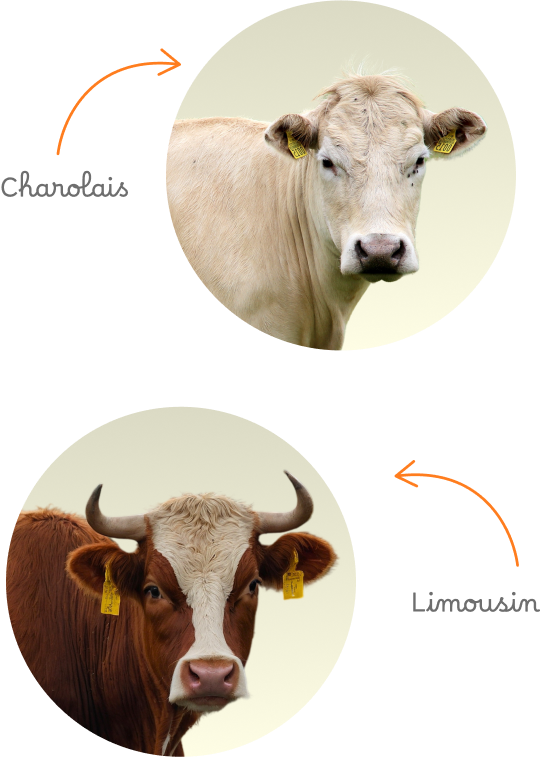
You’d normally associate breeds like Limousin and Charolais with lean meat in comparison to some of the other breeds out there – as mentioned earlier, these cattle are typically pretty large and muscular, so this ends up producing beef with a high muscle-to-fat ratio. Limousin beef, for example, generally has quite low marbling in comparison to breeds like Angus or Wagyu, but the fat content means it can still be very tender without being too unhealthy.
The other French breed I just mentioned, Charolais, also produces quite lean beef, but it does tend to have a firmer texture and slightly different flavor profile in comparison to some of the more marbled breeds – it definitely won’t have that same melt-in-your-mouth quality to it, but it’s absolutely still a great option if you want a healthier option with less fat.
Grain vs. Grass-Fed Beef
Aside from the breed of cattle itself, the diet they have is also something going to have a significant influence on how good the quality of beef is – affecting pretty much everything from marbling to the flavor and texture. Generally speaking, you can either raise cattle on a diet of grain or grass, and the choice of feed actually has a direct impact on what your final product is going to look like.
Grain-Fed Beef
Firstly, grain-fed cattle, which typically contain a diet of corn, soy, and other kinds of grains, tend to produce beef with more marbling and a richer flavor – mainly because it promotes more intramuscular fat, which we’ve mentioned ends up producing more tender, juicer beef (this is why most people describe the flavor of grain-fed beef as being more buttery and mild.
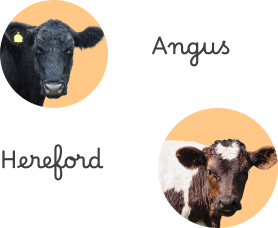
That’s also why you see breeds like Angus and Hereford cattle eating a mostly grain-fed diet in finishing programs, as this further enhances the marbling and tenderness that we’re looking for out of these breeds.

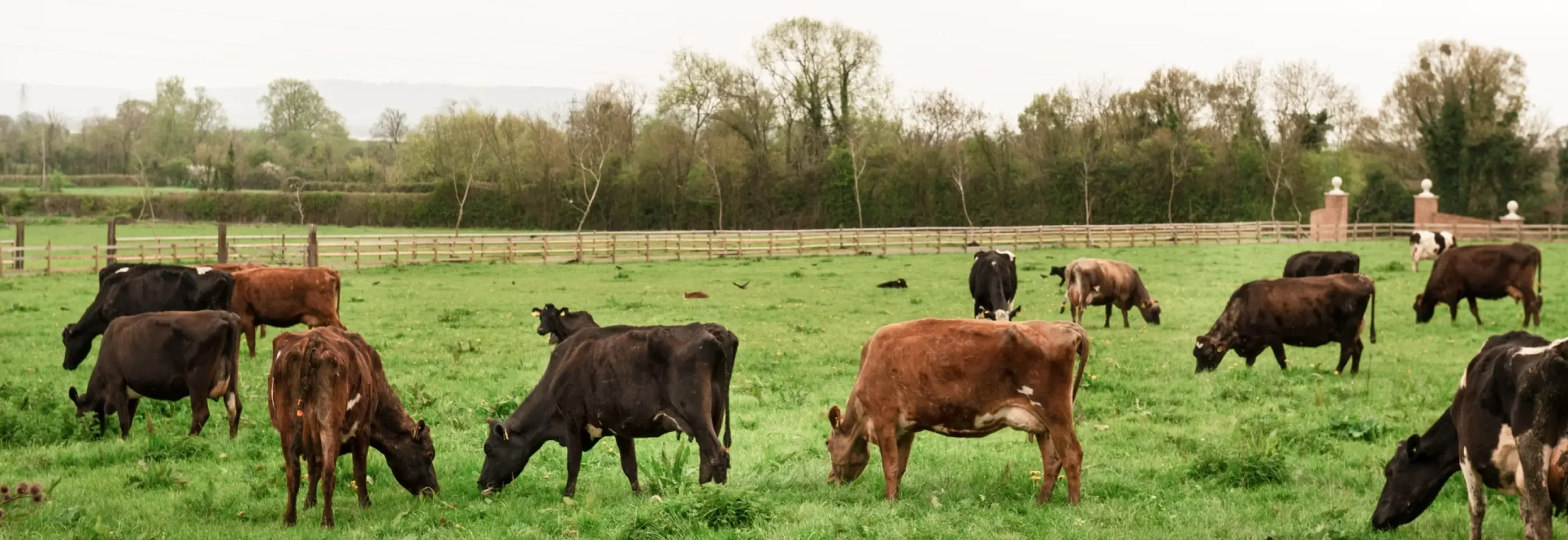
Cattle that mainly eat grass, on the other hand, tend to produce meat that’s leaner, stronger, and has a more pronounced flavor in comparison to grain-fed cattle – one that a lot of people describe as “earthy” or “herbaceous.” You’ve also got to be a bit more careful with grass-fed beef if you’re someone who prefers a more tender texture, and the leanness of it can sometimes result in a firmer texture if you cook it incorrectly.
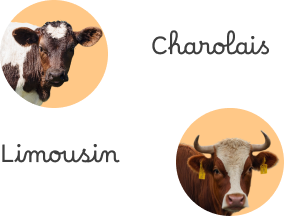
Certain breeds like Charolais and Limousin, which, as mentioned earlier, are already known for their naturally lean meat, are often grass-fed. Similarly to the way Angus and Hereford cattle are fed grains to accentuate their natural marbling, the same idea is there for Charolais and Limousin cattle where they’re fed grass so that they can produce even leaner beef.
Grass-Fed Beef
Climate Adaptability
More often than not, cattle breeds are usually selected based on how well they’re going to be able to thrive in specific climates, and it’s some of those environmental factors that influence meat quality the most.
Tropical Breeds
Breeds like Brahman cattle tend to be particularly common in tropical regions since they’re not only able to withstand warm weather climates but are resistant to parasites, too. As touched on earlier in the article, these cattle originate from Bos indicus, and their resistance to high temperatures and humidity usually makes them ideal for climates like Brazil or India – even southern parts of the United States.
Generally speaking, though, Brahman beef is usually a lot leaner and tougher with not as much marbling, so unless you’ve prepared and cooked it in a way that’s going to enhance the tenderness – slow cooking or marinating, for example – then it’ll need to be crossbred to get more marbling.
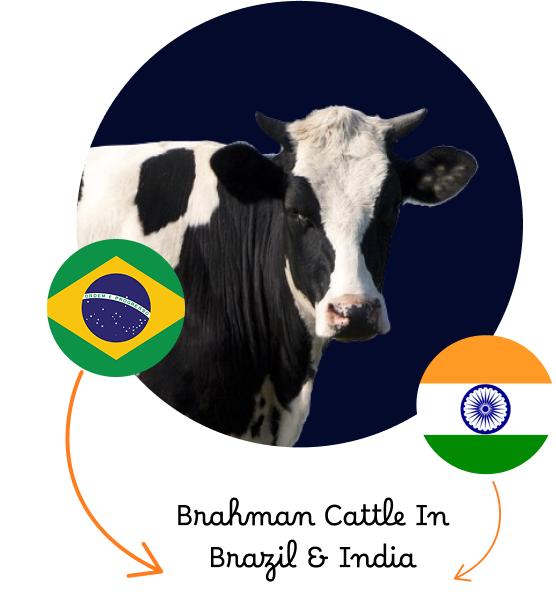
Temperate Breeds
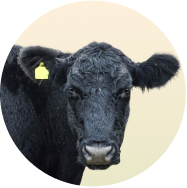
Angus
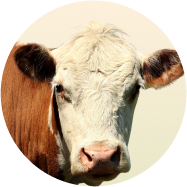
Hereford
Angus and Hereford cattle, on the other hand, are far more suited to cooler climates, where they produce more marbled and tender beef – mostly down to a combination of genetics and environmental conditions. Not only that, but the animals are usually less stressed in temperate environments, so things like this only further contribute to the tenderness of the beef.
Crossbreeding &
Hybrid Vigor in
Beef Production
Understanding Cattle Breeds & Their Beef Quality
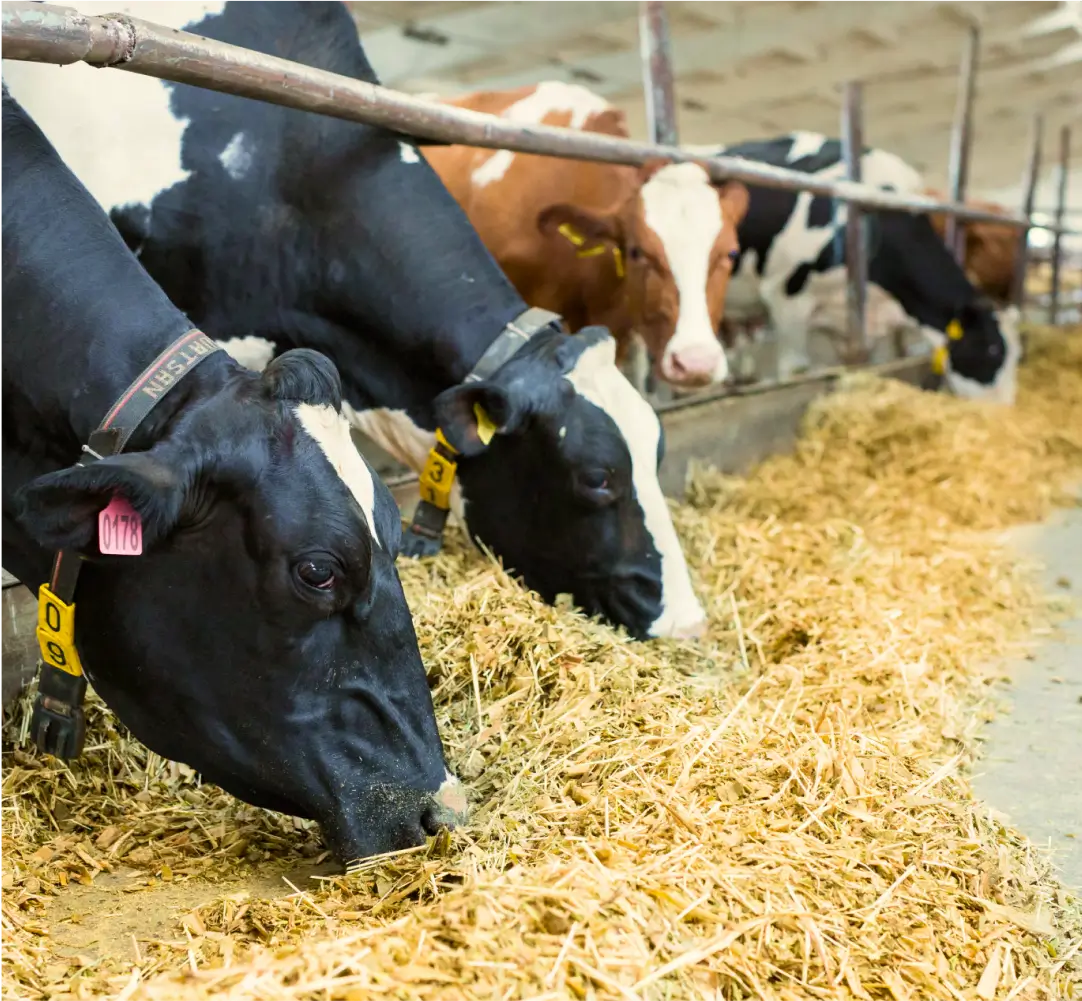
As we’ve alluded to at several points throughout this article, it’s generally a very common practice for farmers out there to crossbreed to different breeds of cattle – let’s talk a little bit more about some of the main reasons they do this and what examples there are:
Benefits of Crossbreeding
for Improved Beef Quality
Again, the main idea here is that by cross breeding two different types of cattle, we’re able to combine some of the best traits of each, ultimately with the aim to improve both the quality and beef and how resistant the animal is to a range of different environments or climates.
Crossbreeding is sometimes referred to as hybrid vigor or even heterosis, and some of the main benefits we can expect from it are as follows:
01
Improved growth rate in the cattle
02
Better marbling, especially if a breed with traditionally leaner beef is crossbred with a cow that has more intramuscular fat
03
Improved tenderness – which tends to go hand in hand with the level of marbling a cut of beef has
04
Adaptability to various different climates – this one is especially true if we’re crossbreeding Boa taurus cattle with Zebu breeds.
So, ultimately, if a farmer is able to leverage the strengths of two or more breeds, they’ll be able to produce cattle that are able to yield high-quality beef while still keeping other essential traits like heat tolerance or disease resistance – things like efficient feed conversion, too.
Examples of Successful Hybrids
One of the most notable examples of crossbreeding would definitely have to be the Brahman x Angus hybrid, which most farmers refer to as ‘Brangus’ As you might expect when you’re crossbreeding a Boa taurus breed with a Zebu one, the end product here is a cow that’s got the superior marbling and tenderness of Angus beef with the heat tolerance and overall hardiness of Brahman cattle.
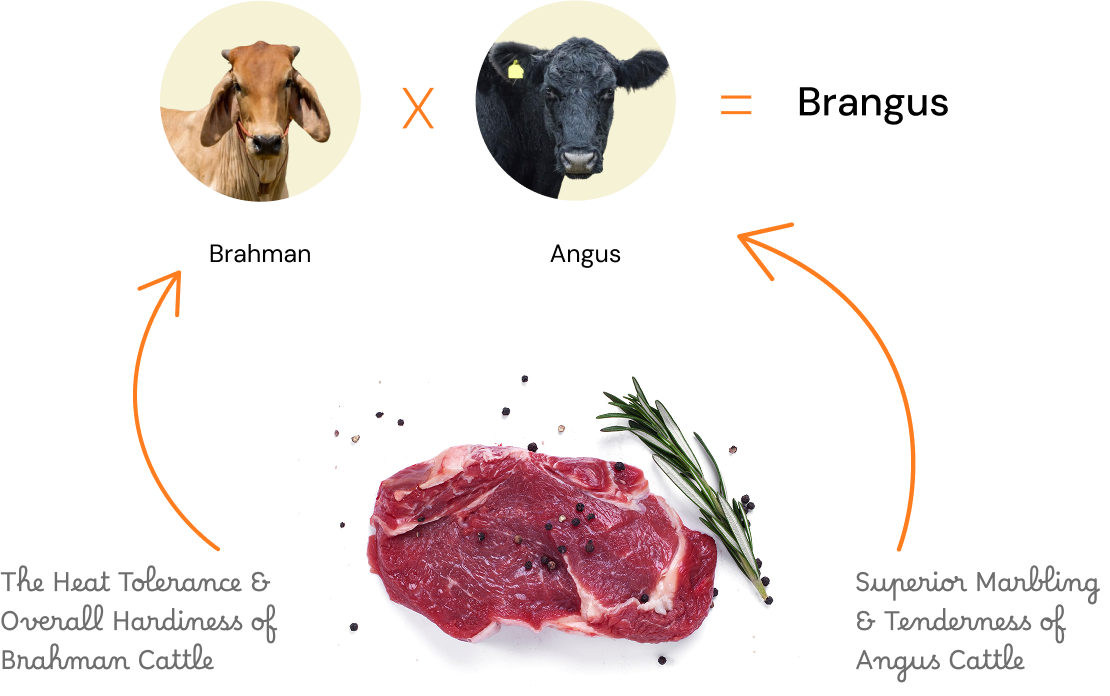
As a result, it means you’ve got a breed of cattle that not only produces flavorful, marbled beef but one that’s able to thrive in warmer climates where pure Angus cattle may traditionally struggle.
This is a hybrid that you’d most commonly see somewhere like the southern states in the United States or certain parts of Australia, where, as you might have guessed, are particularly challenging places for traditional beef cattle to thrive.
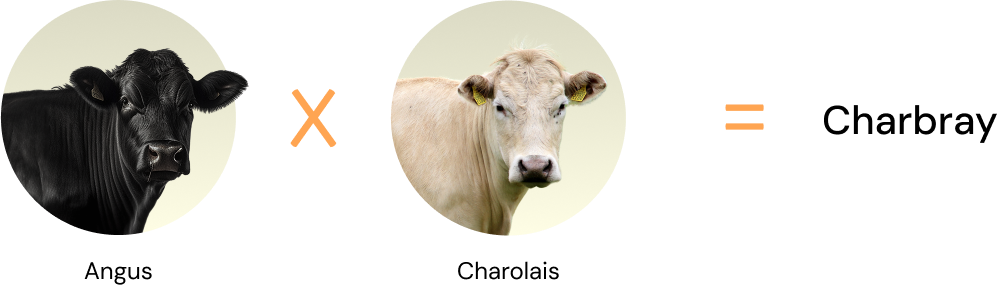
Furthermore, it’s not just the Boa Taurus and Zebu breeds that are often crossbred – you often see this with a lot of other European breeds, such as the Charolais x Angus cross (often referred to as ‘Charbray.’
How Crossbreeding Enhances
Desirable Traits
It goes without saying that farmers are not just crossbreeding cattle for the sake of it – it’s so that certain traits that are essential for not only the beef quality but adaptability of cattle in different environments are enhanced.
The Balance of Flavor &
Lean in Cattle
For example, although there is certainly the more
health-conscious consumer out there whose
desires for a leaner cut need to be met, but, for
the most part, people like their beef to have plenty
of marbling and tenderness. Because of this, you’ll
often see marbled breeds like Angus or Hereford
cattle crossed with larger or generally leaner
breeds like Charolais or Limousin – this way, you’re
able to get cattle that can offer flavor but are still
highly efficient for beef production as a whole.
Furthermore, in regions where it’s more important for the cattle to be able to adapt to a range of different climates, crossbreeding more tropical breeds like Brahman with temperate breeds like Angus means that the farmers are going to be able to keep the quality of beef high while the cattle can withstand hard environmental conditions.
In addition, a point that we’ve not really covered in much detail yet is the importance of the cattle having good feed efficiency, which essentially means how good they are at converting feed into muscle.
As you might expect, this is obviously pretty crucial for sustainable beef production. When you crossbreed cattle, though, they generally have far better growth rates and overall hardiness, so this makes them more resilient to disease and stress – we’ve already covered how both of these can have a negative impact on the quality of beef that is produced in the end.
Market Trends &
Consumer Preferences
in Beef Quality
Understanding Cattle Breeds & Their Beef Quality
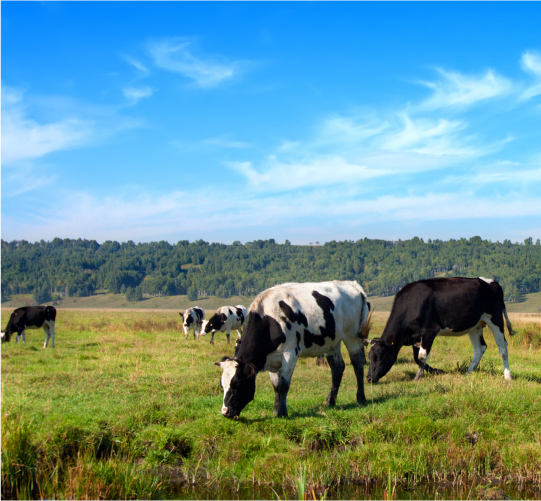
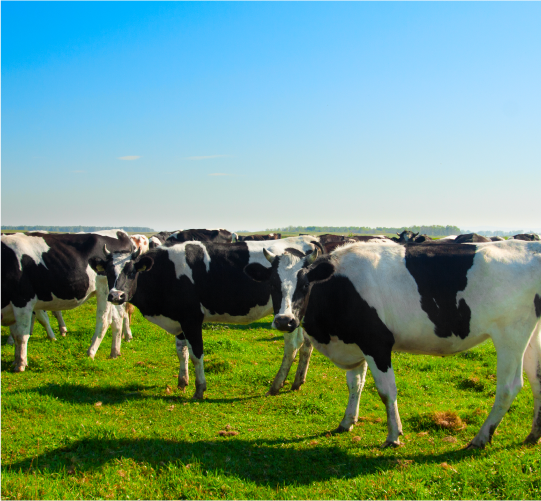
Whether it’s down to growing concerns about health, sustainability, or even ethical food production, it’s not exactly a secret that consumer preferences for beef aren’t the same as they were even 20 years ago. As such, two major trends have emerged in the beef market – demand for organic and grass-fed beef.
‘organic beef’
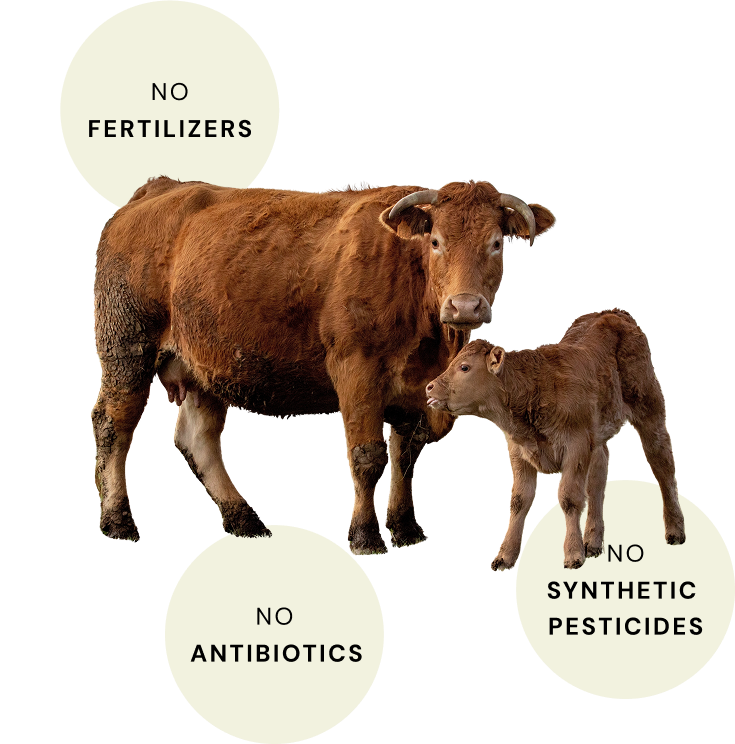
Starting with ‘organic beef,’ as the name might suggest, this is something that appeals to the people who want natural production methods for the meat they end up consuming – meaning no more synthetic pesticides, fertilizers, antibiotics, or growth hormones. A lot of these people will generally equate organic labels on the beef they see in supermarkets with higher food safety and animal welfare standards, so they’ll often choose these products even if they’re more expensive.
‘grass fed’
Grass-fed beef is something we’ve already touched on throughout this article, but it’s yet another trend that’s fairly popular among those health-conscious buyers we keep mentioning. In essence, a lot of people perceive cattle that were fed grass as generally healthier because the cattle have:
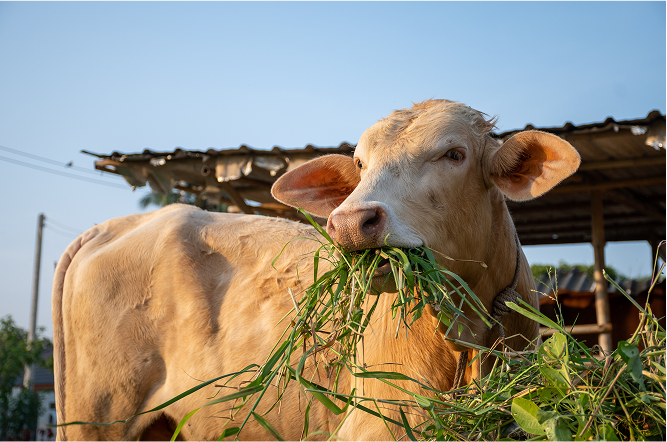
More natural grazing practices
Higher omega-3 fatty acid content
More lean profiles
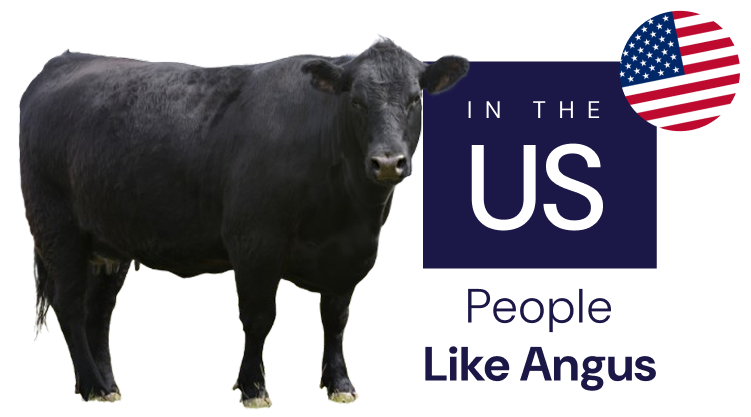
That said, grain-fed beef definitely still holds the most dominant position in the market all in all – especially in regions where consumers have more of a preference for marbling over lean cuts, like most states in the United States, where a lot of people still like Angus cattle the most.
Consumers are definitely becoming more and more informed about health risks and the treatment of the animals they’re consuming, so that’s why sustainability and environmental impact are such key drivers in their purchasing decisions. As such, you might now understand why you see labels like “regenerative agriculture” or “sustainably raised” all over meat packages in your grocery store.
How Breed Reputation Influences
Consumer Choices
Generally speaking, the reputation that any given breed has is naturally going to play a role in shaping consumer preferences, too, with certain breeds establishing themselves as a more premium product in the beef market.
As we’ve touched on several times throughout the article, Angus beef, for instance, is a cut that has now become pretty synonymous with quality, and that’s mainly because of the marketing efforts around programs like Certified Angus Beef (CAB). Whether it’s down to the marbling, tenderness, or just all round flavor, Angus beef has a solid reputation and is something that most consumers are willing to pay more for since they know they’re getting a premium cut of beef.
That’s also why you see restaurants and grocery stores often highlight what breed the beef is from on menus or labels, as it often helps draw in the consumers who associate Angus with a more enjoyable meal.

Restaurants
Grocery Stores
The same allure works for breeds like Japanese Wagyu, as the luxurious reputation that it has is something that’s often considered a gourmet item – the fact that you often see it in fine dining establishments around the world only further reinforces this premium status.
Aside from this, you’ve also got breed names
like Hereford and Charolais that carry a similar
amount of weight in markets where people are
after specific qualities like tenderness or leaner
cuts. Ultimately, the reason why all this is
important is because once you’ve got an idea
of the characteristics any given breed has, you
have the ability to make choices based on what
your specific preferences for flavor, texture, and
fat content are.
Conclusion
Understanding Cattle Breeds & Their Beef Quality
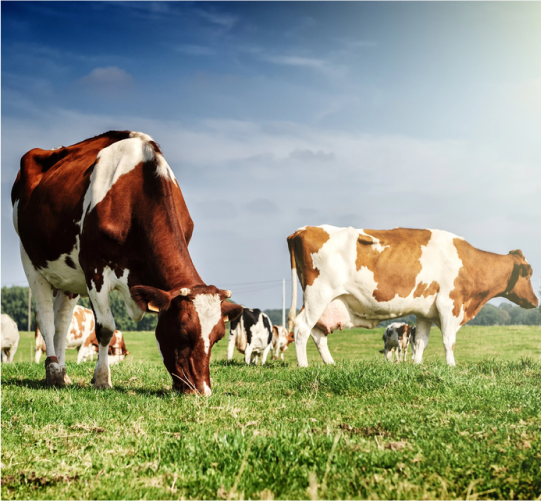
To wrap things up, it’s safe to say that there’s a great deal more thought that goes into buying beef than most people tend to anticipate. Whether you want to pick something up for a small barbecue in your backyard or you’re trying to stock up on supplies for your luxurious restaurant, the specific cut that you’re purchasing holds a huge amount of importance regarding the final product you can expect.
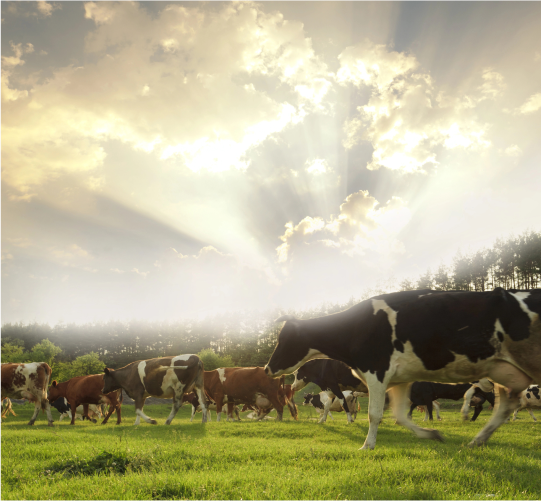
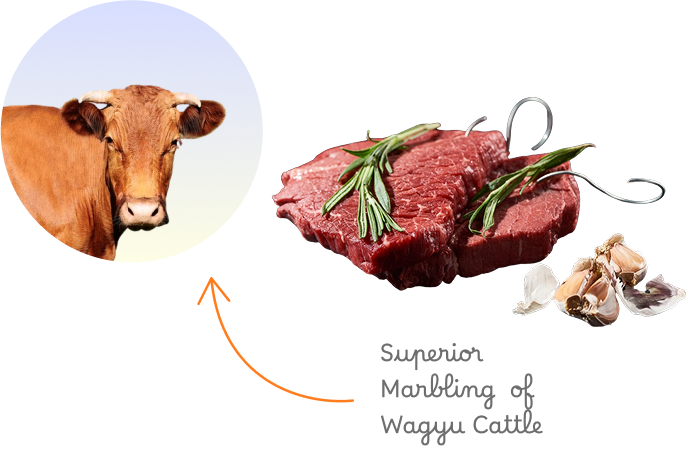
From the luxurious marbling that you’ll get with Wagyu beef to the overall leanness you have with breeds like Charolais and Limousin, every breed of cattle comes with distinct attributes that cater to a bunch of different market demands. If you’re someone who runs a restaurant, you can definitely rest assured that most people are after a more marbled cut like Angus or Wagyu.
That said, the overall shift to organic, grass-fed,
and sustainably produced beef is something that
you’re going to need to take into account, too, as
it’s always best to accommodate a range of
different people and not just assume that they
want a highly marbled cut of beef.
So, next time you’re at your local grocery store or butcher ready to pick up a fresh cut of beef, don’t forget who you’re buying it for and what their preferences might be – do they want a lean, healthy cut that doesn’t have a high-fat content, or would they prefer a juicy, tender cut like Angus or Wagyu beef?
Which cattle breed produces the highest quality beef?
Japanese Wagyu cattle, particularly Tajima-gyu, are widely considered to produce the highest quality beef due to their exceptional marbling and tenderness.
Why is Black Angus beef so popular?
Black Angus is popular for its consistent marbling, tenderness, and flavor, plus strong brand recognition and relatively efficient raising process.
What makes Wagyu beef so expensive?
Wagyu’s high price comes from intensive raising methods, strict breeding regulations, specialized diet, and limited production capacity.
Are heritage cattle breeds worth the premium price?
Yes, heritage breeds like Highland or Galloway often offer unique flavors and higher nutritional values due to their traditional genetics and typically grass-fed diets.
Which breed is best for grass-fed beef production?
Hereford cattle typically perform well on grass-only diets, along with Devon and Galloway breeds, producing quality beef without grain finishing.
Does the cattle breed affect cooking method?
Yes, heavily marbled breeds like Wagyu require different cooking temperatures and times compared to leaner breeds like Charolais.
What's the difference between dairy and beef cattle breeds?
Beef breeds like Angus are bred for meat quality and muscle development, while dairy breeds like Holstein focus on milk production and have leaner meat.
Which breed produces the leanest beef?
Limousin cattle typically produce some of the leanest beef, followed by Charolais, making them popular choices for health-conscious consumers.
How does marbling vary between breeds?
Japanese Wagyu ranks highest in marbling, followed by Black Angus, while breeds like Limousin and Charolais naturally produce leaner, less marbled meat.
Are crossbred cattle good for beef production?
Yes, crossbreeding often combines desirable traits from different breeds, like Angus’s marbling with Brahman’s heat tolerance, creating robust cattle that produce quality beef.