
Teak VS Acacia
A Comprehensive Comparison for
Outdoor Furniture

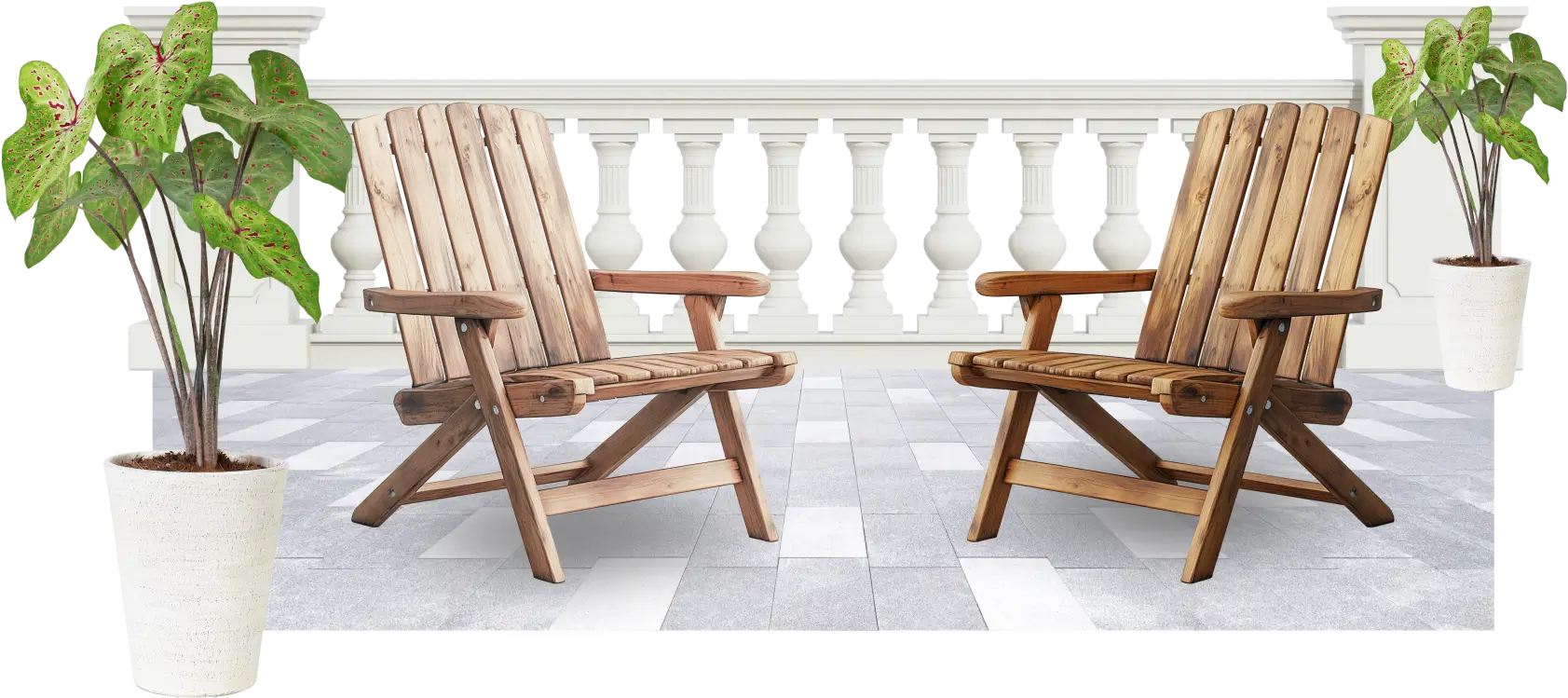
Boasting exceptional hardiness, rustic beauty, and fuss free maintenance, wood is a timeless choice for outdoor furniture.
Among the many woods that make brilliant outdoor furniture, there are two which shine through: teak and acacia. If you’re torn between these two popular woods, familiarizing with the pros, cons, and overall characteristics will certainly help you make a decision.
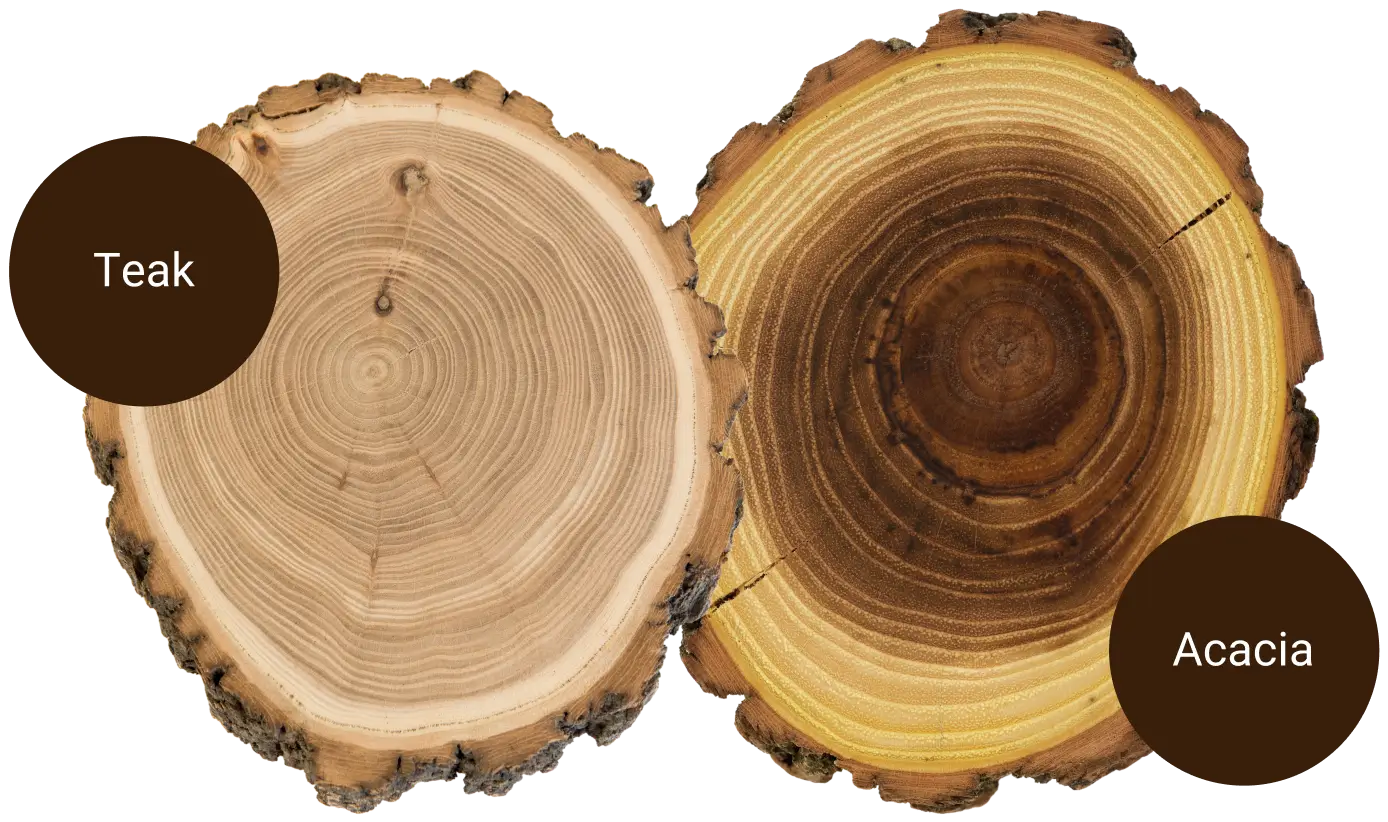
Evaluating essential factors, like durability, aesthetic qualities, and maintenance will help you choose the wood that best matches your preferences and needs.

Durability

Aesthetic Quality

Maintenance
Luckily for you, we’ve gathered and analyzed the major factors of both wood types to provide a comprehensive comparison and help you make an informed choice.
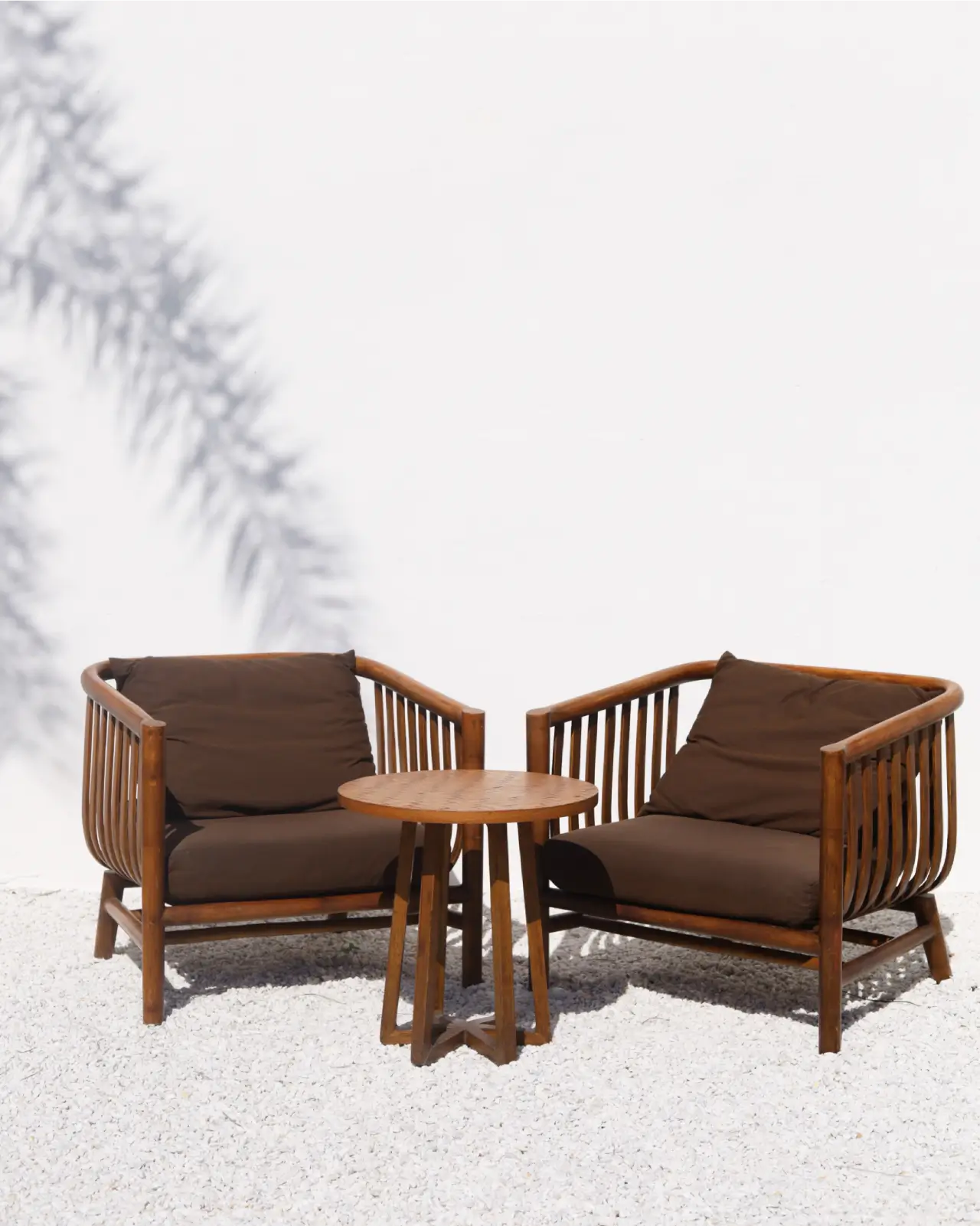
Whether you’re a conscious shopper looking for a more sustainable option, someone with a taste for the finer things seeking a luxurious investment, or perhaps a homeowner looking for a material that can withstand your area’s extreme weather conditions, our complete guide has all the essential information to choose a wood that aligns with your preferences and needs.
Dive in to discover whether teak or acacia wood is the right match for you!
Quick
Comparison
Table
Teak VS Acacia
Here’s a quick overview of all the key qualities that define and differentiate teak and acacia wood:
Origin &
Characteristics
of Teak Wood
Teak VS Acacia
Teak wood comes from the tectona grandis tree which grows natively in various areas of Southeast Asia, including India, Thailand, Indonesia, Malaysia, and Burma. It has many wonderful physical characteristics and properties that distinguishes it from other wood types.
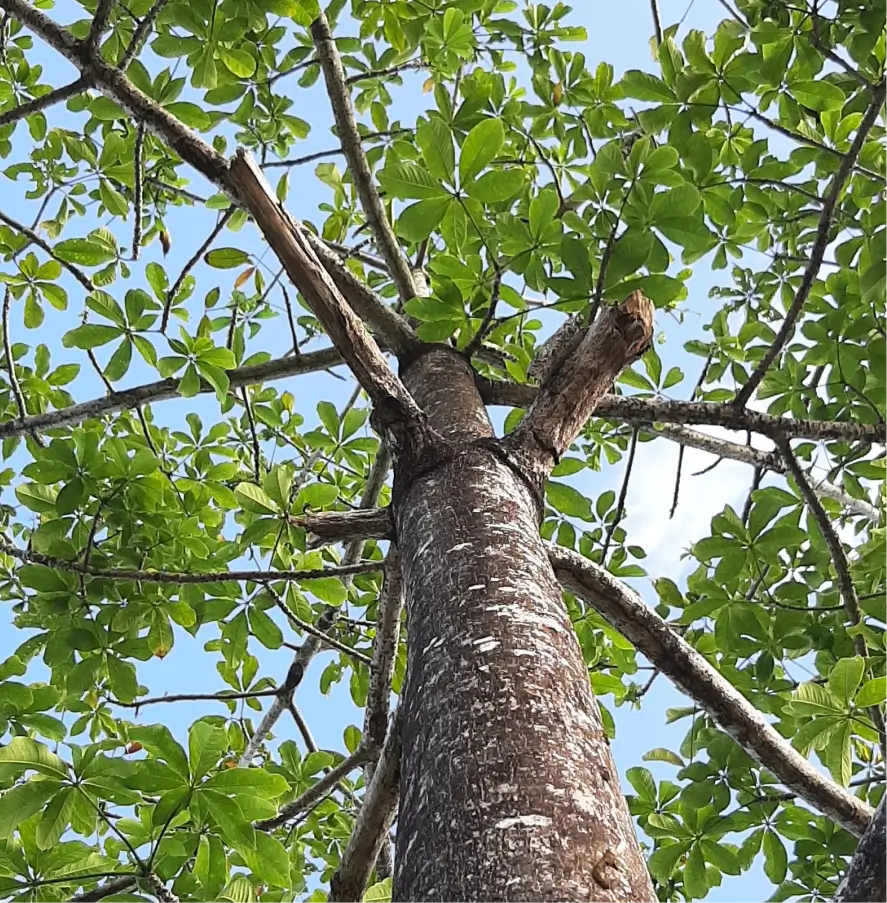
Countries Where Teak Wood Thrives Across Southeast Asia

India

Thailand

Indonesia

Malaysia

Burma
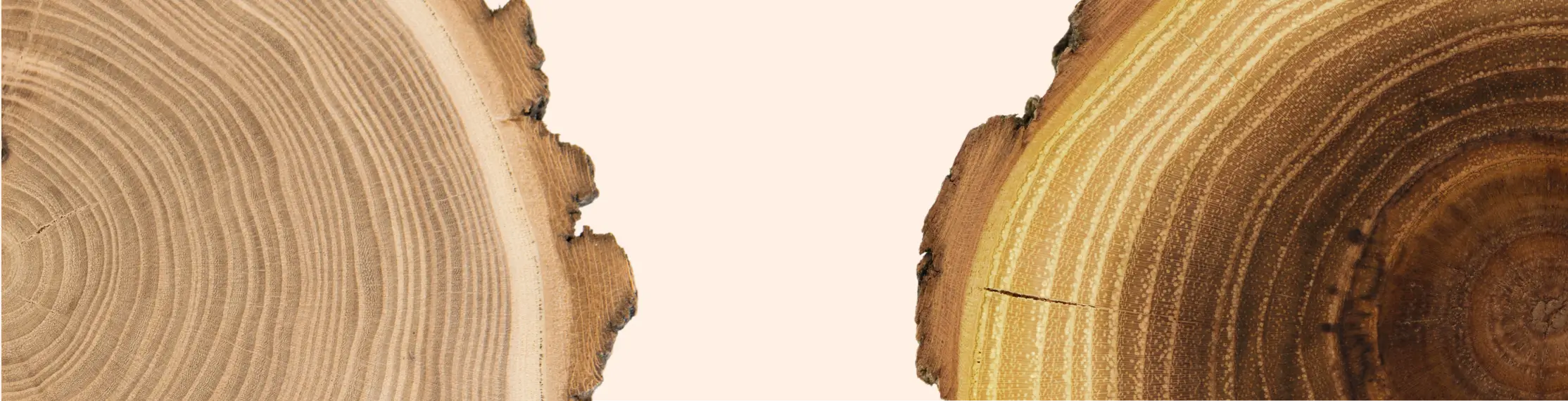
When it comes to color, Teak wood can vary between light brown to dark brown, depending on age, variety, and environmental factors. Lighter teak often radiates a symphony of golden, honey tones, especially when it’s newer. Older teak usually has a deeper color that ranges between medium and dark brown.
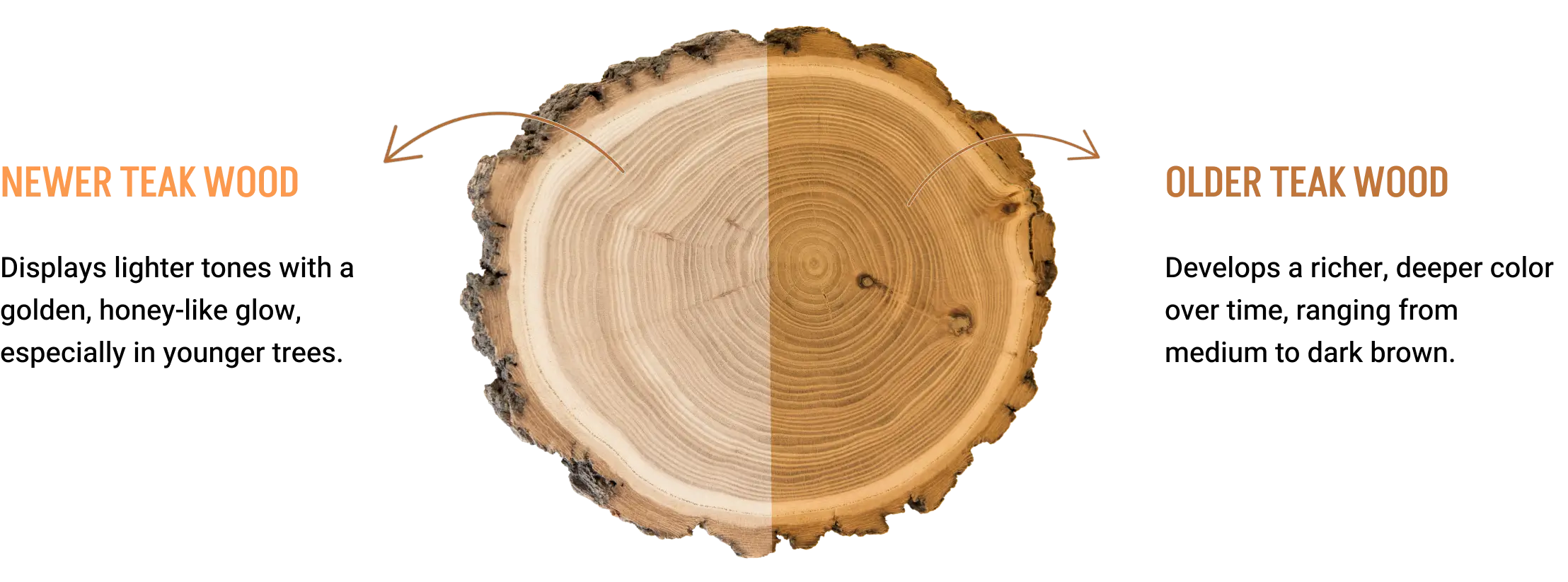

Teak’s grain is commonly straight, but can occasionally be wavy, or even interlocked. Its natural texture is more on the coarse side and slightly uneven, however this doesn’t stop it from being an easy wood to work with.
Beyond its good looks, teak wood also boasts lots of remarkable properties that make it a fantastic outdoor furniture material. Here are some of the many qualities that teak offers:
Here are some of the many qualities that teak offers:
 Hardiness
 Water Resistance
 Stability
 Acid Resistant
 Natural fragrance
Origin &
Characteristics
of ACACIA Wood
Teak VS Acacia
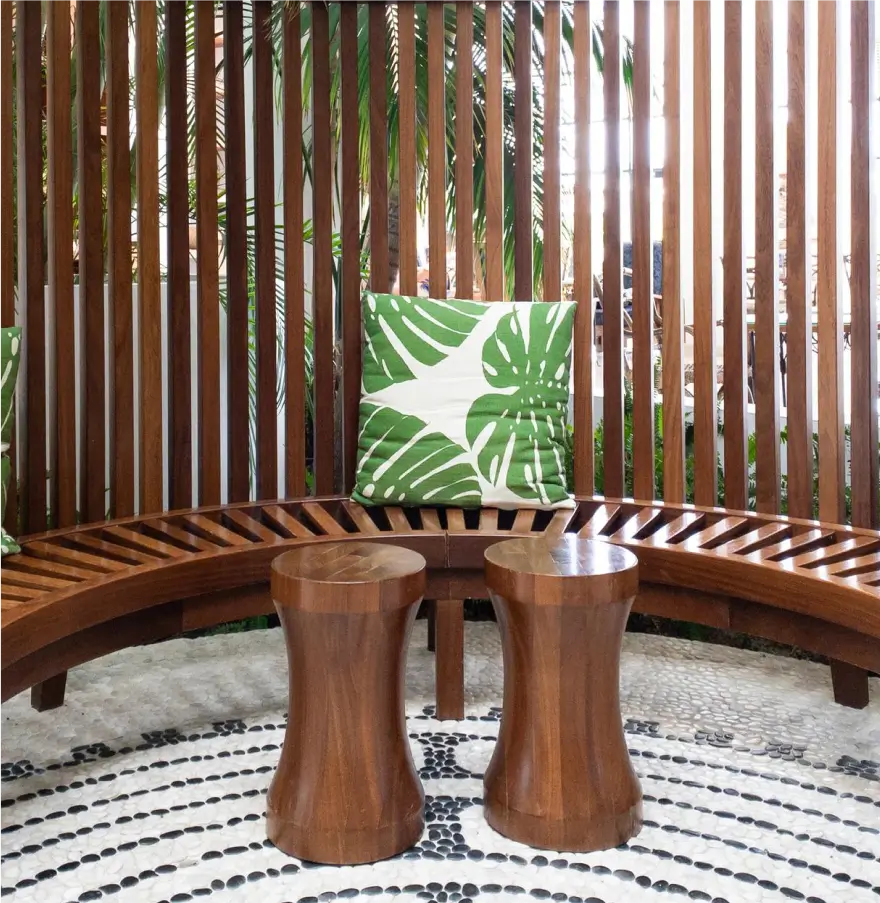
Acacia wood is harvested from the acacia tree which grows in tropical and sub-tropical climates regions, including some parts of America, Africa, Australia, Asia, and the Pacific Islands.
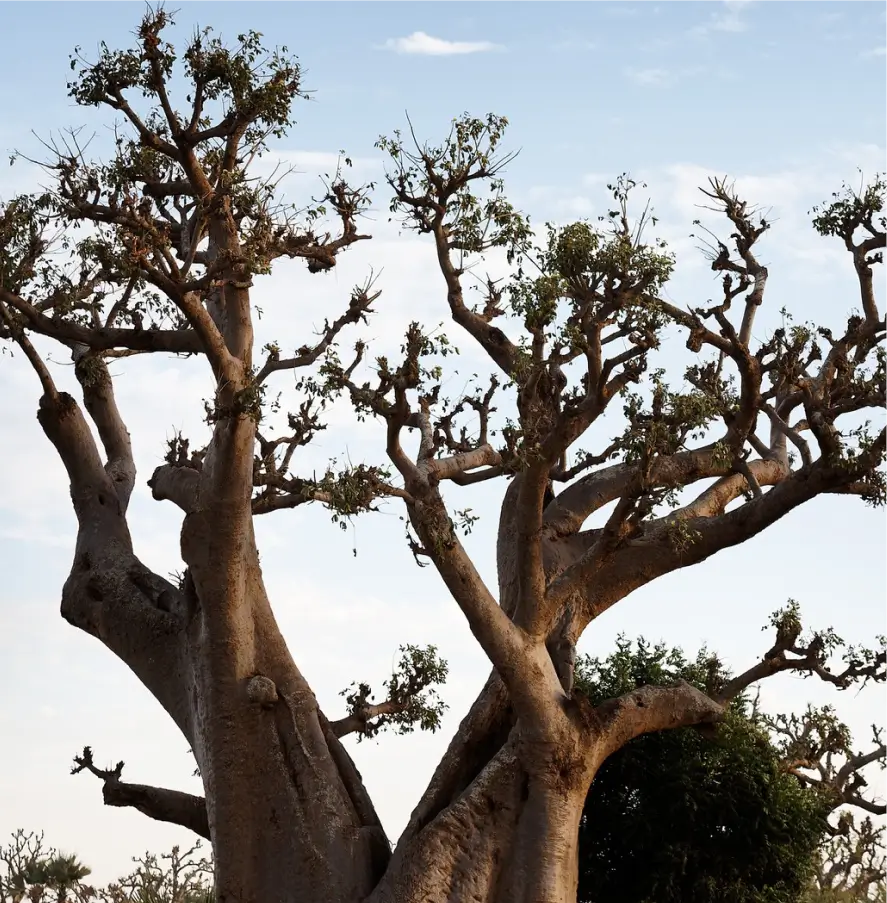
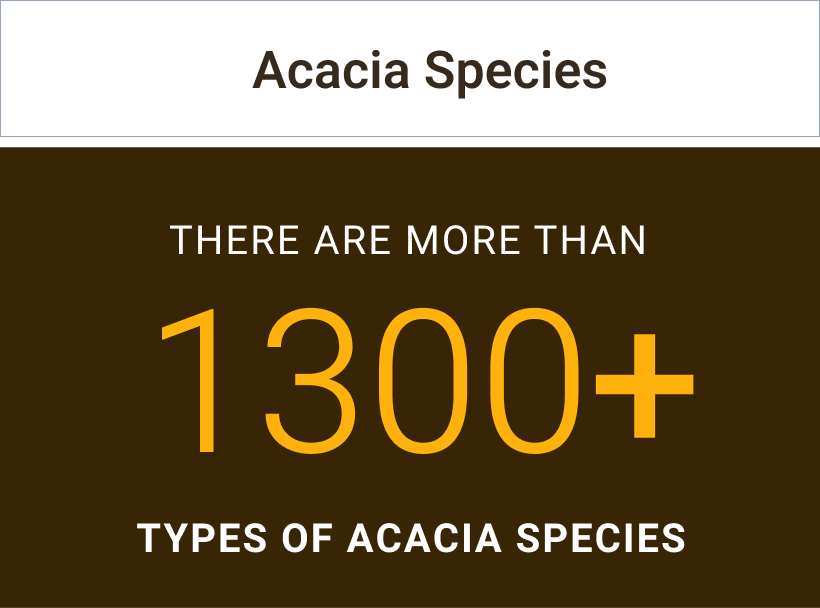
There are more than 1,300 types of acacia species, each offering their own unique attributes, such as koa, Asian walnut, and Australian Blackwood. While many different species of acacia have their own unique characteristics that set them apart, they do have some similarities, including a warm color that ranges from a soft, amber yellow to a deep, rich brown.
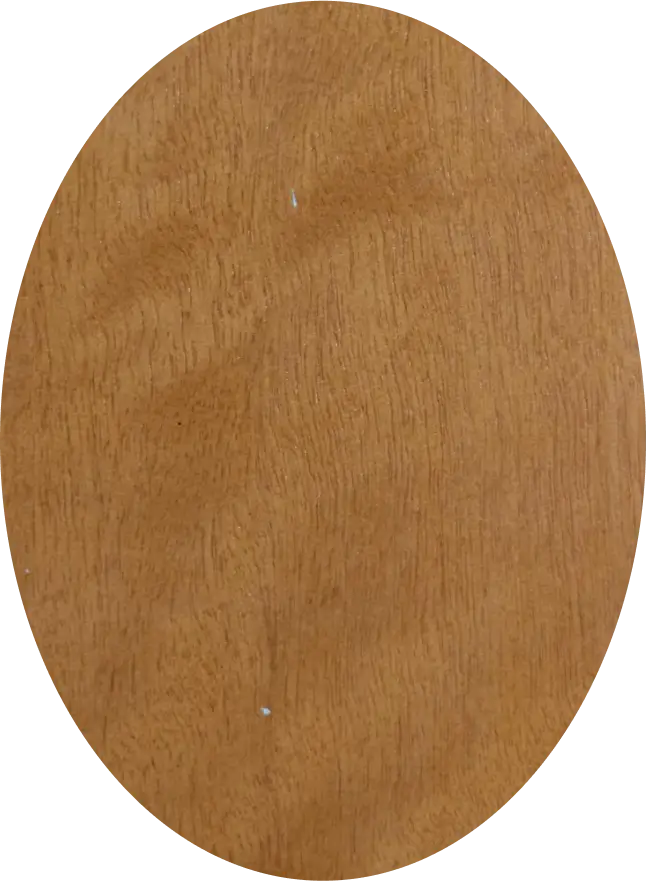
KOA
WOOD
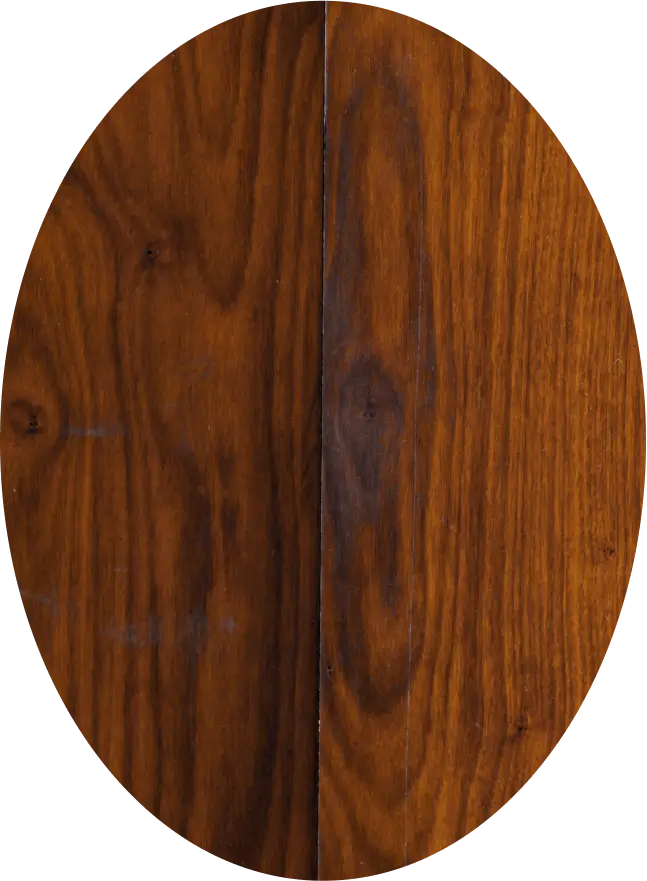
ASIAN
WALNUT
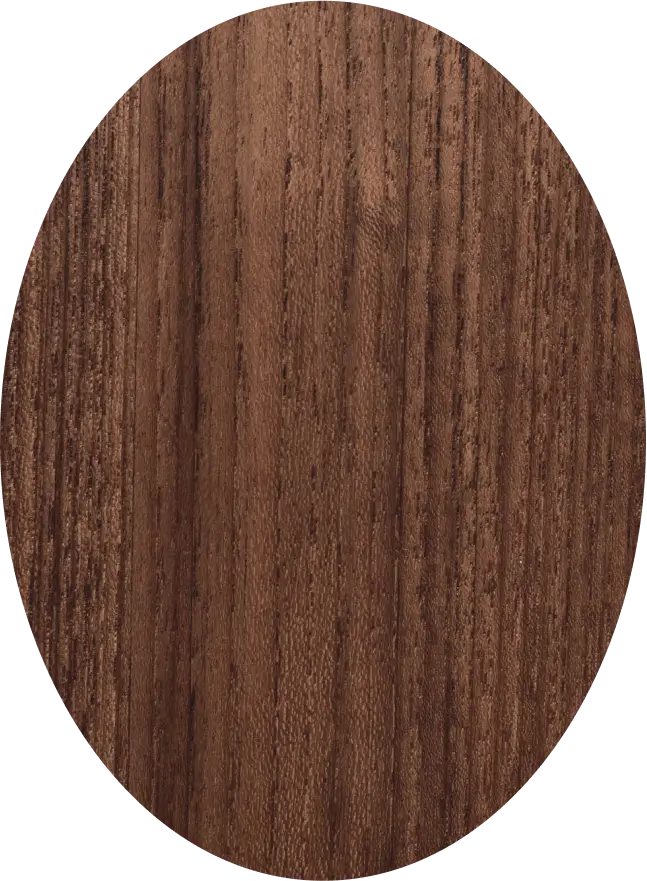
AUSTRALIAN
BLACKWOOD
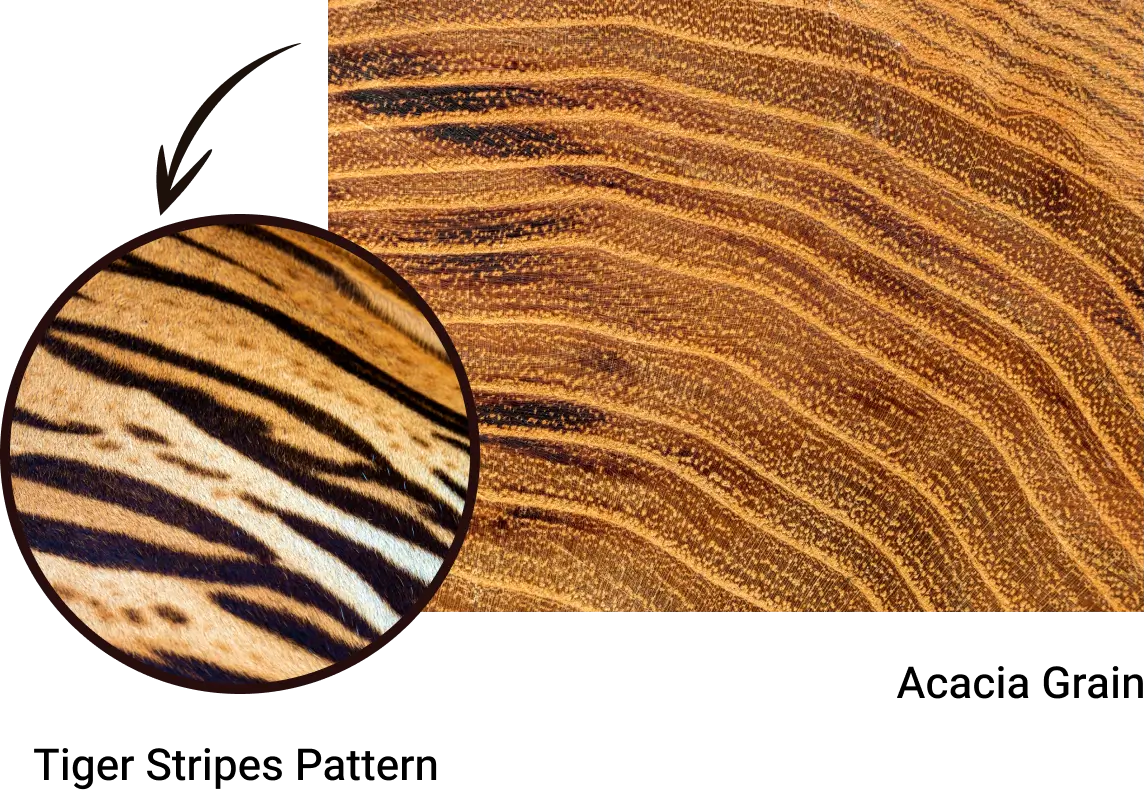
Acacia’s grain features a broad pattern with a blend of woody hues. It can sometimes showcase patterns that are just like tiger stripes!
In terms of texture, acacia has a medium to coarse feel that is often a little rough and sometimes uneven. This makes it relatively tricky to work with because only special tools can properly cut, sand, and finish it.
However, the process of finishing acacia wood is well worth it because of the incredible qualities it offers.
Here are some of the key benefits you get from acacia:
 Durable
 Moisture Resistance
 Antibacterial
 Budget-Friendly
 Low Maintenance
Durability
How Teak & Acacia
Stand the Test of
Time
Teak VS Acacia
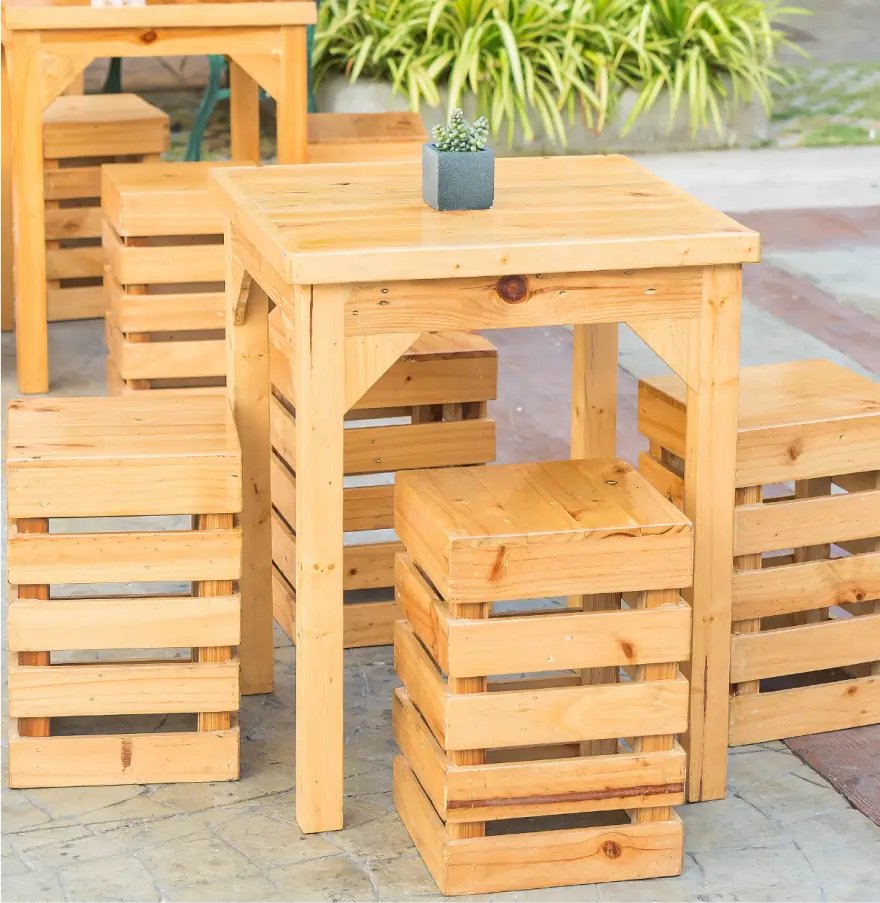
When it comes to durability, both teak and acacia come pretty close, but who wins the race in the long run?
Durability is among the most important factors to consider when deciding on the right wood for your outdoor furniture. Understanding what conditions each wood is suited to, what elements they can withstand, and evaluating their overall longevity will help you choose a wood that suits your needs while ensuring it will reliably withstand your outdoor climate.
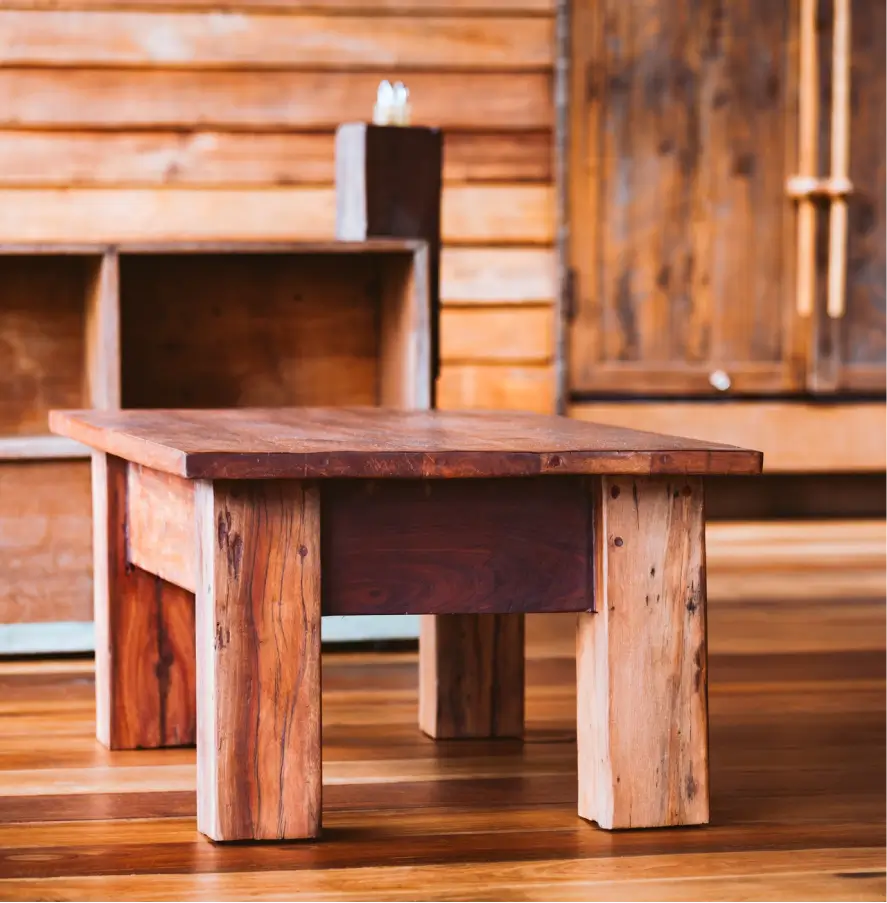
Let’s find out more about teak and acacia wood’s durability below…
Teak VS Acacia
Teak’s Durability
Teak Wood the Ultimate Outdoor Material
Teak wood has an incredibly high oil content and a tight grain structure which go hand-in-hand to create an indestructible barrier that can repel water, pests, rot, and fungal growth. Teak is also packed with silica which safeguards the wood from wear and tear, including warming and cracking caused from weathering.


Water Protection

Pest Protection

Rot Protection

Fungal Protection
The combination of these qualities makes teak remarkably weather resistant, even in the most extreme climates. Whether your region experiences a high UV index, heavy rain, or severe humidity, teak wood will reliably maintain its integrity for decades.
Teak VS Acacia
ACACIA’S Durability

Density
Comparable
to Marble

Susceptible
to Wear Over
Time

Not Suited
for Humid
Environments
Acacia boasts a density that’s comparable to marble, making it incredibly stable. However, because acacia doesn’t have the same level of oils as teak, it is more susceptible to wear down over time. While acacia is moisture resistant, it’s not water resistant like its counterpart, meaning it’s less suited to extremely humid and wet environments.
In fact, if you expose acacia to moisture for too long, it will end up warping and softening over time, inevitably leading to a loss of integrity. However, with the right upkeep, such as regular coating and routine oiling, acacia could last longer.

Coating on wood
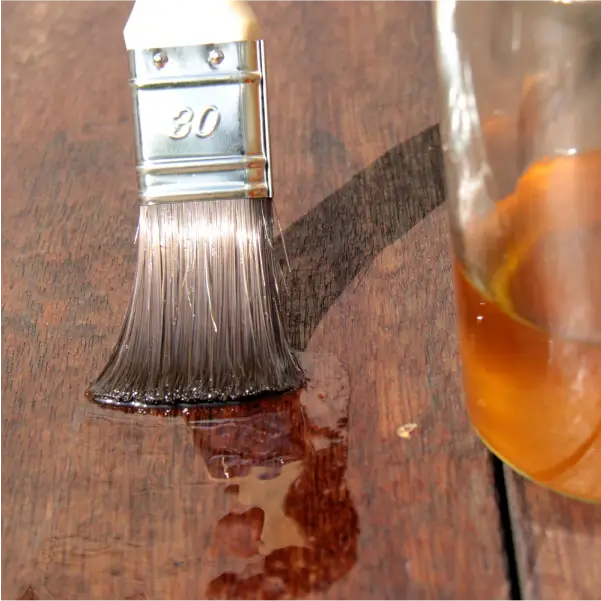
Oiling on wood
Aesthetic
Appeal
Color, Grain, & Aging
Process
Teak VS Acacia
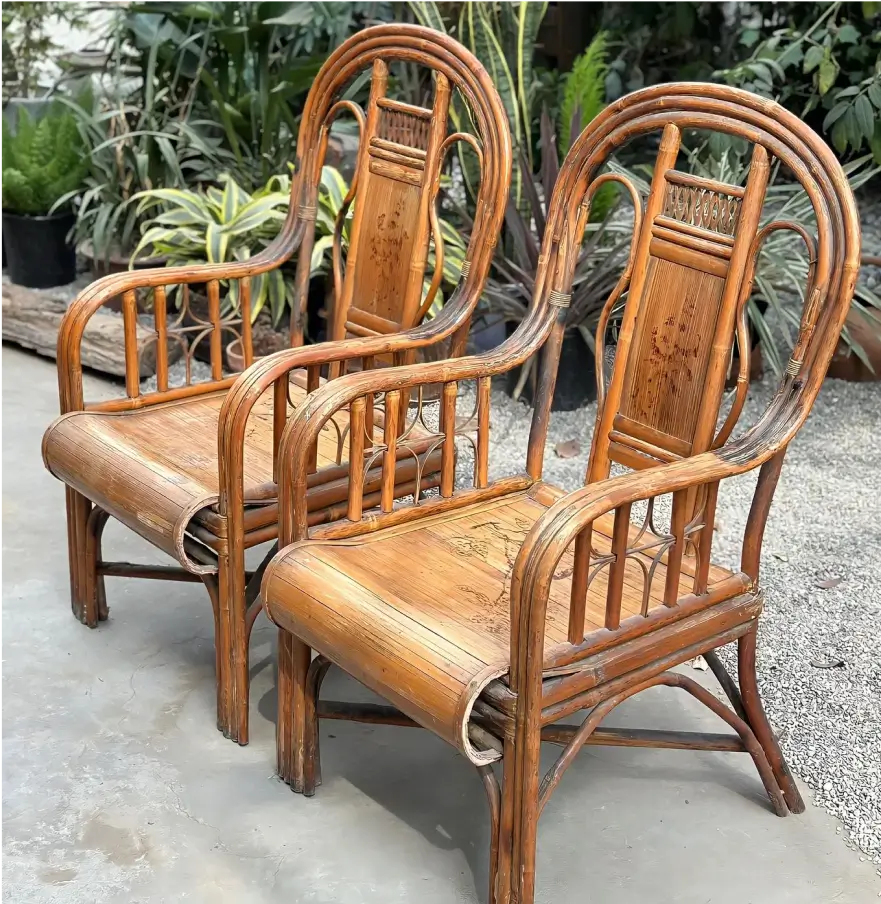
Both teak and acacia wood boast their own natural beauty that’s characterized by distinct colors, grain patterns, and aging processes. Depending on your personal taste and home exterior, one of the two woods might appeal more to you.
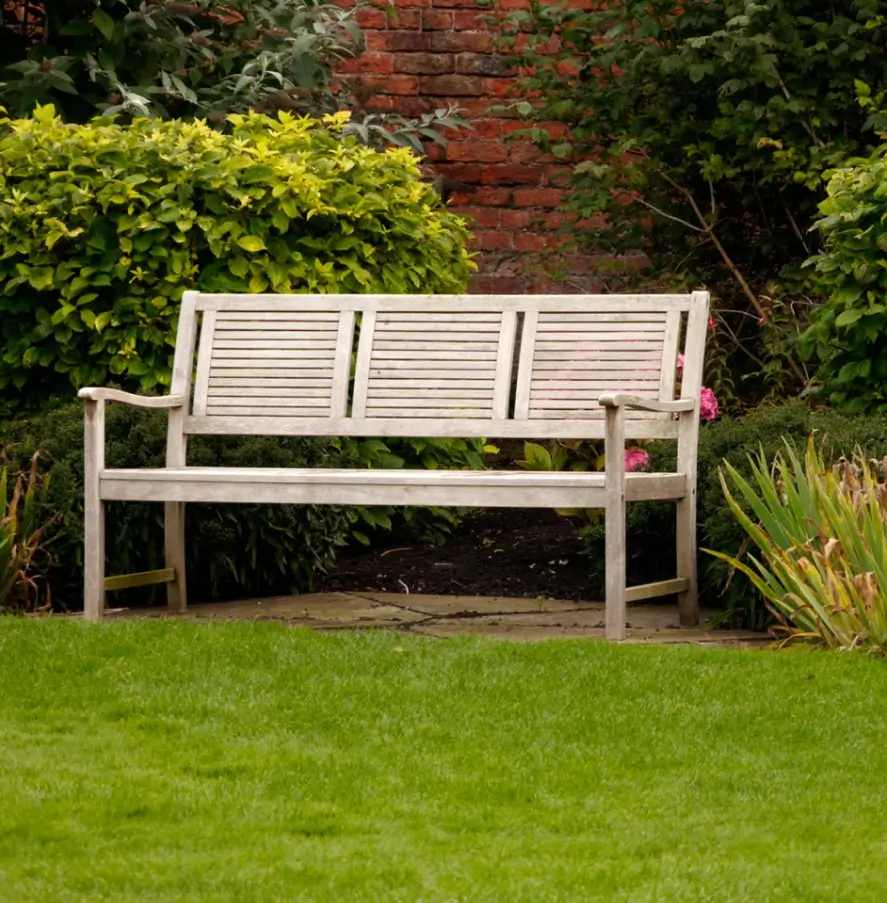
In order to decide on which appearance best matches your need, it’s worth thinking about what kind of aesthetic you want to achieve in your outdoor space. Is it modern and minimal? Or, perhaps, eclectic and bold?
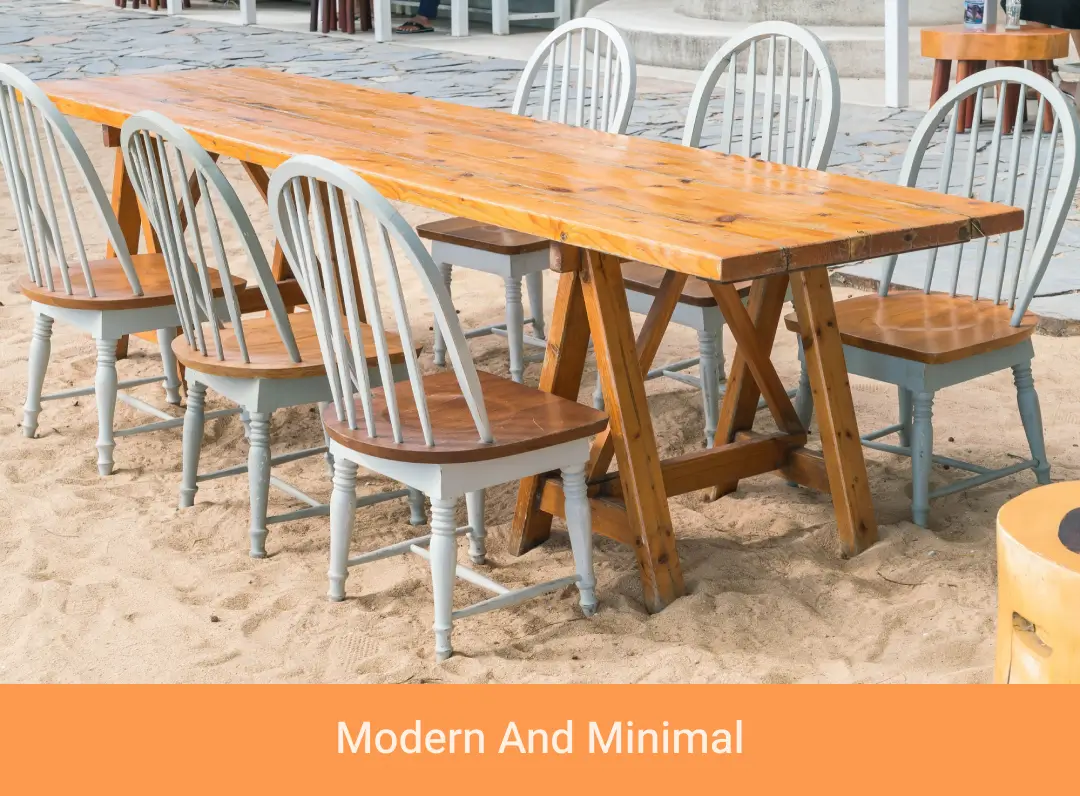

Creating a moodboard can help you define a solid vision for your backyard, and thus, decide on a wood that best aligns with your desired aesthetic.
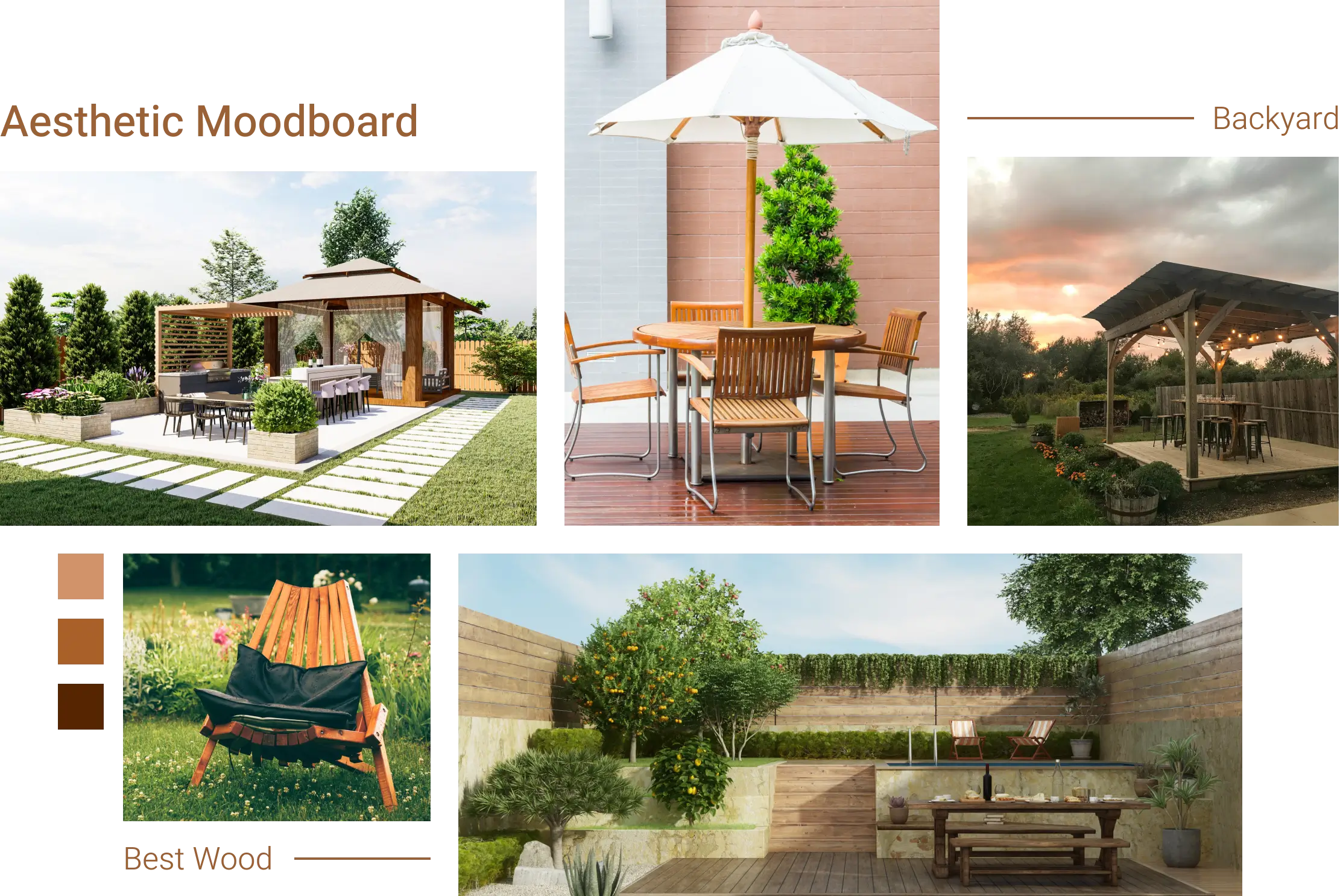
Let’s See What Teak And Acacia Offers…

01
Teak’s Appearance
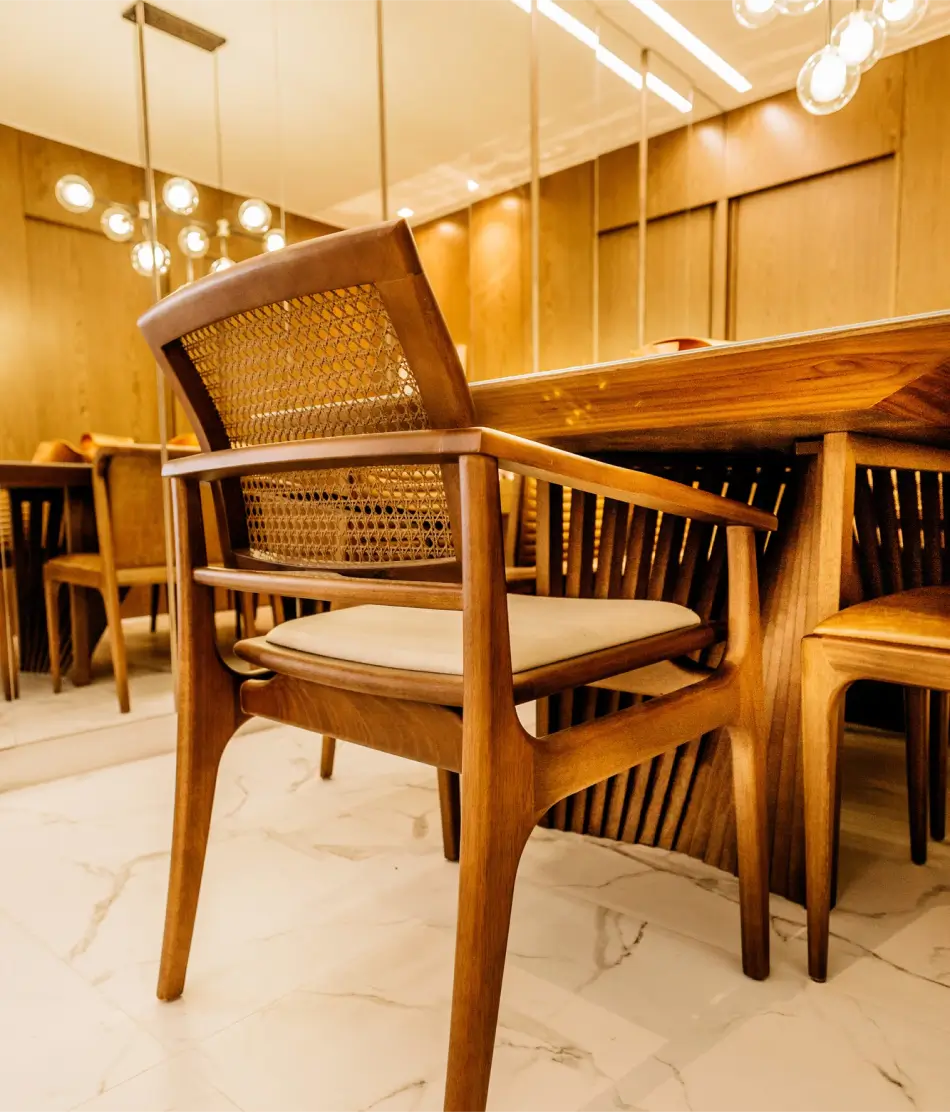
Because teak wood radiates luxuriously golden, honey hues, it’s a perfect choice for anyone after an elegant and sophisticated wooden furniture. Minimalist enthusiasts also adore teak for its understated grain pattern which subtly uplifts any space without being too distracting.
Additionally, its tight grain creates a silky, lustrous look which undoubtedly looks high-end – perfect if you have a taste for the finer things in life!
02
Acacia’s Appearance
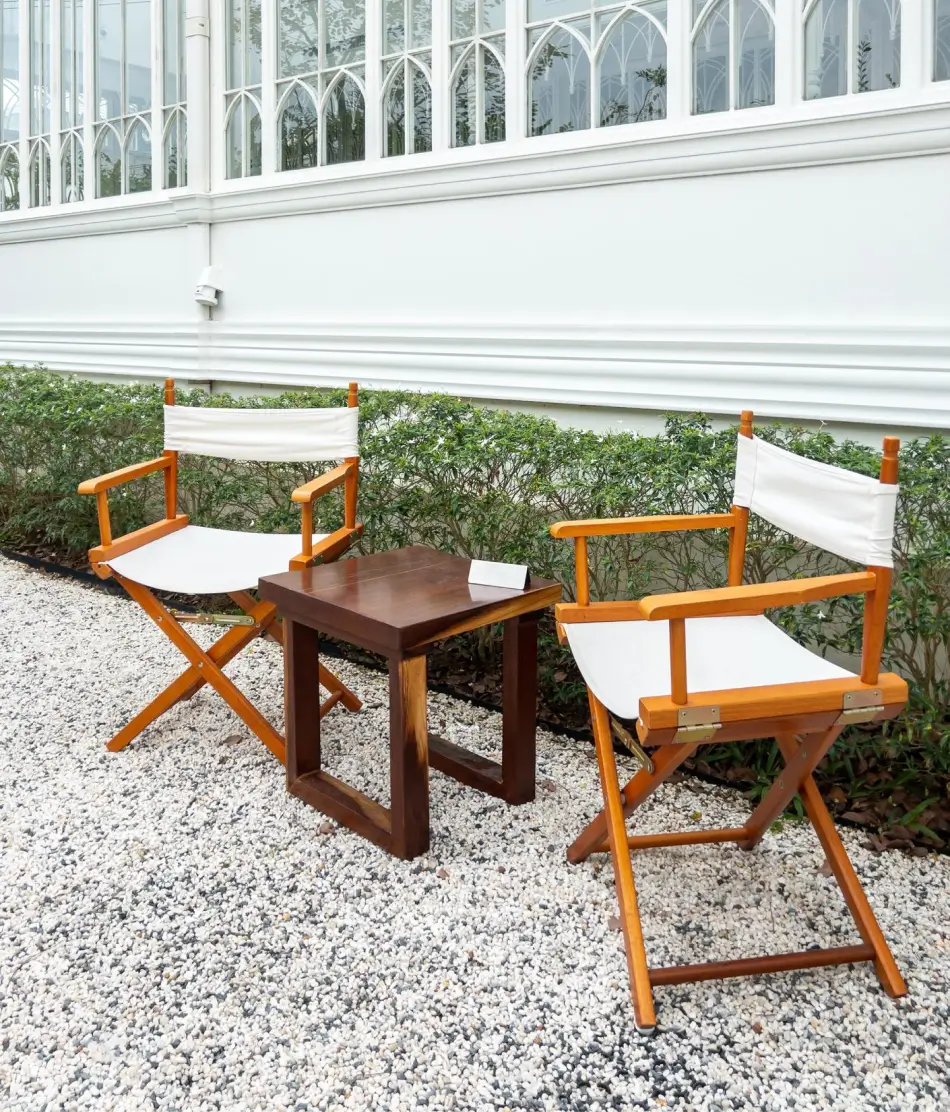
Acacia comes in a variety of colors, ranging from deep, rich brown to a muted amber. So, if you want to diversify your outdoor space to create a multi-tonal exterior, acacia is the only wood you need!
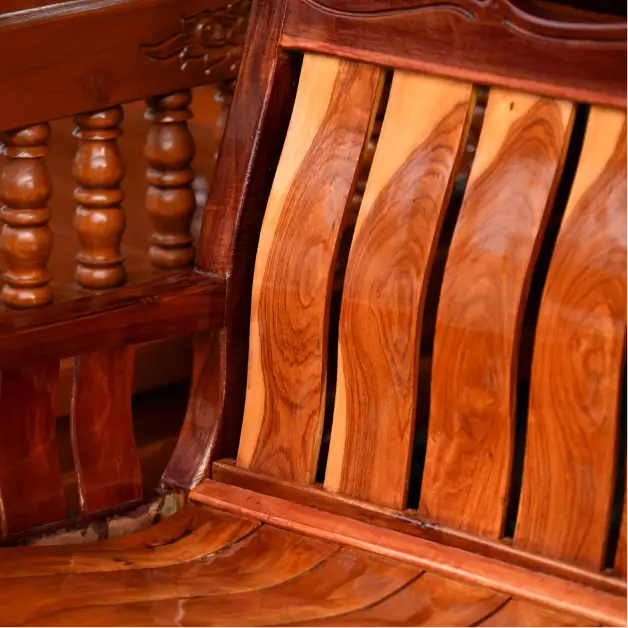
Acacia also showcases a striking grain pattern that’s often compared to tiger stripes or the eyes of a bird. This makes acacia a wonderful match for anyone with a more maximalist taste that’s after an eye-catching finish.
Teak VS Acacia
AGING PROCESS
Both teak and acacia wood age like fine wine, but in very different ways!
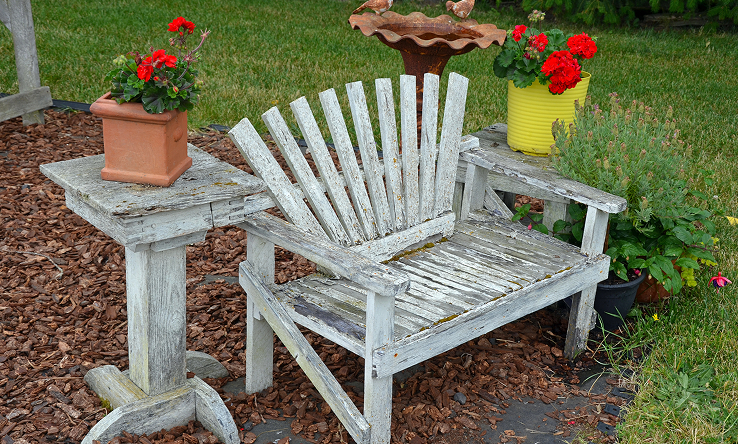
Timeless Beauty of Mature Teak Wood Patina
Overtime, teak wood matures to a silvery-gray patina which is both sleek and timeless. The cool hues of mature teak is often described as understated and calming. It also serves as a versatile complementary additive that harmonizes with a range of cool, gray toned materials, such as metal and stone — a delightful choice for a contemporary slate patio!
Rustic Warmth and Charm of Aged Acacia Wood
As acacia wood gets older, it tends to develop a deeper, richer, and warmer color, which introduces a cozy and rustic appeal to outdoor settings. Also, the radiant warmth of aged acacia beautifully contrasts with verdant plants and vibrant florals, making it a wonderful accent for lush gardenscapes!
It’s important to note that certain factors, like sun and water exposure can dictate how either wood type ages.
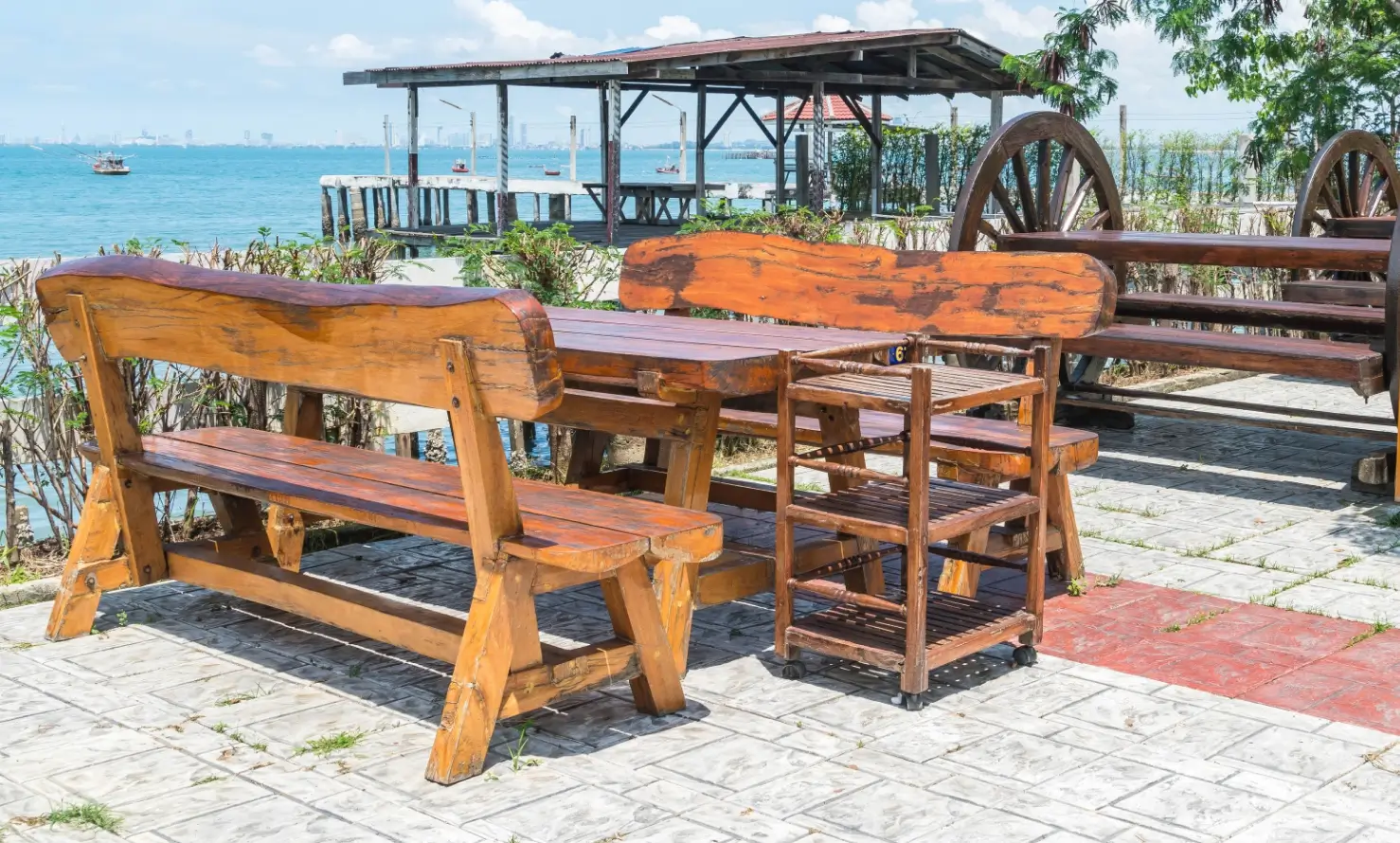
Teak Vs Acacia: Key Differences At A Glance
| ASPECT | TEAK WOOD | ACACIA WOOD |
|---|---|---|
| Mature Color | Silver-gray patina | Deep, rich brown |
| Aesthetic Look | Sleek, timeless & understated | Cozy, rustic & warm |
| Best Setting | Compliments cool tone like metal | Compliments lush gardens |
| Maintenance | Ages well with minimal care | Requires more and good care |
| Mood | Calming & Modern | Inviting & Natural |
Cost
Comparison
Teak VS Acacia
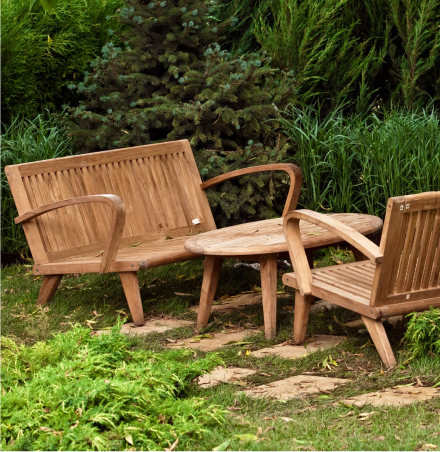
When it comes to cost comparison, acacia stands out as a cheaper option. However, teak’s longevity does make it a justifiable investments in the long run.
If you’re wondering why acacia is cheaper than teak, or whether it’s worth paying the bigger price for teak, explore below:
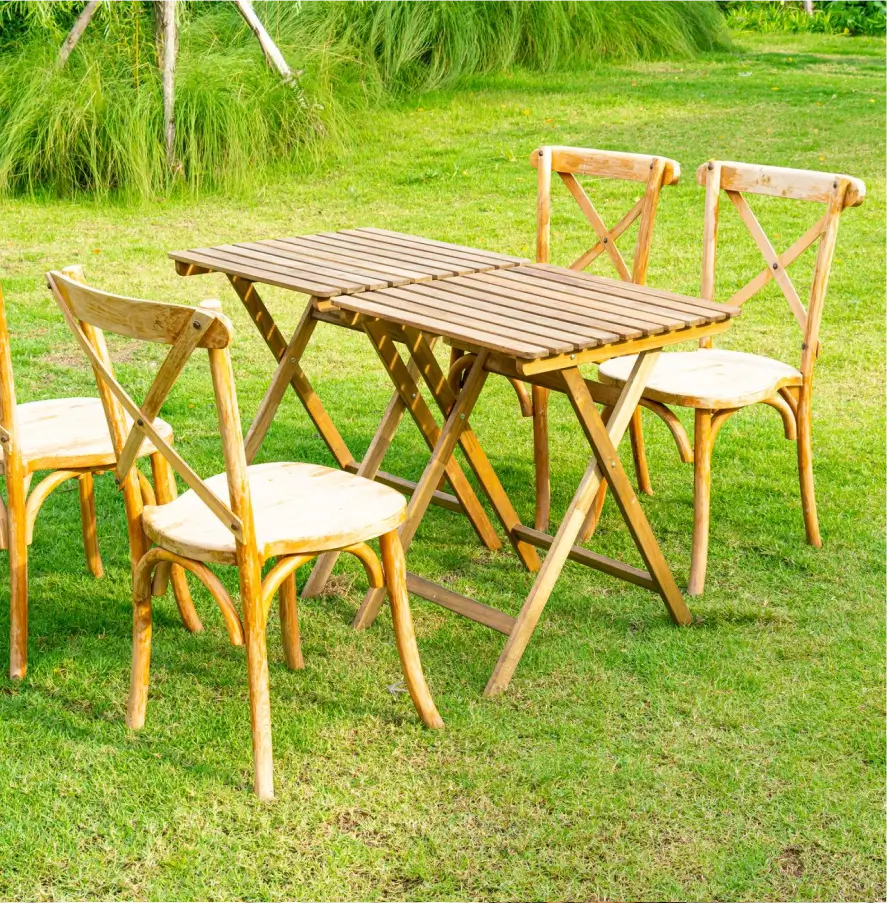
Teak VS Acacia
Why Teak Is Expensive
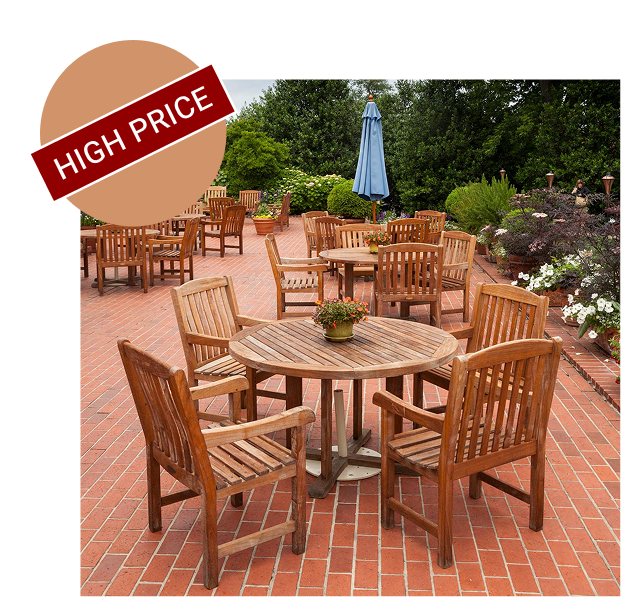
Uncovering the High Price of Teak
There are a few main reasons that bump the price of teak wood higher than acacia wood. For starters, teak wood requires lots of labor in order to grow and harvest. Teak is also imported from Southeast Asian regions, like Indonesia, Thailand, and Malaysia. Because teak wood is tricky to harvest, its availability is limited, further adding to its costly price tag.
Factors Behind Teak’s Higher Price

Labor Intensive Harvesting

Southeast Asia Origin
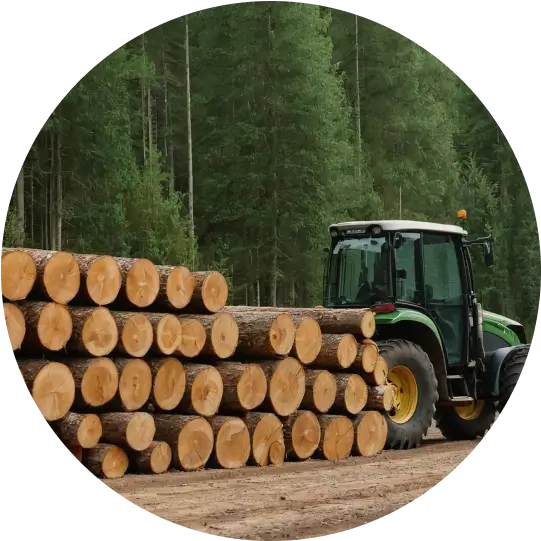
Limited Availability
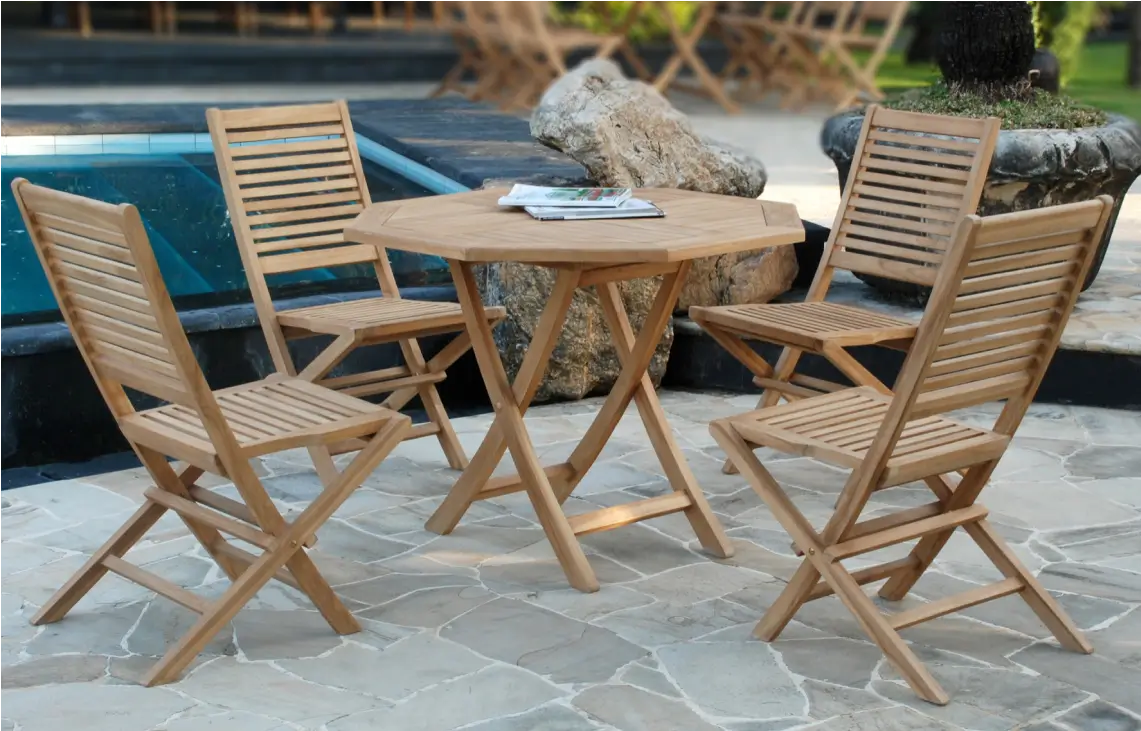
While teak wood might be the more expensive option, its exceptional durability, premium quality, and visual beauty makes it a worthwhile investment that will certainly grace your outdoor space for many decades.
Teak VS Acacia
Acacia as a Budget-Friendly Option
Acacia grows in abundance, particularly in specific areas of America, making it much cheaper to transport as international import fees are out of the picture. It’s also super fast-growing and relatively simple to harvest, and therefore cheaper to buy.
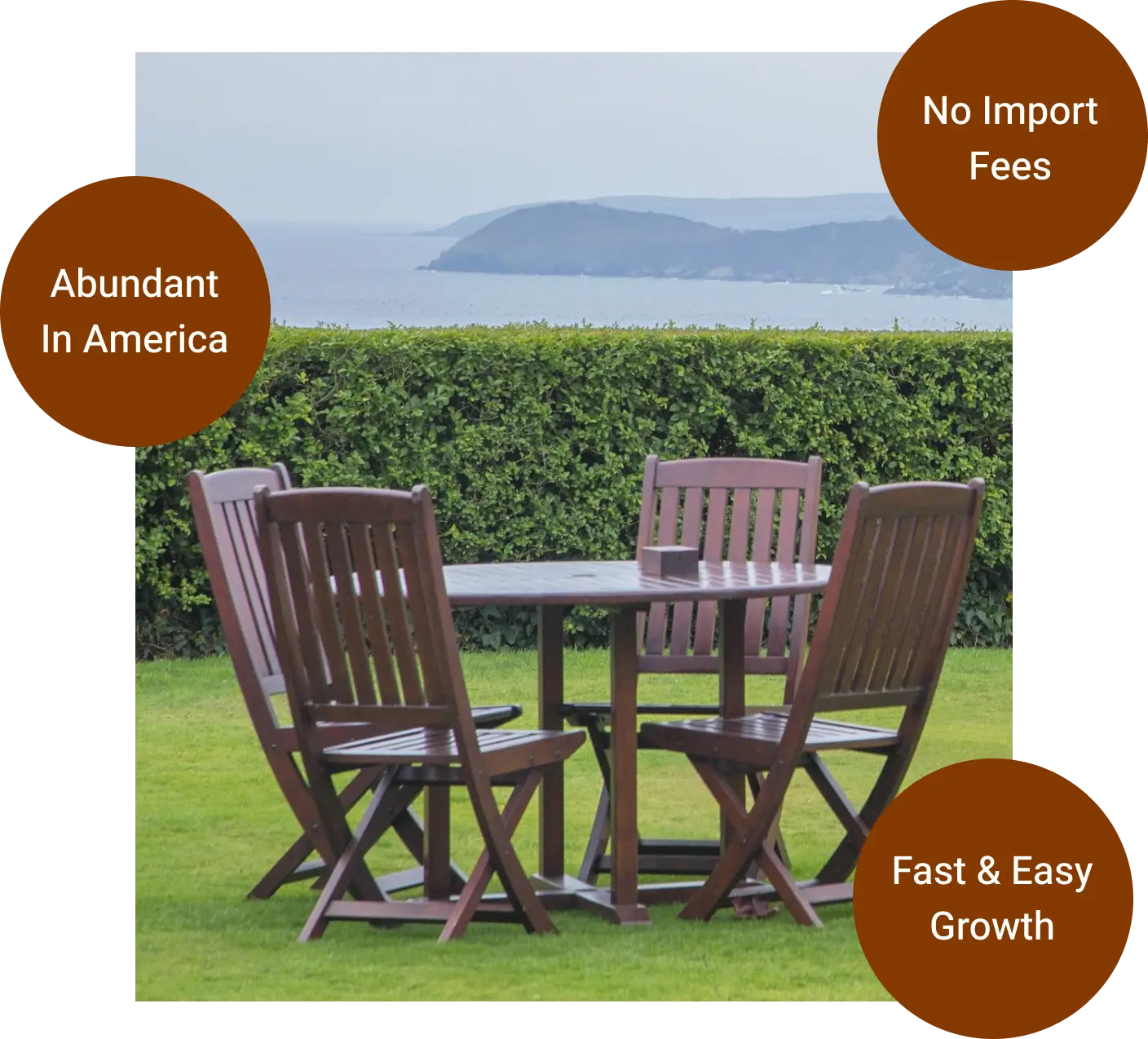

In fact, if you browse around for acacia furniture, you’ll find that it’s around $10 per board foot, which is $40 cheaper than teak!
Sustainability &
Environmental
Impact
Teak VS Acacia
When choosing wood for your outdoor furniture, there’s one factor that everyone should consider: sustainability.
Choosing a wood type that’s kind on the environment and has minimal impact is the best way to minimize your carbon footprint and and promote eco-friendly practices. Let’s see whether teak or acacia is more sustainable…
Teak VS Acacia
Teak Sustainability
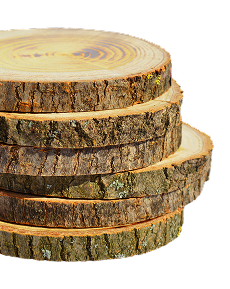
When properly grown in its native forests, teak has a pretty low impact, thanks to carbon sequestration and carbon storage in the tectona grandis tree’s roots. However, the high demand for teak wood has resulted in poorly managed forests that aren’t certified and therefore don’t follow ethical logging practices. This means biodiversity is damaged.
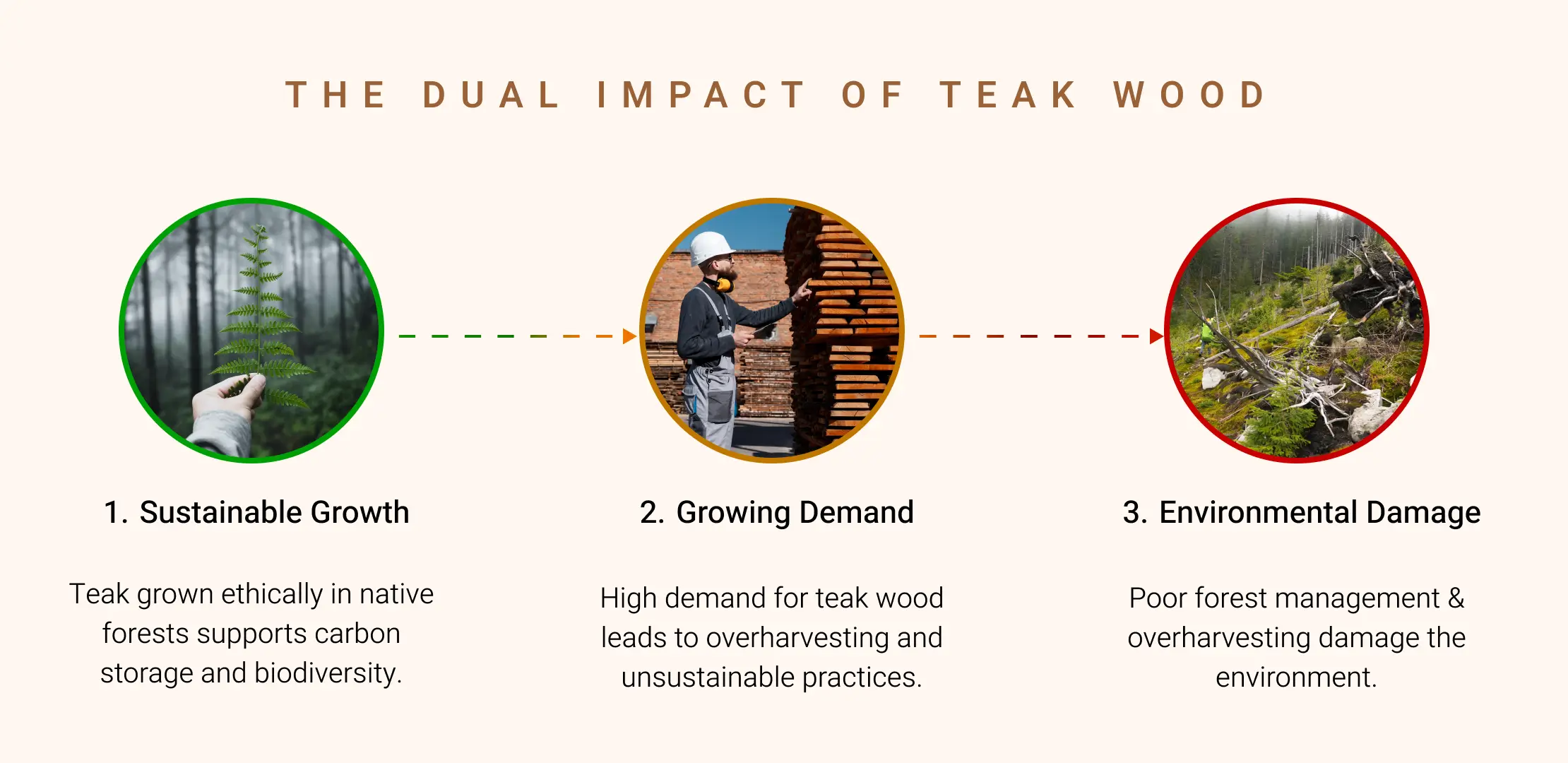

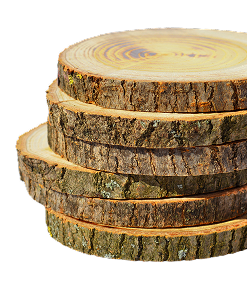
Additionally, because teak wood only grows in specific areas of South Asia, it requires overseas transportation to far away lands, like Europe and the US. This contributed to greenhouse gas emissions, causing a greater carbon footprint.
Despite the potential drawback of teak wood being illicitly farmed and the CO2 emissions caused from shipment, teak is actually relatively sustainable when harvested properly.
In hindsight, the exceptional longevity of teak wood means it does not need to be frequently replaced, therefore reducing the long term demand for new resources.
Teak VS Acacia
ACACIA Sustainability
When it comes to sustainability, acacia wood excels.
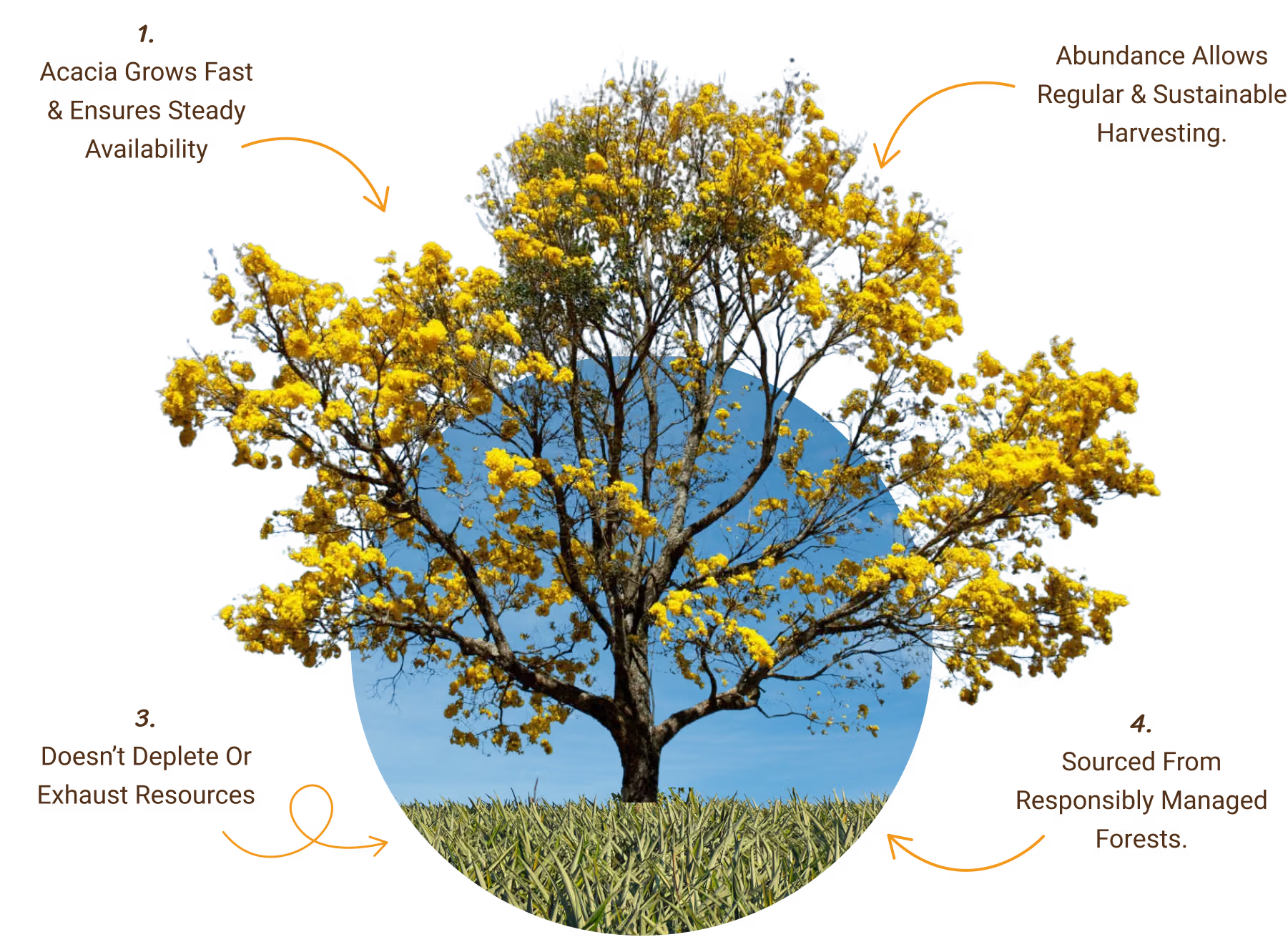
Acacia grows fast and in abundance, meaning it can be harvested regularly without exhausting or depleting resources. It’s also more regulated than teak wood and therefore more likely to come from responsibly managed forests that follow responsible forestry practices that respect the environment.
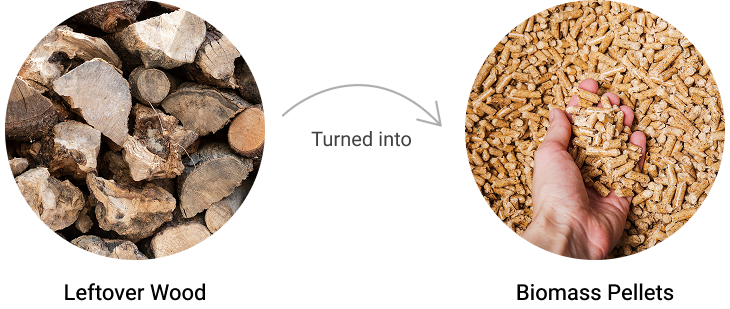
When harvesting acacia, it’s common for any leftover wood to be turned into biomass pellets rather than thrown away, resulting in less waste — this also supports fossil-free energy!
The transportation of acacia is the part where the most CO2 is released. However, this doesn’t compare to the emissions from transporting teak as acacia is grown domestically in the US.
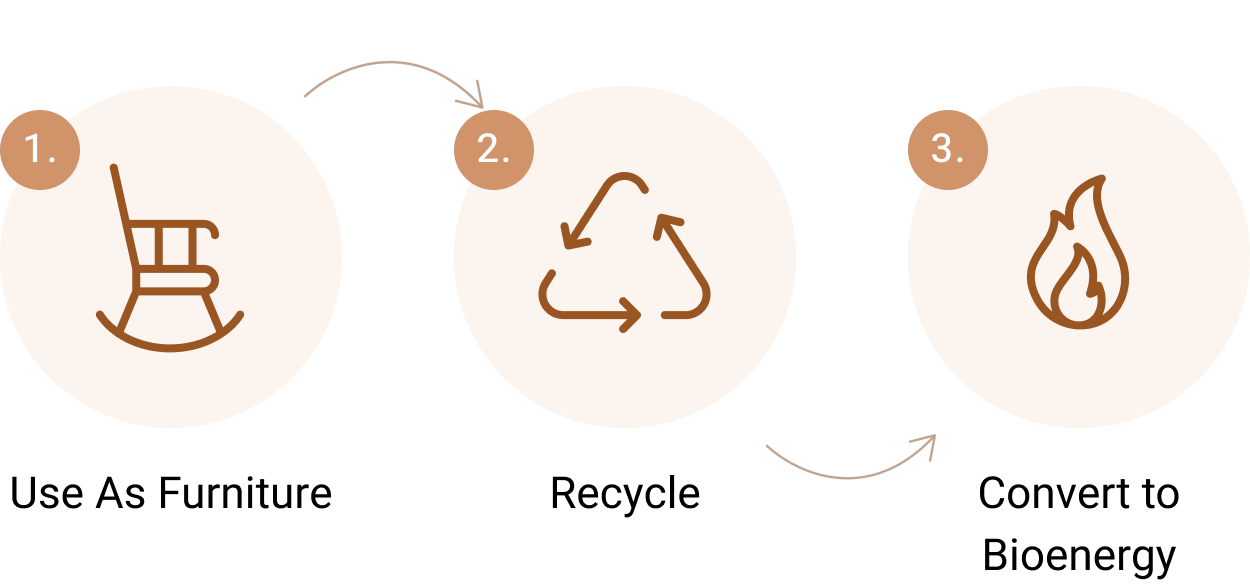
From Furniture to Bioenergy
Furthermore, when acacia has served its time as furniture, it can be recycled and used as bioenergy, which minimizes waste.
Maintenance
Requirements for
Teak & Acacia
Furniture
Teak VS Acacia
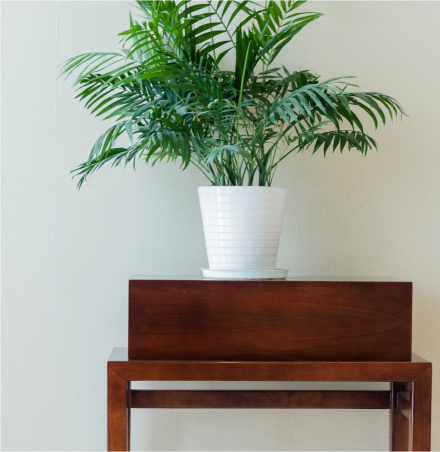
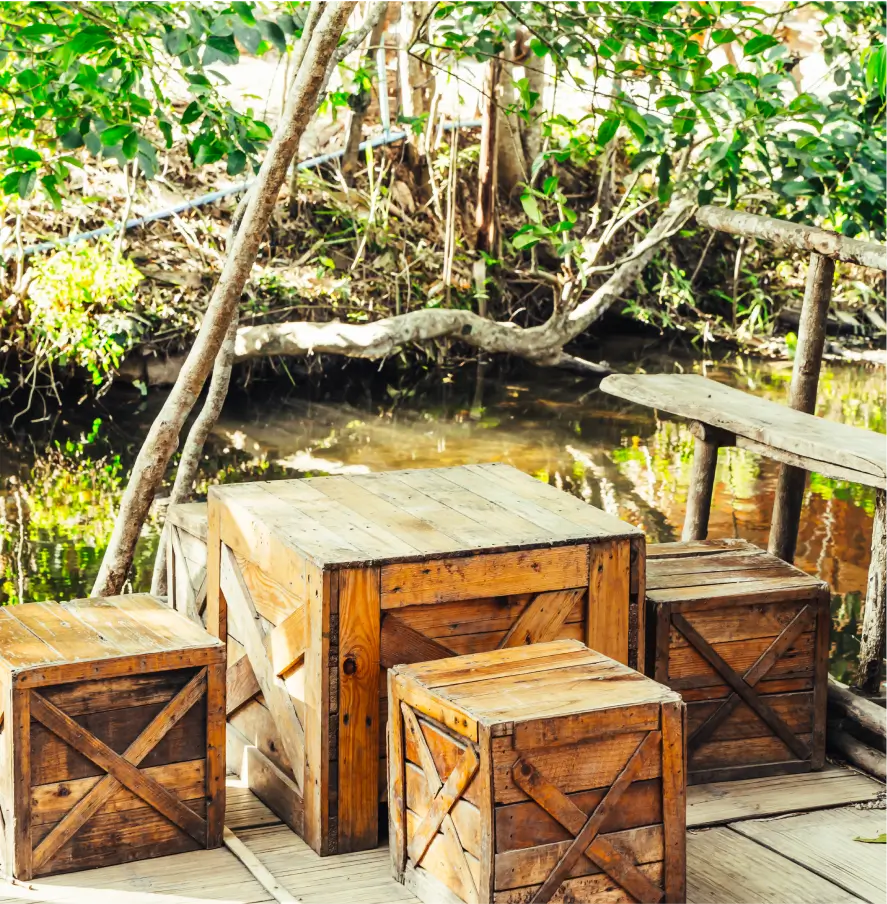
In general, teak and acacia wood are fairly minimal fuss when it comes to care and upkeep, thanks to their impressive durability and overall resilience.
Let’s see which wood is easier to maintain…
Teak VS Acacia
Teak Maintenance
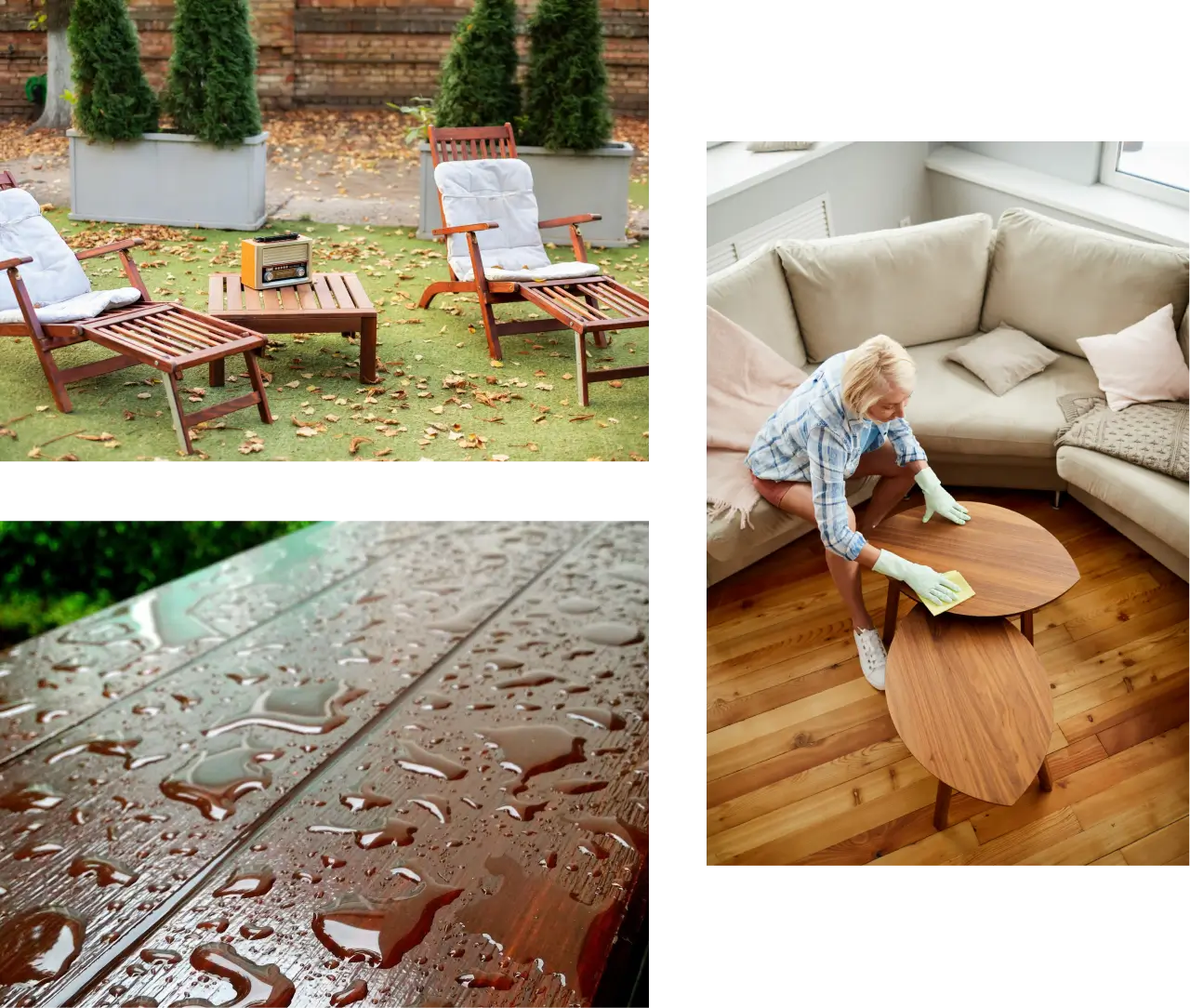
Effortless Care and Lasting Durability of Teak Wood
Because of teak wood’s impeccable weather resistance and overall density, it’s an incredibly low maintenance material and easy to care for. Compared to other types of outdoor wood, teak is among the easiest to care for, making it perfect for anyone who’s too busy for constant upkeep.
Here are some common teak wood maintenance requirements:
01
Routine Cleaning
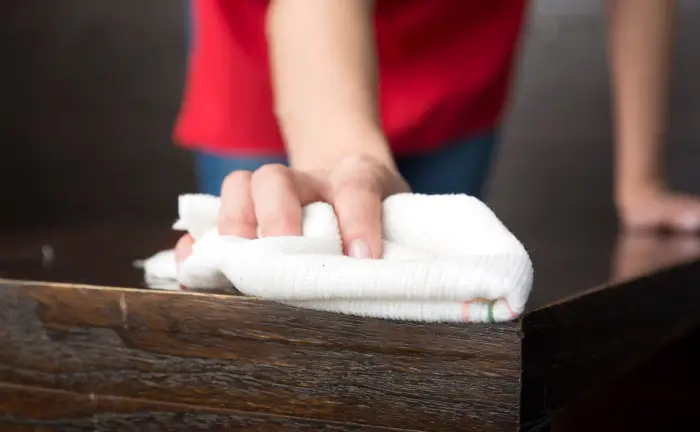
To keep teak wood looking its best, it needs an occasional wipe down with a damp cloth or soft brush to remove any spills, built-up dirt, and dust.
02
Protect from Harsh Weather

While teak is incredibly hardy, it’s still a good idea to cover it from excessive sun, rainstorms, snow, and hailstones.
03
Oiling
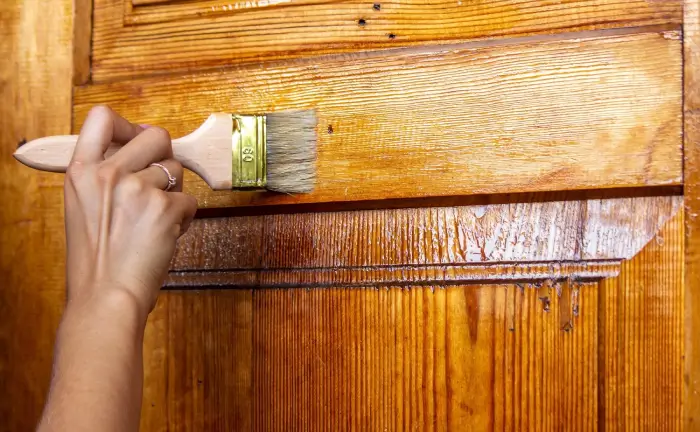
While this step isn’t a necessity, it will certainly keep your teak furniture looking lustrous and rich in color!
Teak VS Acacia
ACACIA Maintenance
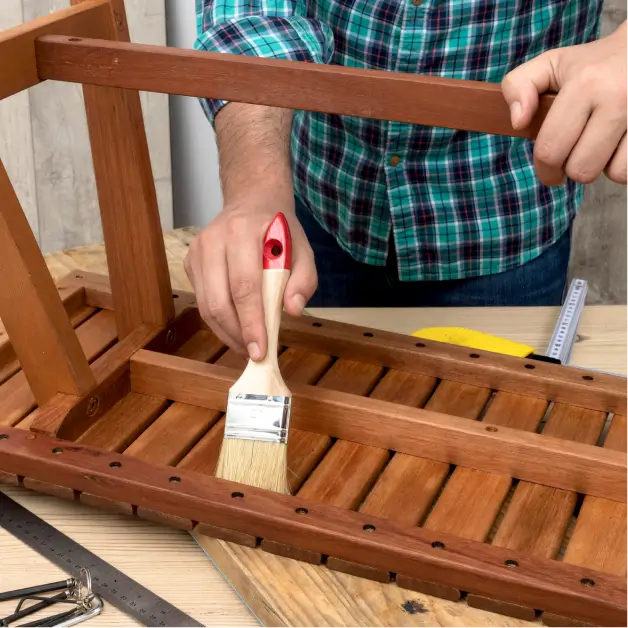
Because acacia is less resistant to the outdoors than teak, it needs a little more TLC in order to stay looking its best. While they do require more care, it’s certainly worth it considering how beautiful the wood looks. However, if you’re after an easy-going, low maintenance material for your outdoor furniture, acacia may not be your best match.
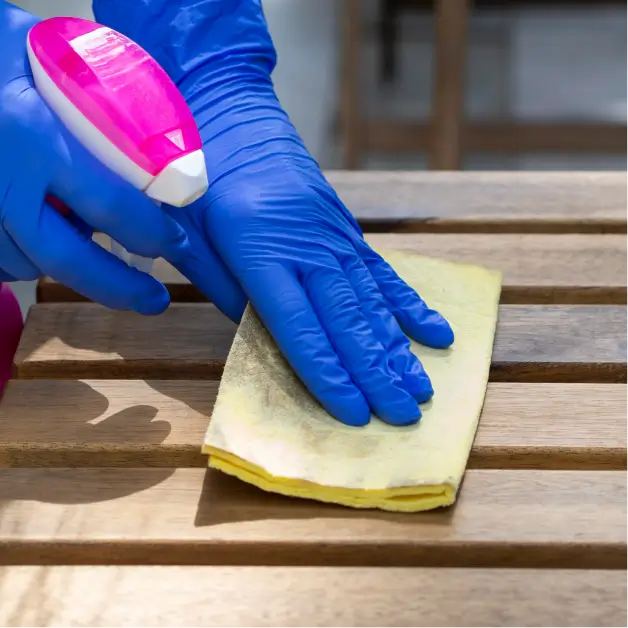
Step 1:
REQUIRES MORE
CARE
Step 2:
MAINTAIN
REGULARLY
Step 3:
ACHIEVE STUNNIG
RESULTS
Here are the main care needs of acacia wood:

01
Regular Cleaning
Unlike teak wood which only needs the occasional wipe down, acacia requires routine cleaning with a soft cloth or brush and mild soap. This is because acacia is slightly more susceptible to staining.

02
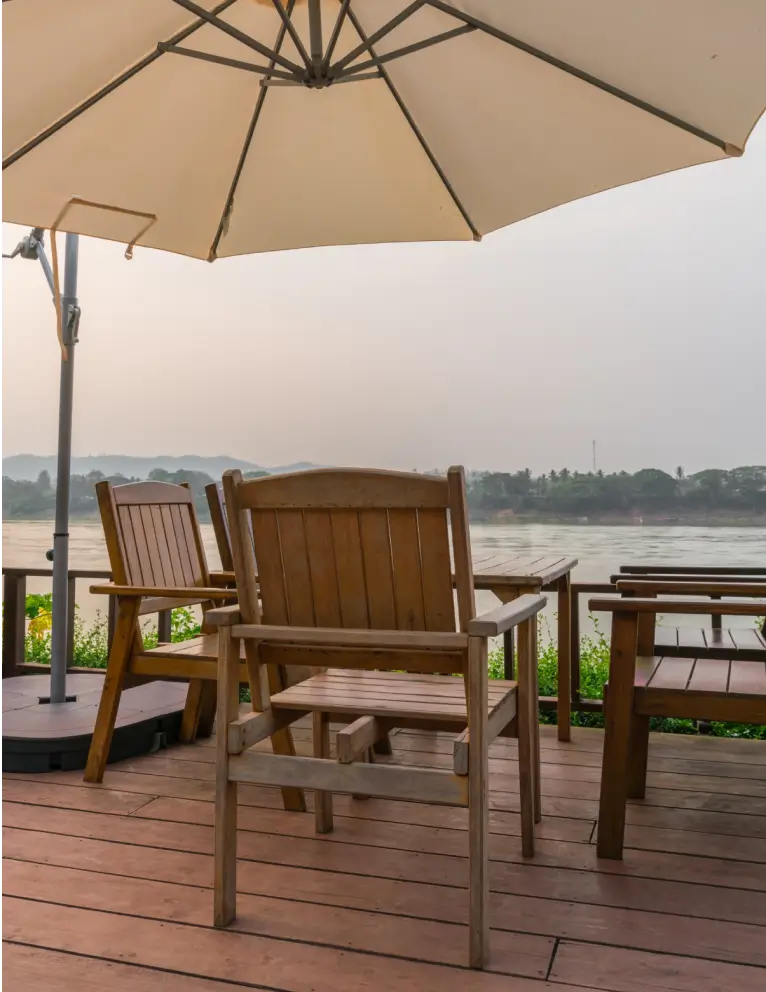
Protect from Rain
Because acacia is only moisture resistant, rather than water resistant, it needs to be protected from rainfall and heavy humidity. You can do this by covering acacia furniture with waterproof outdoor covers.
03
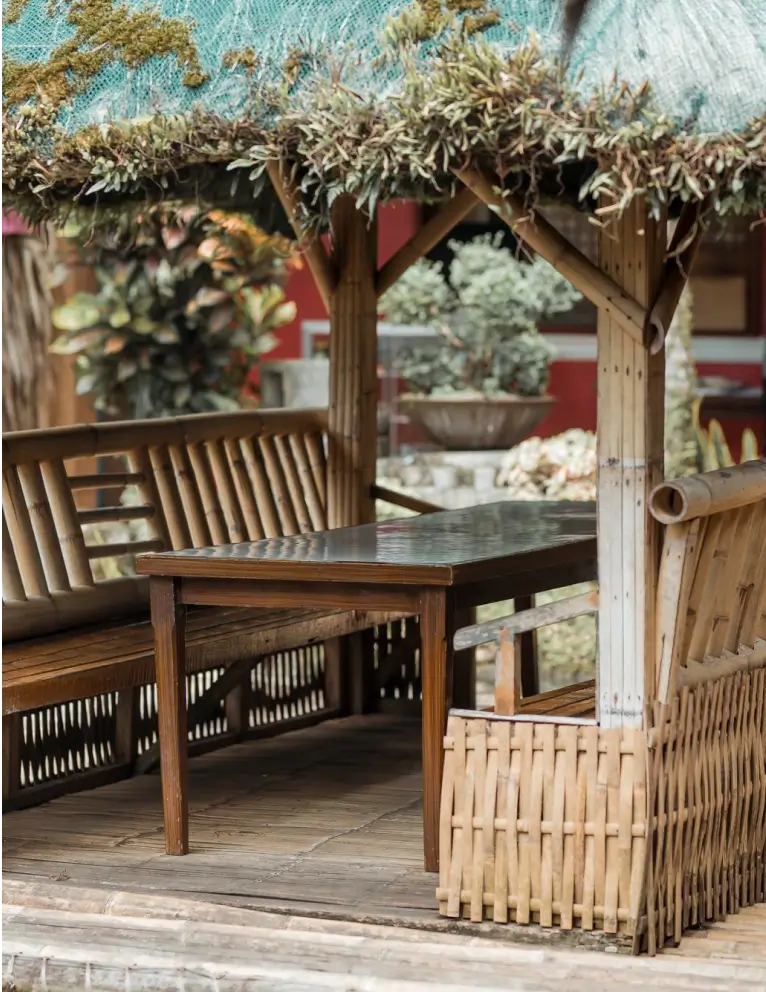
Keep Out of Direct Sunlight
Direct sunlight can cause acacia to lose its rich color and even lead to drying and cracking, which will damage the integrity of furniture. The best way to protect outdoor acacia furniture from the sun, is by placing it in heavily shaded areas, such as beneath a pergola.
04
Routine Oiling
Furniture crafted from acacia wood needs to be regularly sealed with oil, especially when kept outdoors. This is to protect it from drying out and cracking, and to maintain its moisture resistance.

05
Keep Away from Extreme Temperatures
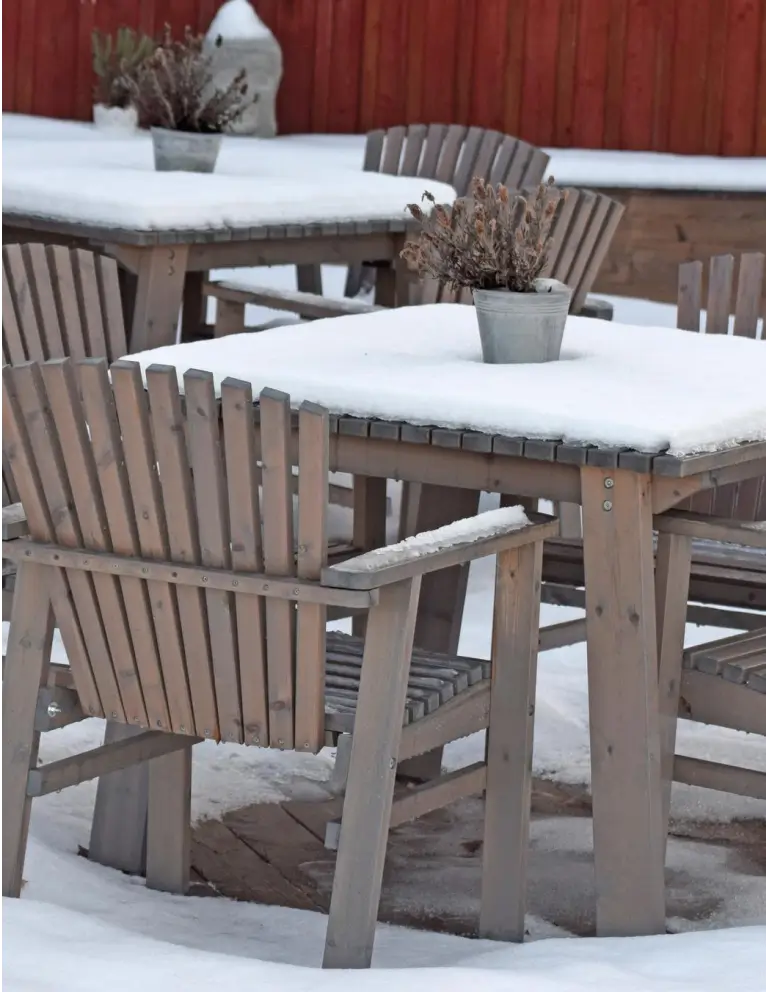
Extremely cold or scorching hot temperatures will warp and crack acacia, so it’s essential to keep it away from such conditions. If you experience heat waves in the summer or frost and snow in the winter, make sure you take any acacia furniture indoors before any extreme weather kicks in. You should also keep acacia away from outdoor appliances, such as BBQ grills, or fires as this heat can also cause damage.
Water
Resistance &
Weathering
Teak VS Acacia

When deciding on the right wood for your outdoor furniture, it’s essential to consider which type will best tolerate your local climate.
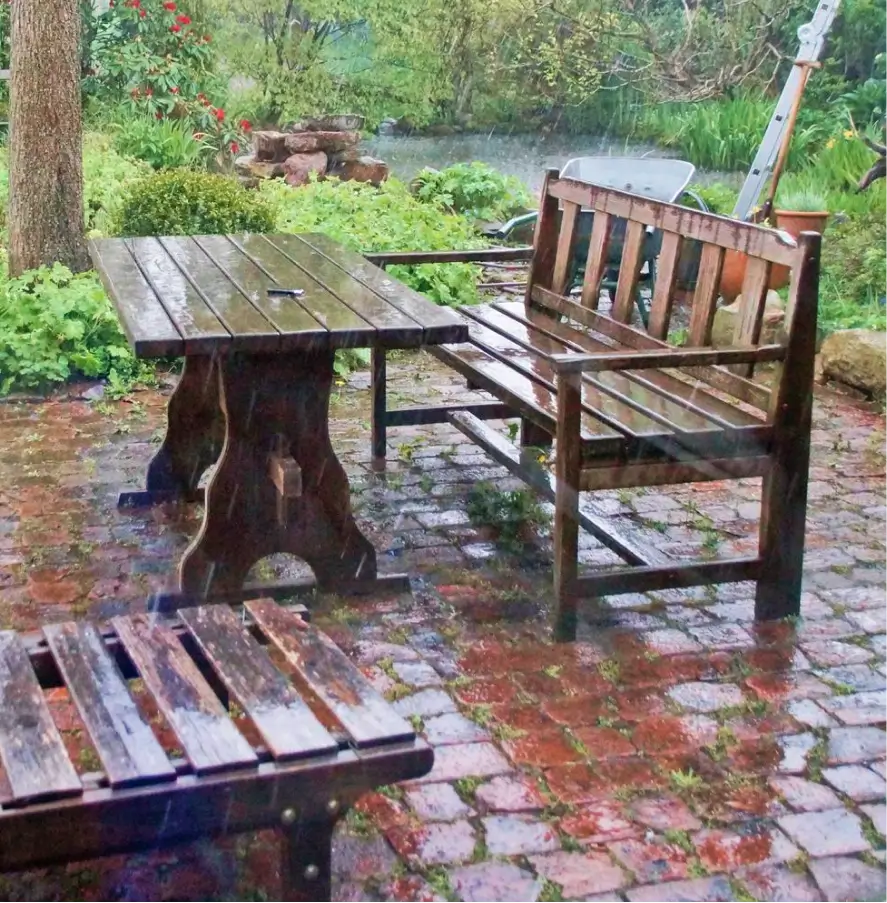
If you live in a highly humid area that gets lots of rainfall, or if you’re exposed to sea spray by the coast, you should go for a more water resistant wood. Whereas if you live in a relatively dry area with low humidity, a moisture tolerant wood will do just fine.
Let’s see whether teak or acacia wood is best for you…
Teak VS Acacia
Teak's Superior Water Resistance

Teak Wood the Ultimate Choice for Wet and Humid Environments
As we mentioned earlier, teak wood has incredible water resistance, thanks to its high concentration of protective oils. This makes teak wood a perfect choice for outdoor settings that often experience rainfall, or areas that are exposed to the seaside. Additionally, teak’s acidity resistance further makes it a wonderful choice for rainy areas!
Why Choose Teak For Your Outdoors?

Water Resistance
Teak is perfect for rainy settings.

Seaside Suitability
Ideal for areas exposed to moisture.

Acidity Resistant
Withstands tough conditions.
Because of teak wood’s water resistance, it’s more protected against rot, mold, and mildew, which are common byproducts of water seeping into wood. This means your teak furniture will reliably last, even in damp or wet climates.
Teak VS Acacia
Acacia's Moisture Resistance
Acacia Unsuitable For Wet Areas
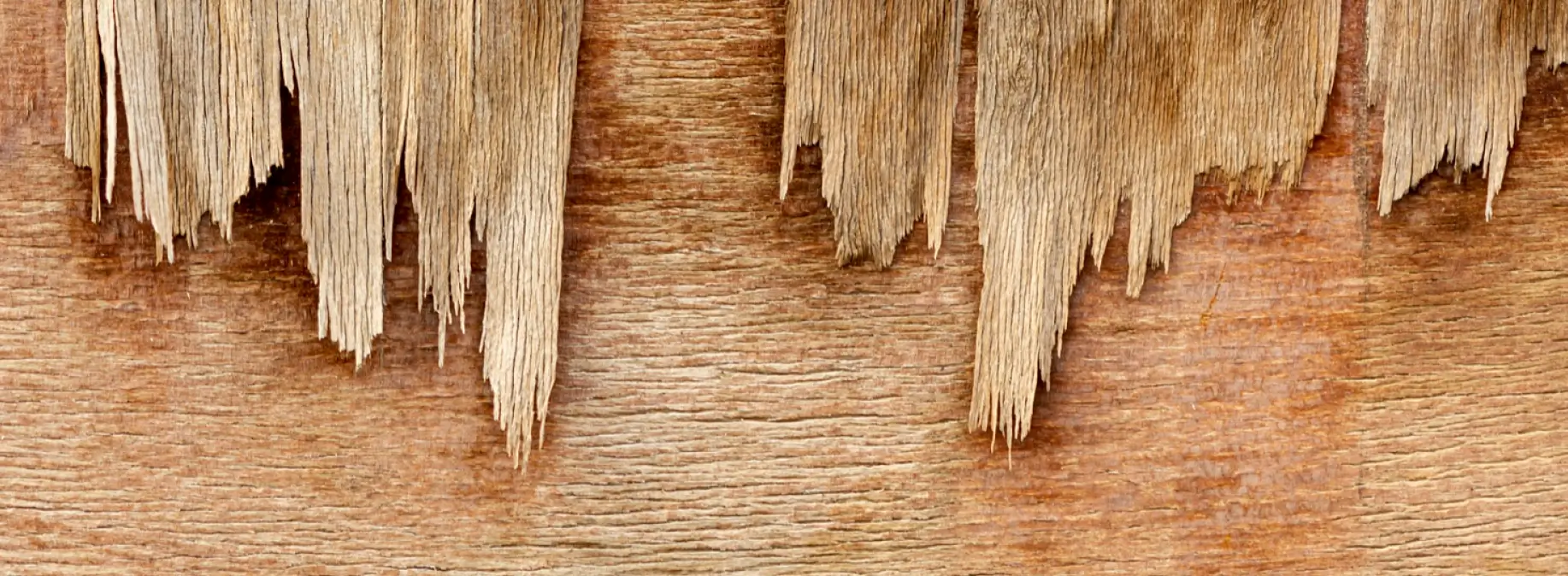

Unlike teak, acacia isn’t water resistant, so it’s not a good idea to choose this wood if you live in a wet or highly humid area.
Acacia’s Key Characteristics At A Glance
While it’s not as waterproof as teak, acacia does have a moderate level of moisture tolerance that can withstand mild humidity. This wood’s moisture resistance combined with its antibacterial and antifungal properties serves as a robust combination that prevents any nasty fungal infections, mold, and mildew growth.
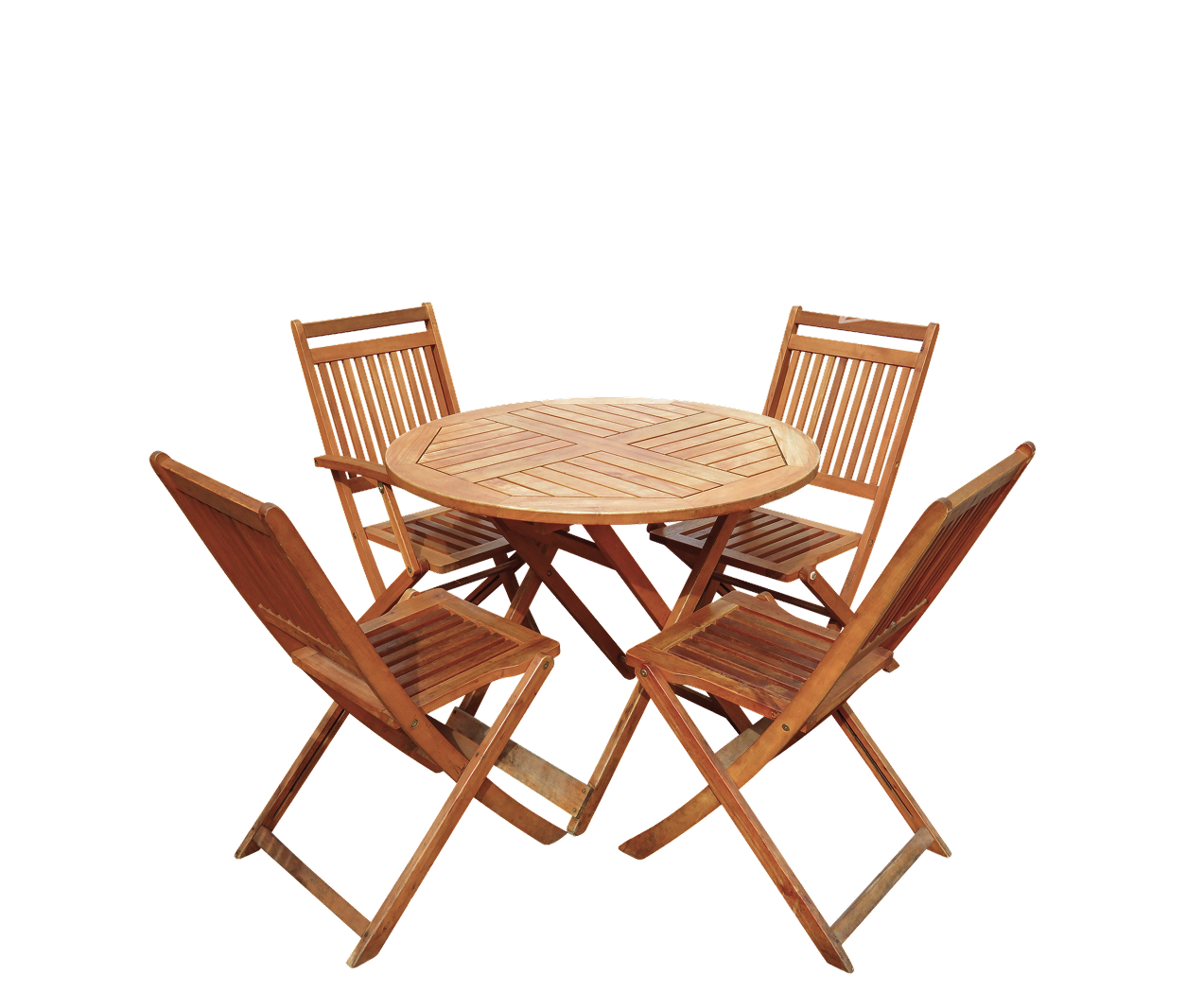
If you live in a drier climate, acacia is a good match. You can also keep acacia wood in shielded outdoor areas, like covered patios or porches.
Which Is More
Versatile?
Teak VS Acacia
Both teak and acacia can be used to craft a range of outdoor furniture. However, both varieties of wood are better suited to different types of furniture, due to their varying densities, durability, and resilience. Here’s an overview of each woods versatility:
Teak VS Acacia
How Versatile Is Teak Wood?
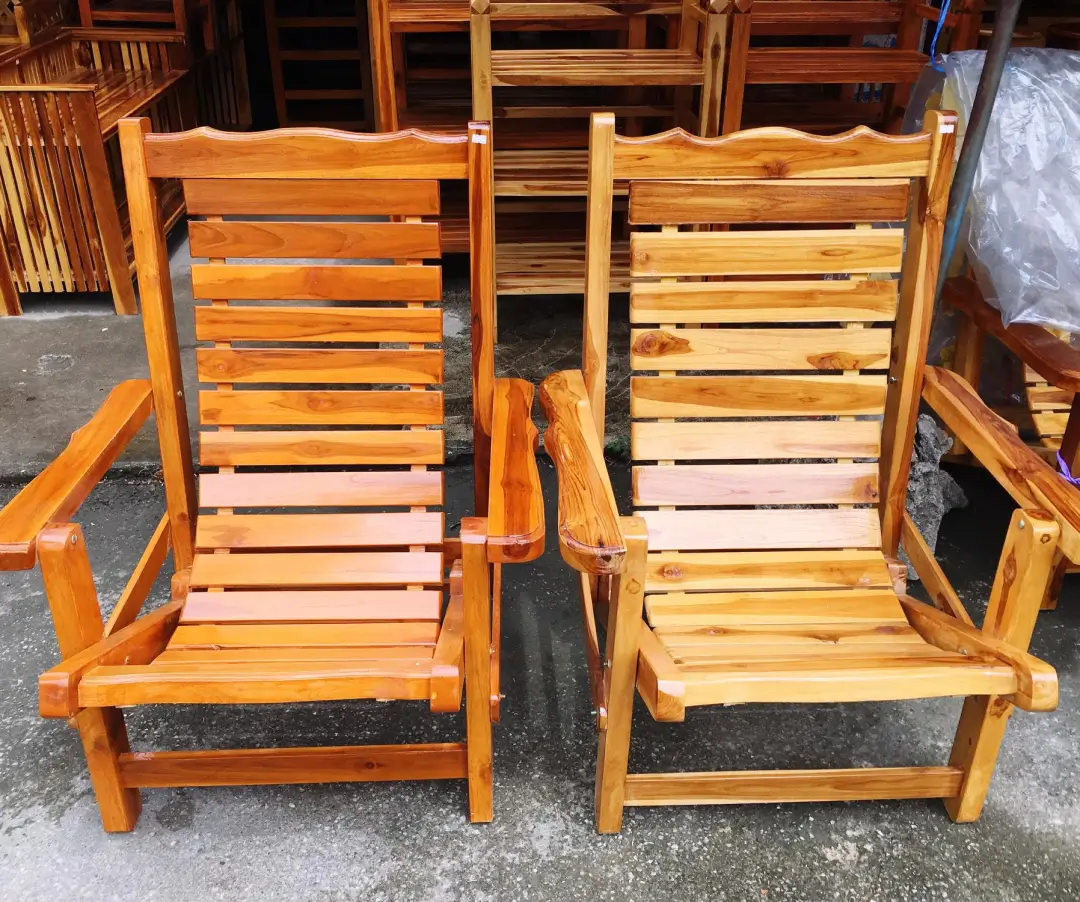
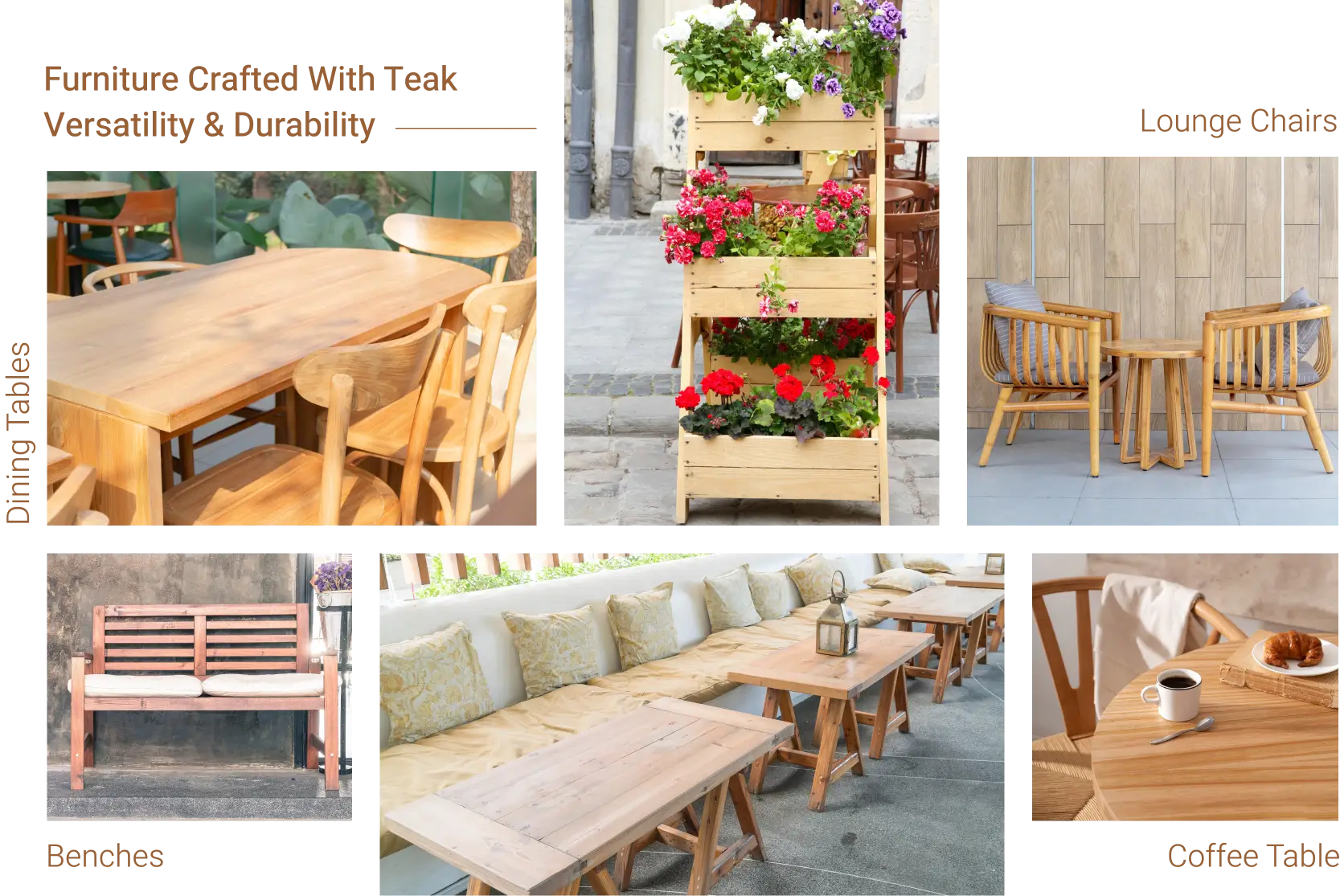
Teak wood is heavy, water resistant, and durable, which makes it a fantastic natural material for crafting outdoor furniture, particularly dining tables, coffee tables, and outdoor counters. You can also use teak to craft umbrella stands, firepit tables, garden planters, and outdoor seating, such as sofas, lounge chairs, and benches.
Despite its density, teak is actually an incredibly workable wood. So, if you’re up for a bit of DIY, it’s a great wood to try crafting with. Also, because teak wood is rich in natural, protective oils, you don’t need to seal it with any finishes — just a good sanding and a wood stain of your choice will do the trick!
Teak VS Acacia
What Can You Make With Acacia Wood?

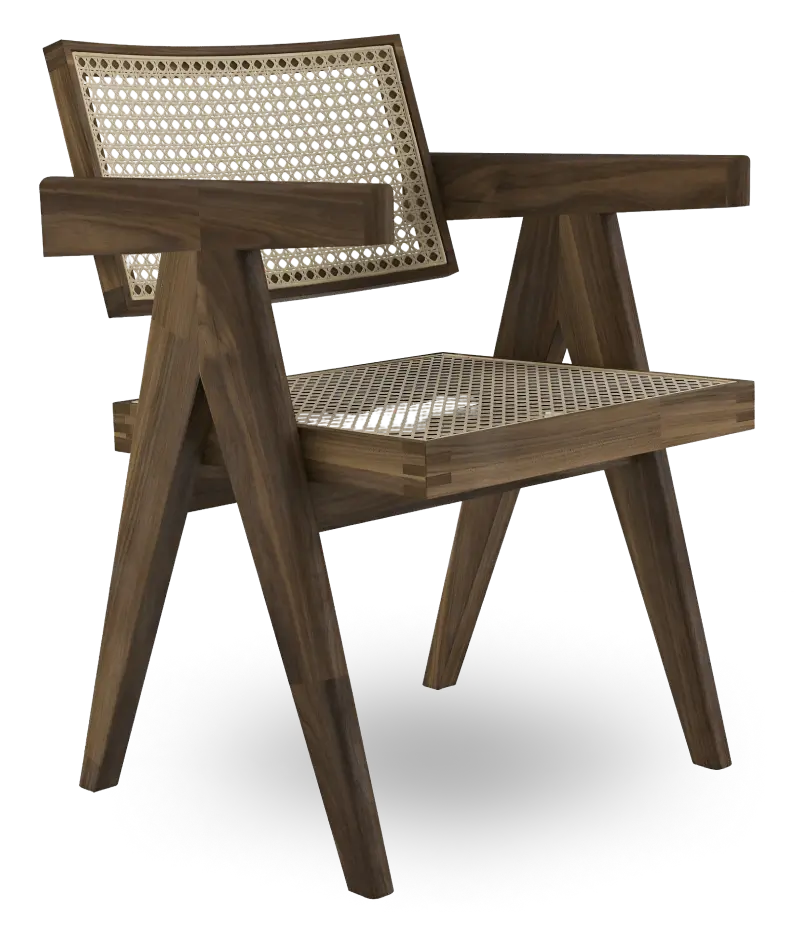
Because acacia is only moisture resistant, rather than water resistant, and susceptible to stains, it’s not an ideal material for surfaces, like outdoor countertops or tables. However, it is incredibly dense which makes it super stable. This makes acacia a fantastic option for seating furniture, such as benches, lounge chairs, and sofa frames.

Perfect for seating furniture
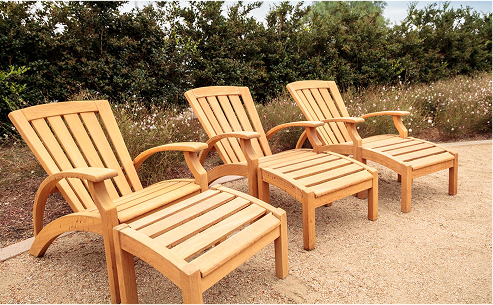
Perfect for benches, lounge chairs
and sofa frames.
Not ideal for surfaces
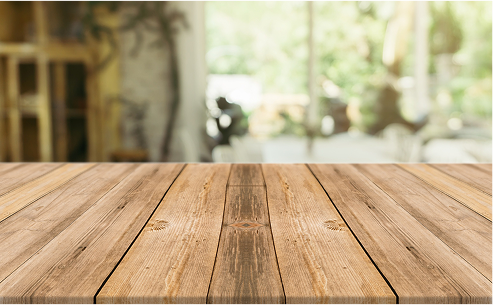
Not an ideal material for outdoor
countertops and tables.
Acacia wood is incredibly dense which makes it tricky to work with. Unless you’re a skilled carpenter who’s not only equipped with the right experience, but also the right tools, it’s best to leave the crafting to the experts, because this is not beginner-friendly wood.

Final Verdict:
Which Is the Best
Choice for Your
Outdoor Furniture?
Teak VS Acacia
By reading our complete comparison of teak vs acacia, you should have a better idea of what wood is the right choice for your outdoor furniture. To help you make a final decision, we’ve wrapped up all the key points…
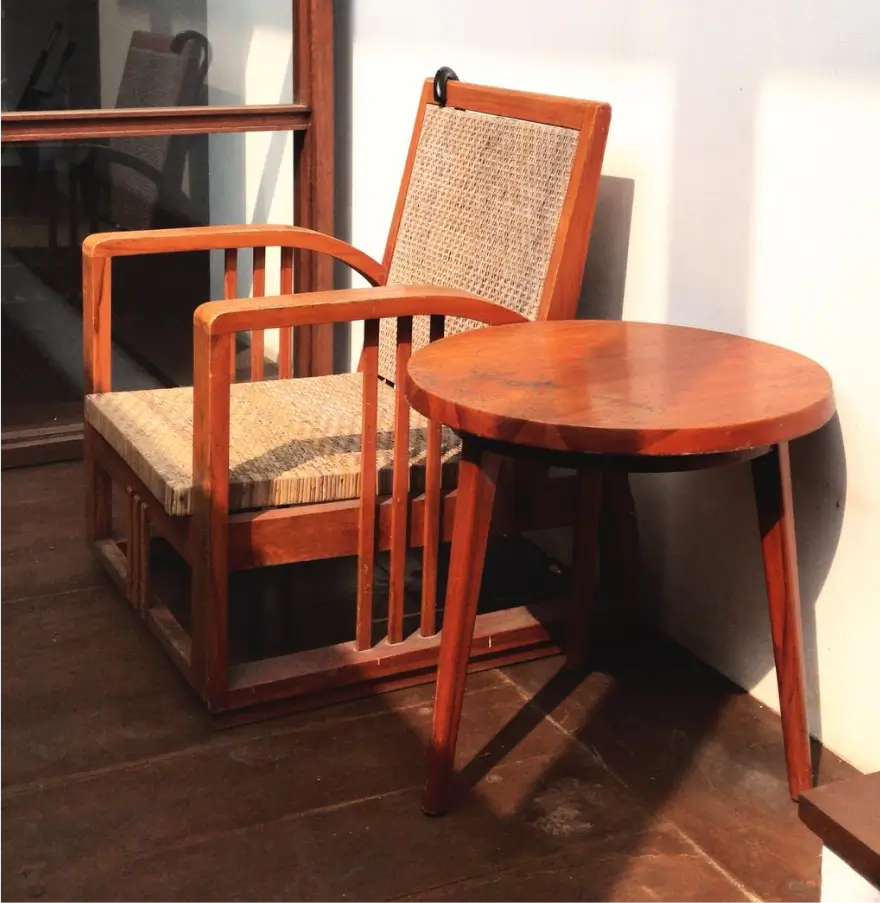
Teak VS Acacia
Teak Pros and Cons
Here’s a summary of the main pros and cons of teak wood for outdoor furniture:
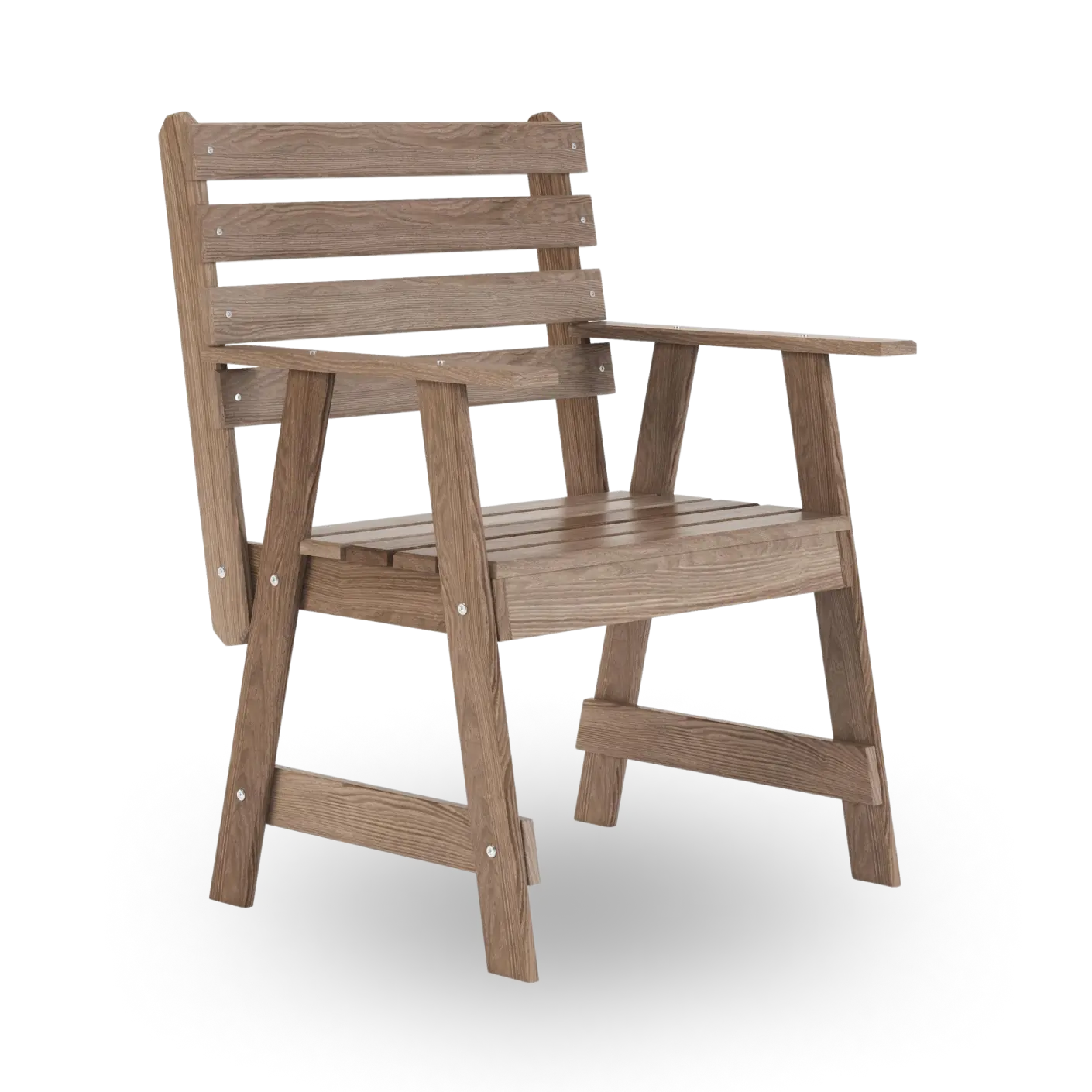
PROS
- Impeccable durability
- Water, weather, and acid resistant
- Heavy and stable
- Fuss-free maintenance
- Luxurious appeal
- Ages beautifully
- Long-term investment
- Versatile and workable
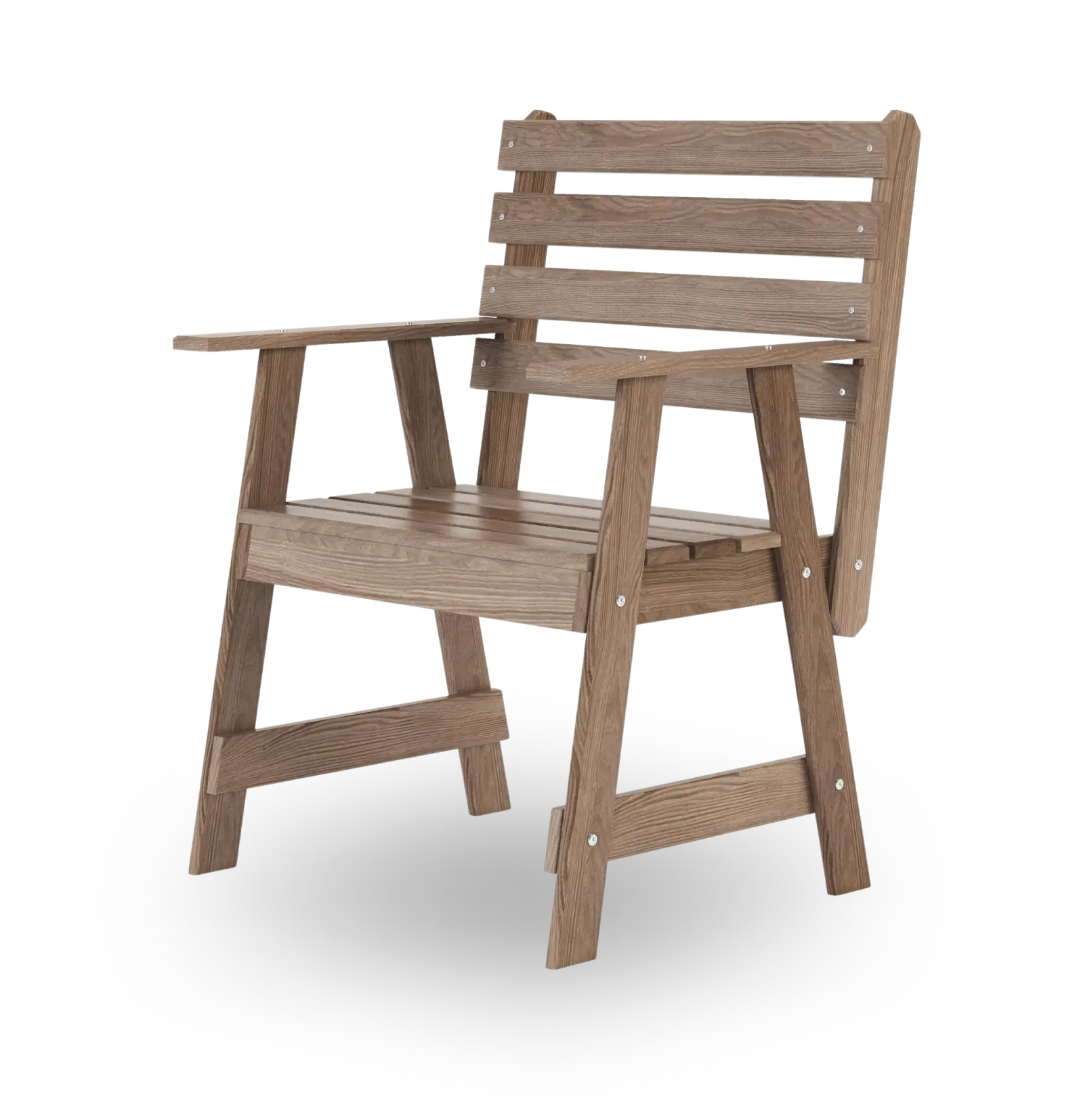
CONS
- Costly
- Limited availability
- Potential environmental and ethical concerns
Teak VS Acacia
Acacia Pros and Cons
Here’s a roundup of the key pros and cons of acacia for outdoor furniture:
PROS
- Antibacterial And antifungal
- Wide variety to choose from
- Budget friendly
- Moisture resistant
- Extremely stable
- Domestically available in the US
- Sustainable and eco-friendly option
- Versatile and workable
CONS
- Not waterproof or weather resistant
- Susceptible to staining and sun damage
- Shorter lifespan
- High maintenance needs
- Not suited to all types of furniture
- Difficult to work with
Teak VS Acacia
Which Should You Choose?
Both teak and acacia shine in their own ways, offering a range of attractive benefits that make them equally wonderful choices.
Teak Wood A Long Lasting and Versatile Choice
Based on the main benefits offered by teak wood, we believe it’s ideal for someone willing to pay a larger amount for a long-term investment, as teak lasts many decades. Because teak is incredibly versatile and durable, it can withstand all kinds of climates, especially rainy or coastal areas. It’s also incredibly low maintenance which is perfect for anyone after fuss-free furniture that they can leave out and forget about.
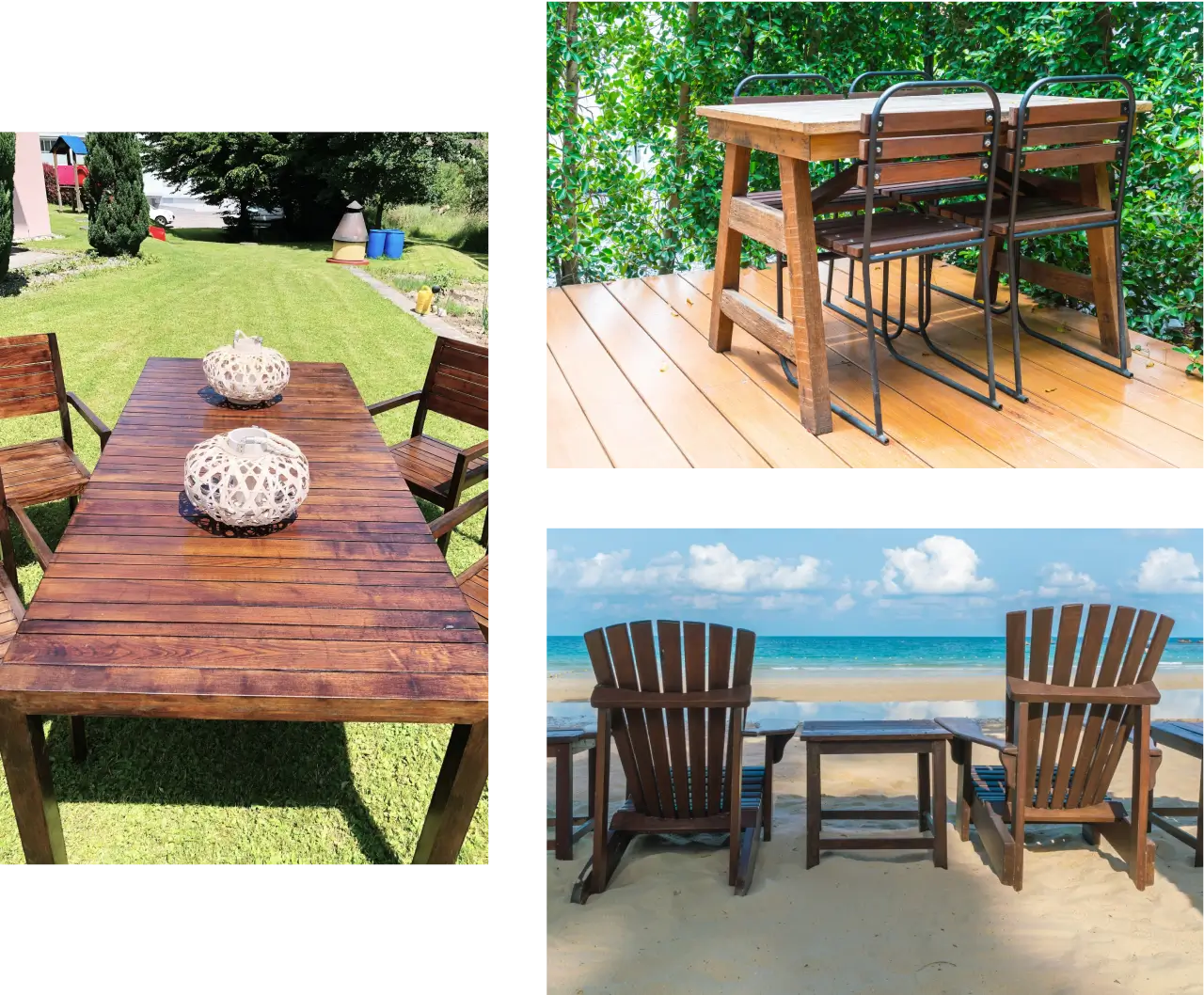
Acacia A Budget Friendly and Eco Friendly Choice
When we look at the benefits offered by acacia, it’s clear that it’s the perfect suit for anyone on a budget, who lives in a milder climate. It’s also a match made in heaven for conscious consumers after a more environmentally friendly and ethically harvested wood. However, its lack of durability makes it only suitable for specific furniture types, like chairs and benches, as opposed to tables and outdoor counters.
Additionally, acacia comes in many unique colors and grain patterns, meaning it offers a wide variety that suits all kinds of outdoor aesthetics.
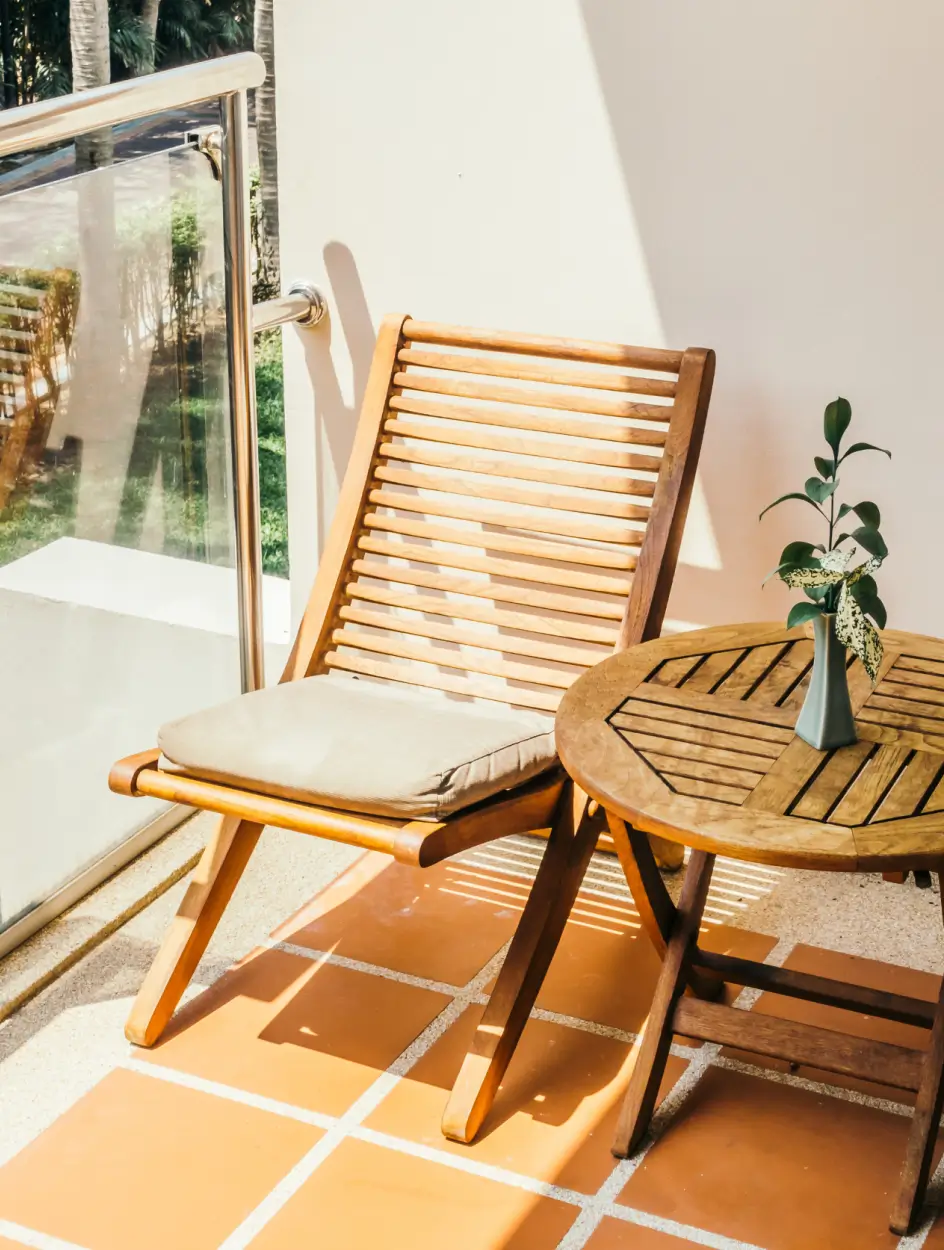

Complete Your
Outdoor Space
With Grillio
Teak VS Acacia
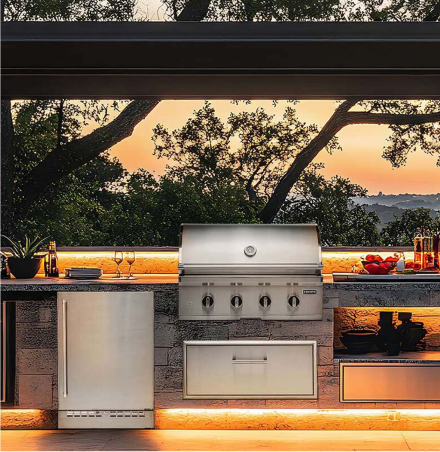
Make your dream outdoor space with Grillio!

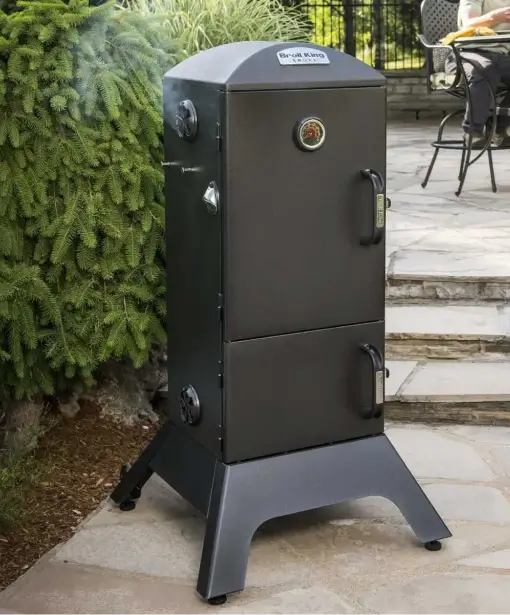
Whether you’re after a complete outdoor kitchen to match with your patio wooden dining set, a cozy firepit to heat up your backyard lounge, or a BBQ smoker to take your grilling game to the next level, we have all the accessories and appliances you need to complete your outdoor getaway.
BBQ GRILLS
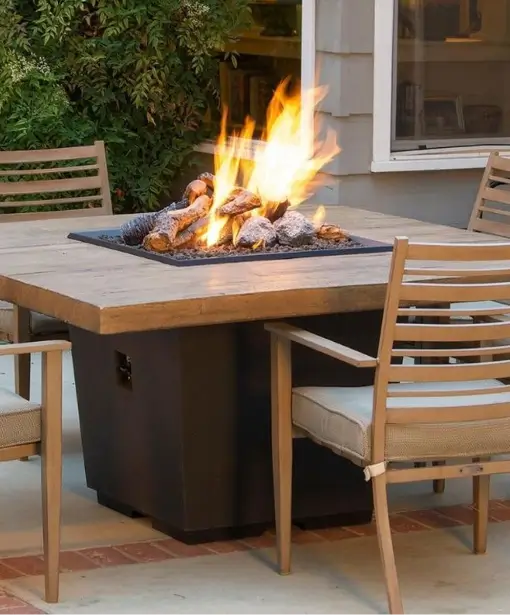
FIRE TABLES
BBQ SMOKER

PIZZA OVEN
Shop our complete range online today!
Which is more durable - teak or acacia wood?
Teak is significantly more durable than acacia, lasting 50+ years with proper care, while acacia typically lasts 15-20 years. Teak’s higher natural oil content makes it more resistant to weather, insects, and decay.
How do the prices compare between teak and acacia outdoor furniture?
Teak furniture is considerably more expensive, often costing 2-3 times more than acacia. This price difference reflects teak’s superior durability, limited availability, and longer growing time.
Which wood requires less maintenance?
Teak requires less maintenance as it naturally resists weathering and decay. Acacia needs more frequent sealing and protection from elements, typically requiring treatment every 1-2 years.
How does weather resistance compare between the two woods?
Teak has superior weather resistance due to its high natural oil content, while acacia is moderately weather-resistant but more susceptible to damage from prolonged exposure to rain and sun.
Which wood is more sustainable?
Acacia is generally more sustainable as it grows faster (15-20 years) compared to teak (20-25 years), and is more widely available from managed forests. However, both can be sustainable when sourced responsibly.
How does the appearance change over time?
Teak naturally weathers to a silver-grey patina while maintaining its structural integrity. Acacia can become darker and may show more visible wear without regular maintenance and sealing.
Which wood is better for heavy use areas?
Teak is superior for heavy-use areas due to its exceptional durability and resistance to wear. While acacia is strong, it’s better suited for moderate use or covered outdoor spaces.
Can both woods be left uncovered outdoors?
Teak can be left uncovered year-round with minimal impact, while acacia furniture should ideally be covered or stored during harsh weather conditions to extend its lifespan.
How do you clean and maintain each type of wood?
Teak requires simple cleaning with water and mild soap, while acacia needs regular cleaning plus annual or bi-annual sealing and treatment with specific wood preservatives to maintain its appearance and durability.
Which wood is more resistant to pests and rot?
Teak’s natural oils make it highly resistant to pests and rot without treatment. Acacia has moderate natural resistance but may require additional treatment to prevent insect infestation and decay.
Outdoor Living & Care Guides
- Outdoor Furniture Care & Maintenance
- Corrosion Resistance in Outdoor Products
- Grades of Stainless Steel for Grills
- Budget-Friendly Backyard Ideas
- The Cost of an Outdoor Kitchen
- How to Keep Bugs Off Your Patio
- Best U.S. Cities for Outdoor Weather
- Tips for Year-Round Grilling
- Pet-Proofing Your Outdoor Space