

Imagine a giant, fiery mountain that can spew hot, melted rock from deep inside the ground. This is called a volcano. When a volcano erupts, it pushes out molten rock called lava, which flows down the mountain and eventually cools to form solid rocks. These special rocks, known as lava rocks, come in different shapes and sizes and tell the story of the fiery forces that created them. They are a fascinating part of Earth’s natural wonders and help scientists learn more about our planet’s inner workings.
What Is a Volcano?
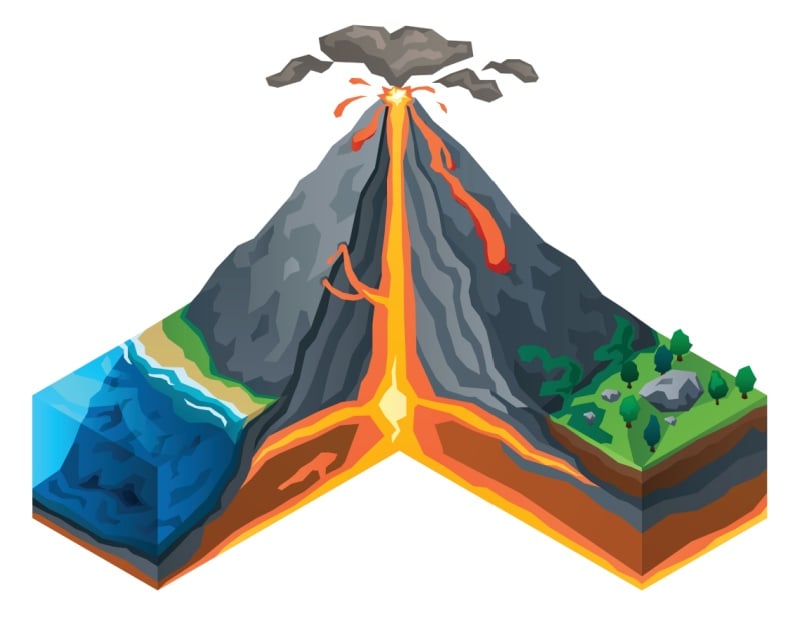
A volcano is a mountain that forms where lava escapes from deep inside of the earth. This happens because of the movement of tectonic plates and the molten rock beneath them. Tectonic plates are like puzzle pieces that make up the surface of Earth, and they float on top of a semi-liquid mantle below. These plates are always moving and sometimes bump into each other in different ways. When two plates crash into one another, one plate can be forced under the other in a process called subduction. This causes magma, or hot melted rock, to rise and create an opening in Earth’s crust, forming a volcano. When two plates pull apart, magma can come up through the gap and create new volcanoes. Sometimes, plates slide past each other, causing friction and heat, which can also lead to volcanic activity. Volcanoes are like nature’s way of releasing the pressure and heat from inside the earth.
There are three main types of volcanoes: shield, composite, and cinder cone. Shield volcanoes look like big, wide shields. They have gentle slopes and are formed by lava that flows easily and spreads out in all directions. Mauna Loa in Hawaii is an example of a shield volcano. Composite volcanoes, also known as stratovolcanoes, are tall and cone-shaped with steep sides. They are made of layers of lava, ash, and rocks and can have explosive eruptions. Mount St. Helen in the U.S. is a composite volcano. Cinder cone volcanoes are the smallest type of volcano. They have steep, cone-shaped hills made from ash and rocks that burst out during eruptions. Sunset Crater in Arizona is a cinder cone volcano.
What Is Lava

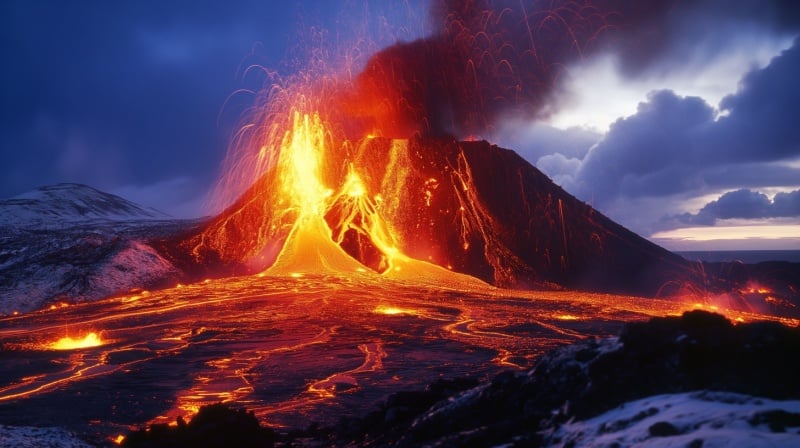
Lava is the hot, melted rock that comes out of a volcano during an eruption. It starts deep inside the earth, where it is called magma. When a volcano erupts, the magma travels up though the volcano and spills out onto the surface, becoming lava.
There are several types of lava based on how it flows and looks. One type is called pahoehoe, which is smooth and flows easily, creating shiny, ropy surfaces. Another type is a’a, which is rough and chunky, making it look like a pile of sharp rocks. There’s also pillow lava, which forms underwater and looks like big, round pillows stacked on each other. The most common form of lava is pillow lava.
Cooling and Solidifying: Lava Rocks

When lava comes out of a volcano, it is super-hot and flows like a river. As it moves away from the volcano, it starts to cool down and harden. This process can take a few hours or even several days, depending on how thick the lava is and the temperature around it. As lava cools and solidifies, it turns into different types of rocks. These volcanic rocks are called igneous rocks. Extrusive and intrusive are the two main categories of igneous rock. Lava formed into rocks on the surface of Earth are extrusive. Rocks formed from magma cooling and solidifying within Earth’s crust are intrusive.
A few common types of lava rocks are basalt, pumice, and obsidian. Basalt, which is dark and dense, forms when lava cools quickly on Earth’s surface. Pumice, a light and airy rock that can even float on water, forms when lava cools quickly and traps lots of tiny gas bubbles inside. Obsidian, a shiny, black volcanic glass, is created when lava cools very quickly without forming crystals.
Fun Facts
- Lava can move as fast as 40 miles per hour.
- A new volcano can sprout up and grow very quickly. Paricutin, a volcano in Mexico, grew more than 1,200 feet high in just one year.
- When underwater volcanoes erupt, they can create new islands. This is how the Hawaiian Islands were formed.
- Earth isn’t the only planet with volcanoes. Mars has Olympus Mons, the largest volcano in our solar system, rising about 13.6 miles high.
- Sometimes, during a volcanic eruption, lightning bolts can form in the ash cloud. This happens because of static electricity.
- The lava that erupts from a volcano can be as hot as 2,200 degrees Fahrenheit, which is much hotter than any kitchen oven or barbecue grill can get.
- Some volcanoes are active, erupting often, while others are dormant, meaning they haven’t erupted in a long time but might again someday.
- After lava breaks down over time, it forms some of the richest soil, perfect for growing crops. This is why areas around volcanoes are often very green and lush.
- Underwater volcanic eruptions or volcanic islands collapsing into the sea can cause large waves called tsunamis.
- Most of the world’s active volcanoes are in the Pacific Ocean, in an area known as the Ring of Fire. It’s shaped like a horseshoe and is a hot spot for volcanic activity.
Additional Resources
- NASA Volcano Lesson
- Easy Volcano Eruption Experiment for Kids
- Vibrant Volcanoes Lesson
- Volcano Lesson Plan
- Make a Volcano Model
- Introduction to Volcanology
- Lava Rocks and Fire Stones
- Hands-On Volcano Activities to Do at Home
- Volcano Mini Coloring Book
- The Ring of Fire
- Volcano Vocabulary Worksheet
- Types of Volcanoes
- Ten Volcanic Activities and Boredom-Busters
- Seven Volcano Activities
- 24 Preschool Volcano Activities
- Different Types of Volcanoes on Earth
- Everything About Volcanic Processes
- The Floor Is Lava Game