An outdoor kitchen sink is a beautiful addition to any outdoor space, whether a backyard patio or a spacious deck. It provides convenience and functionality, allowing easy clean-up after outdoor cooking and entertaining. Typically designed to withstand the elements, outdoor sinks are perfect for outdoor use in all kinds of weather.
Outdoor kitchen sinks come in various materials, such as stainless steel or copper, providing both durability and a stylish aesthetic. With options including double-basin sinks and sinks with accessories, outdoor kitchen sinks offer ample space for washing dishes and food prep, making them a versatile and essential outdoor kitchen component.
An outdoor kitchen sink offers numerous benefits that contribute to a convenient and enjoyable outdoor culinary experience.
Time-Saver: No longer will you need to run back and forth between indoor and outdoor spaces for basic tasks like washing your hands or rinsing vegetables. With an outdoor sink, everything is within reach, saving you time and effort.
Hygiene: An outdoor kitchen sink serves as a clean-up station, allowing you to easily wash and rinse dishes, utensils, and grill accessories right where you need them. This eliminates the need for guests to go inside and disrupt the flow of the gathering.
Efficient Food Prep: With a sink readily available, you can easily wash, peel, and clean ingredients while keeping your countertop space clutter-free. This streamlines your cooking process and ensures cleanliness throughout.
Low-Maintenance: Made from durable materials like stainless steel, outdoor sinks can withstand extreme weather conditions and are easily cleaned. Rounded corners and removable trash features make keeping your sink tidy and sanitary a breeze.
Find the Perfect Material for Your Outdoor Sink
Outdoor Stainless Steel Sinks
Stainless steel sinks are an excellent choice for outdoor grill stations due to their outstanding characteristics and advantages.
Durability: Made from high-quality stainless steel, these sinks are built to withstand the rigors of outdoor use. They are resistant to dents, scratches, and stains, making them a long-lasting investment for your outdoor space.
Corrosion Resistance: The most common grades used in outdoor sinks are 304 and 316 stainless steel. Both grades provide excellent resistance to corrosion, ensuring your sink stays in top condition even in harsh weather conditions.
Sound Insulation: Many models feature a brushed finish that adds an aesthetically pleasing look and helps mask scratches and water spots. Some stainless steel sinks also feature sound insulation and coating with padding on the underside for added protection and noise reduction.
Copper Outdoor Sinks
Copper sinks add a beautiful and unique look to any outdoor space. Known for their natural warmth and patina that develops over time, copper sinks are highly durable and resistant to corrosion. However, they require regular maintenance to prevent the patina from becoming too dark or dull.
Natural Granite Sinks
Granite sinks offer a luxurious and elegant appearance with various colors and patterns. They are incredibly durable and withstand extreme weather conditions without fading or cracking. However, granite sinks may require sealing to maintain their resistance to stains and scratches.
Frequently Asked Questions
What Installation Considerations Are There When Choosing an Outdoor Kitchen Sink?
There are a few crucial installation factors to keep in mind:
Space Planning: The first consideration is the available space in your outdoor area. Ensure you have ample space for the sink and any accompanying accessories or countertops. Additionally, consider the layout of your outdoor grilling station and the most convenient location for the sink.
Durable Material: Next, think about the sink material. Stainless steel is a popular choice for outdoor sinks due to its durability and resistance to the elements. However, consider other options, such as natural granite, if you desire a more luxurious look.
Water Supply: Another important consideration is the water supply for the sink. Ensure you have access to a clean water supply and a drain for proper plumbing. If your outdoor space doesn't have these provisions, you may need to consult a professional for assistance.
Clean-Up: Additionally, think about the ease of maintenance and clean-up. Look for sinks with removable trash options or built-in trash drawers for convenient disposal of food waste. Rounded corners and corner attachments can also make cleaning easier.
Can You Have An Outdoor Sink Without Plumbing?
Yes, it is possible to have an outdoor sink without plumbing. Various options are available, such as portable sinks with water tanks or a garden hose connected to a water source. These alternatives provide a convenient way to have a functional outdoor sink without traditional plumbing.
Is Hot Water Needed For Outdoor Kitchen?
Hot water is not necessarily needed for an outdoor kitchen, as it largely depends on the specific needs and preferences of the individual using the space. Some outdoor kitchens may choose hot water for various purposes, such as washing dishes or cooking, while others may opt for cold water only. Ultimately, the decision to have hot water in an outdoor BBQ kitchen will depend on the specific requirements and preferences of the user.
How Much Does It Cost To Install An Outdoor Sink?
The cost of installing an outdoor sink can vary depending on various factors, such as the type and quality of the sink, any additional plumbing or electrical work needed, and the overall complexity of the installation. The average cost can range from $200 to $1,000 or more. It is recommended to consult with a professional plumber to get an accurate estimate for your specific needs and location.
How to Drain Your Sink?
To drain your sink, you can follow these steps:
Start by removing items or debris from the sink, such as dishes or food particles.
Locate the sink drain, which is typically located in the center or towards the back of the sink.
If a stopper or strainer is covering the drain, remove it by lifting or twisting it off.
Once the drain is exposed, locate the drain plug or stopper mechanism. This may be a lever, knob, or pull rod that controls the stopper.
Depending on the type of mechanism, you may need to twist, pull, or push the stopper to release it and allow water to drain.
If the sink is still not draining, you can try using a plunger. Place the plunger over the drain, ensuring a tight seal, and vigorously push and pull the plunger up and down to create suction and dislodge any clogs.
If the plunger does not work, you can try using a drain snake or auger. Insert the snake into the drain and rotate it clockwise while pushing it further into the pipe. This can help break up and remove any stubborn clogs.
After using the plunger or drain snake, run hot water down the drain to flush out any remaining debris and ensure proper drainage.
If the sink still does not drain, it may be necessary to call a professional plumber to assess and fix any underlying issues with the plumbing system.
Remember always to exercise caution when working with plumbing systems and consider wearing protective gloves or goggles if necessary.
How Do I Hook Up An Outdoor Kitchen Sink?
To hook up an outdoor kitchen sink, follow these steps:
Determine the location: Choose a suitable place for your outdoor kitchen sink, keeping in mind access to water supply and drainage.
Install the water supply lines: Connect the water supply lines to your outdoor sink. You can either extend the existing water supply from your house or install a separate line specifically for the outdoor kitchen sink. Use appropriate piping and connectors, ensuring proper sealing to avoid leaks.
Install a shutoff valve: Install a shutoff valve near the sink area to control the water supply. This will allow you to turn off the water when not in use or during winter months to prevent freezing.
Connect the drain: Install a drain pipe or hose that connects to the sink's drain. Ensure proper slope to allow for adequate drainage and prevent water accumulation.
Connect the sink: Install the sink by following the manufacturer's instructions. This typically involves attaching the sink to the countertop or cabinet and connecting the water supply lines and drain pipe to the sink.
Test for leaks: Turn on the water supply and check for leaks or drips. Tighten any connections as needed to ensure a secure and leak-free setup.
Install a wastewater disposal system: Depending on local regulations, you may need to install a wastewater disposal system, such as a grease trap or a septic tank, to handle the wastewater from your outdoor kitchen sink properly.
Remember to consult local building codes and regulations before undertaking any plumbing work. If you're unsure about any step, it's recommended to seek professional assistance from a plumber or contractor.
How to Winterize Outdoor Kitchen Sink?
To winterize an outdoor kitchen sink, follow these steps:
Turn off the water supply to the sink by shutting off the main water valve.
Disconnect any hoses or attachments connected to the sink.
Drain the water from the sink and pipes by turning on the faucet and letting it run until no more water comes out.
Remove any removable parts from the sink, such as the faucet or sprayer, and store them indoors to prevent freezing and damage.
Insulate the pipes and sink by wrapping them with insulation material or using heat tape to protect them from freezing temperatures.
Cover the sink with a waterproof cover or tarp to protect it from snow, ice, and other winter elements.
Regularly check on the sink throughout the winter to ensure it remains protected and take any necessary steps to prevent freezing or damage.



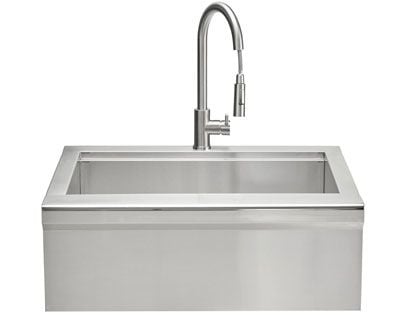 Coyote 30-Inch Farmhouse Sink & FaucetModel: C3FHSINKby Coyote Outdoor LivingQuick ShipSale $1,159 $1,27910% Off$64/mo with 18-month financing