


Marine Grade Grills
Filters
-
![Mont Alpi 44-Inch 6-Burner Stainless Steel Built-In Gas Grill]()
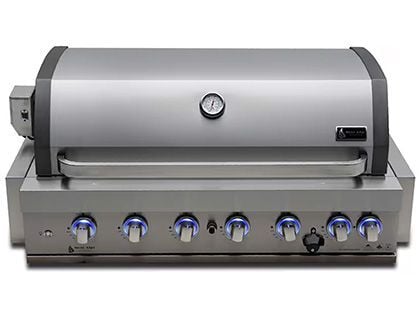 Mont Alpi 44-Inch 6-Burner Stainless Steel Built-In Gas GrillModel: MABi805by Mont AlpiQuick ShipSale $2,399 $2,82215% Off$133/mo with 18-month financing
 -
![Mont Alpi 44-Inch 6-Burner Black Stainless Steel Built-In Gas Grill]()
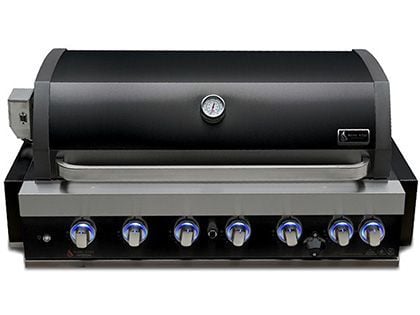 Mont Alpi 44-Inch 6-Burner Black Stainless Steel Built-In Gas GrillModel: MABi805-BSSby Mont AlpiQuick ShipSale $2,399 $2,82215% Off1$133/mo with 18-month financing
 -
![Kenyon Big American 3-Zone Built-In 4500 Watt 240V Electric Grill With Split Lid, No Mounting Holes & IntelliKEN Touch Control]()
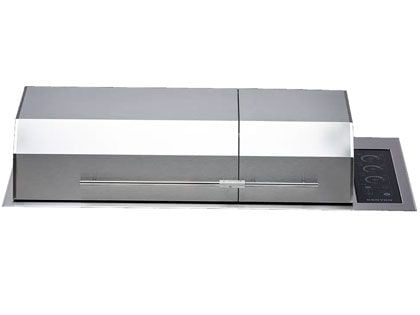 Kenyon Big American 3-Zone Built-In 4500 Watt 240V Electric Grill With Split Lid, No Mounting Holes & IntelliKEN Touch ControlModel: B70432by KenyonQuick ShipSale $4,895$272/mo with 18-month financing
 -
![Kenyon Big American 3-Zone Built-In 4500 Watt 208V Electric Grill With Split Lid, No Mounting Holes & IntelliKEN Touch Control]()
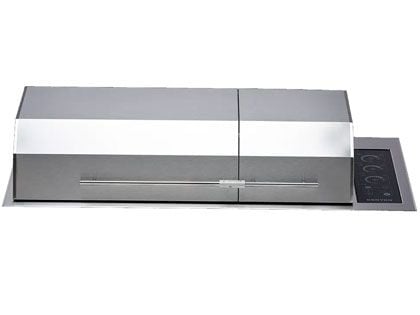 Kenyon Big American 3-Zone Built-In 4500 Watt 208V Electric Grill With Split Lid, No Mounting Holes & IntelliKEN Touch ControlModel: B70480NHby KenyonQuick ShipSale $4,895$272/mo with 18-month financing
 -
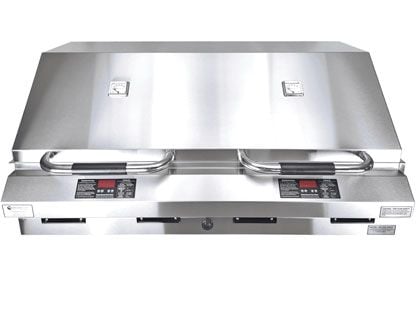 ElectriChef Diamond 48-Inch Built-In 8360 Watt Electric Grill With Dual temperature Controls - Marine GradeModel: 8800-EC-1056-IM-D-48by ElectriChefSale $7,774$432/mo with 18-month financing

Marine-Grade Grills Built with 316 Stainless Steel
If you live near the coast, own a poolside outdoor kitchen, or grill on a boat, standard stainless steel will not hold up. Salt air, chlorine vapors, and persistent humidity attack ordinary 304-grade steel within months, causing pitting, discoloration, and structural corrosion. That is exactly why marine-grade grills exist.
Every grill in this collection is constructed with 316 marine-grade stainless steel, the same alloy used in yacht hardware, offshore oil rigs, and pharmaceutical equipment. Compared to standard 304 stainless, 316 adds molybdenum to its nickel-chromium composition, dramatically increasing resistance to chloride-driven corrosion. The result is a marine-grade stainless steel grill that looks brand-new season after season, even when exposed to direct saltwater spray.
Why Choose a 316 Stainless Steel Grill?
- Salt & Chlorine Resistance: 316 stainless shrugs off the corrosive agents that destroy lesser metals in a single season.
- Exceptional Heat Retention: Thicker, premium-gauge 316L panels hold heat evenly at searing temperatures without warping.
- Minimal Maintenance: A quick fresh-water rinse is all it takes to keep your 316 stainless steel grill at peak performance.
- Lifetime Warranties: Top brands like Blaze and Broilmaster back their marine-grade models with lifetime warranties.
- Versatile Formats: Built-in grills for outdoor kitchen islands, freestanding cart models, portable grills, and flameless electric grills for marine vessels and fire-restricted communities.
Who Needs a Marine-Grade Grill?
A marine-grade stainless steel grill is the smart investment for anyone grilling in high-corrosion environments: coastal homeowners within miles of the ocean, poolside outdoor kitchens exposed to chlorine, waterfront restaurants and resorts, boaters and yacht owners, and anyone in humid Gulf or tropical climates. If your current grill shows rust spots, flaking, or pitting after just one or two seasons, upgrading to 316 marine-grade stainless steel will save you money over the long run by eliminating premature replacement cycles.
316 vs. 304 Stainless Steel: What's the Difference?
Both 304 and 316 are austenitic stainless steels in the premium 300 series, but 316 adds 2-3% molybdenum to its alloy composition. This single element makes all the difference in chloride-rich environments. While 304 stainless steel grills perform beautifully inland, they are vulnerable to pitting corrosion in salt air. 316 (and especially 316L, the low-carbon variant) resists pitting, crevice corrosion, and stress-corrosion cracking far better, making it the definitive choice for coastal and marine applications. Learn more in our complete guide to grill steel grades.
Frequently Asked Questions
What is a marine-grade grill?
What is 316 marine grade stainless steel?
Is 316 stainless steel better than 304?
Do I need a marine grade grill if I live near the ocean?