
Few things capture the spirit of summer quite like grilling. The sizzle of a perfectly seared steak, a table full of smoky sides, and the whole family gathered outside. It’s a tradition that never gets old. And whether you’re working with a built-in barbecue, a portable unit, a tabletop grill, or a backyard firepit, there’s no shortage of ways to get in on the action.
This excellent unit is available both freestanding and built-in and is a favorite among grillers and foodies alike, due to its ease of use and especially the incredible flavor that is added to your dishes when using it to cook meals.
But what else is there to know about pellet grills, how they work, and the benefits that they enjoy over other types of grilling and barbeque units?
Let’s take a deep dive into the world of smoke, spice, and that satisfying sizzle sound when you open the lid of a pellet grill to reveal the perfectly cooked goods within.
Read on for your complete guide to pellet grills and all the specifics that you need to know before buying one for your own backyard!
What is
A Pellet Grill?
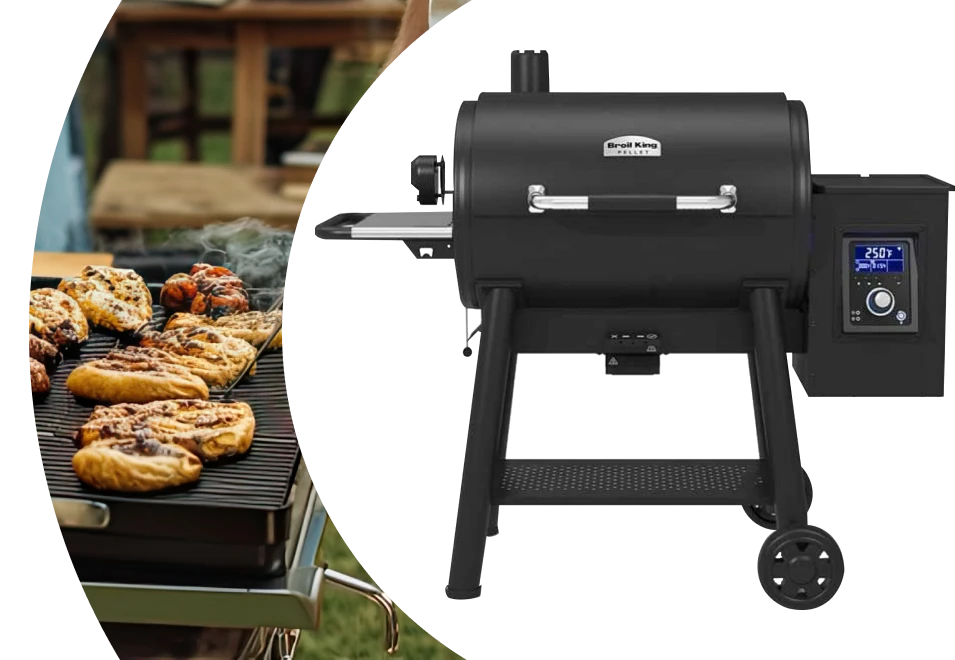
Also known as a pellet smoker, this outdoor cooker is essentially a hybrid unit that combines the abilities of a gas grill, kitchen oven, and wood smoker to create a special and unique flavor profile in the food you cook there.
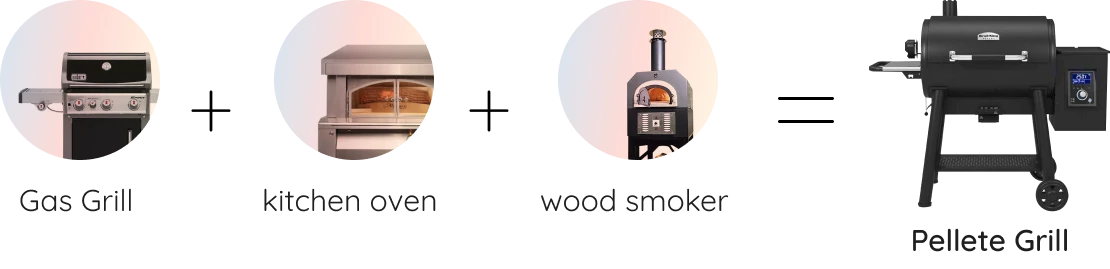
Thus, this type of wood pellet grill and smoker can grill, smoke, bake, broil, roast, braise, and much more just by using the incredible heat and taste provided by a combination of electricity and hardwood pellets.
In all, it’s an easy, painless way to achieve truly show-stopping dishes with incredible flavor that will blow all your guests away. But let’s take a moment to look into these aspects of a pellet smoker grill!
Pellets
The wood-fired smoke created by pellets inside this type of grill is essential to the overall flavor and cooking of food.
Wood pellets help provide a nice, consistent temperature for the entire grill, and because they are not directly on fire underneath your meat or vegetables, the indirect heat radiates for a more comprehensive cook.
The pellets used to heat your outdoor pellet grill are


This means excellent smoke, great flavor, and the ability to cook at a low temperature or a fairly high one, depending on the amount of heat needed.
Power Source
Unlike gas grills that run on either propane or natural gas, a pellet smoker grill relies on an electrical connection to operate. This doesn’t have to be a heavy-duty or industrial output, either— your typical household electrical outlets will be enough to power it!
Gas Grill runs on

Pellet grill relies on

In fact, the only processes activated by electricity in a pellet BBQ grill connect to digital displays, the auger’s movement to rearrange the pellets, and powering stoker fans to disperse heat evenly.
As such, most pellet grills only require between 300 and 500 watts of power for the initial unit ignition, with much lower energy use to maintain the rest of its cooking time, at about 30 watts.
Unit Sizes
As with all other appliances and outdoor cooking units, size does matter! Moreover, the square inches on the best pellet grill for you depends primarily on the available backyard space, and how many people you are cooking for.
For a small family of three
of interior grilling space
As a group gets larger
of interior grilling space
But the real challenge in pellet smoker grill sizing comes with your typical food audience— for a small family of three, a unit that has 450 square inches of interior grilling space is generally adequate. As a group gets larger, however, a minimum of 500 square inches is recommended to prevent grill crowding and suboptimal cooking conditions.
Parts
Of A Pellet Grill
Now that we have talked about the bare bones of what a BBQ pellet grill is, it’s time to look closer at the inner workings and parts of your pellet grill.
This will help us to better understand how exactly this amazing piece of outdoor cookery does such a great job!
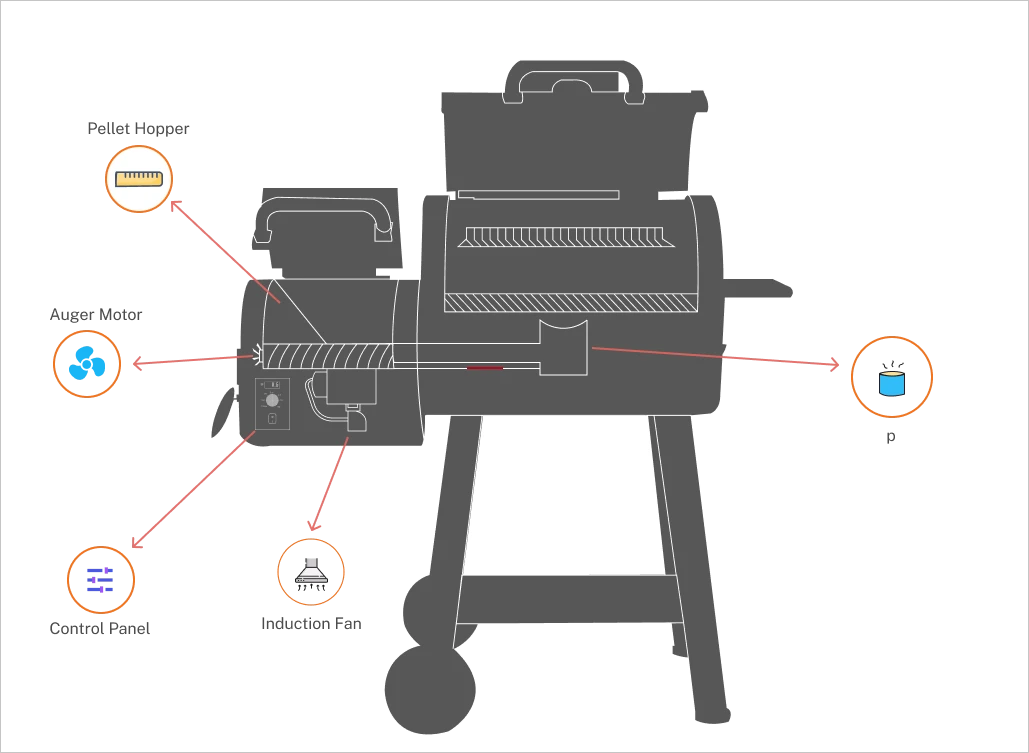
The electronic display for controlling your pellet BBQ grill is where it all starts. From here, you toggle the unit on and off, set the temperature, and command your grill.
The controls here take readings from cook box probes to level out the augur and combustion fan activity and moderate heat, regulate airflow, and automate fuel intake.
This is where your wood pellets are stored, and it’s typically formed as a container jutting out from the side of your unit that can easily be refilled.
To make the most of wood pellet purchases and the energy that powers your pellet grill smoker, it’s advised that your hopper size should be between 50 and 55 pounds in capacity.
Essentially a large, motorized screw, the auger cranks along the bottom of your pellet grill and transfers wood pellets from the hopper’s funnel exit into the depths of the grill and its main heating source.
And because you don’t have to worry about manually distributing the combustion agent (ie. the wood pellets) and can rely on an automated augur to do so, the pellet grill is much simpler to regulate temperatures on.
Part of the appeal of a pellet fired grill lies in the consistent and indirect temperatures that radiate across the entire grill space and cook your meat evenly.
This aspect is directly controlled by the automated system itself, and is adjusted by your settings on the display pad, making it an effortless process to measure out the perfect induction and heating within the pellet BBQ grill.
These two features work in conjunction— the burn pot is essentially the burner of the entire grill, whereas the hot rod igniter is an electric starter that makes the sparks happen.
The burn pot itself is crucial to the entire cooking process, and one that is off-center will likely not be able to produce even heat distribution. Additionally, the metal that comprises this part is important— stainless steel and carbon steel are the top contenders for burn pots, with different specifications.
Stainless steel burn pots, on the other hand, are much better and will last longer. Although you do need to make sure your stainless steel is of a good grade and gauge (ie. 430 to 304 grade), and preferably not classed as “ferritic”, a process that uses low amounts of chromium as a tempering agent in the steel.
How Does
A Pellet Grill Work?
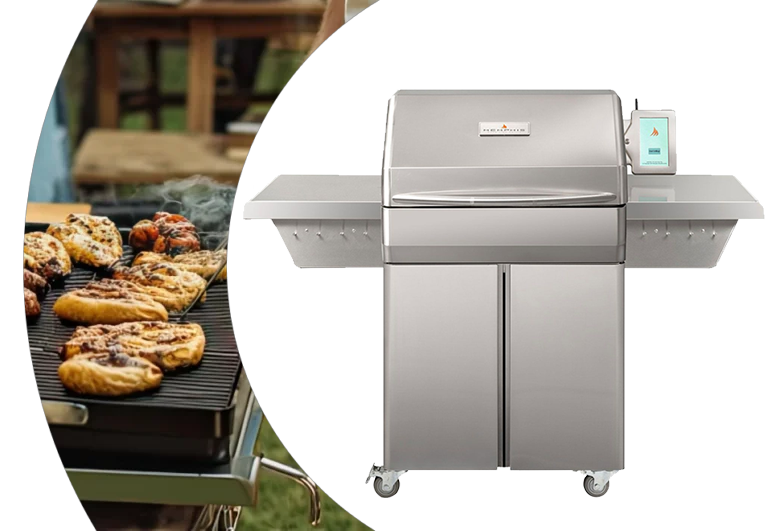
As with other new appliances that you are considering adding to your home setup, understanding just how a pellet BBQ grill works to make sure this is the right unit for you is the next step in the process.
A pellet smoker grill can be one of the best investments for your backyard cooking arrangements and your entire family and friend group, there’s no doubt about it.
But what exactly makes this amazing grill unit so special among the ranks of other grills and outdoor cookers available to you? The secret lies in its inner workings and how the automated functions produce the perfect conditions for whatever dish you want to prepare on your pellet burning grill.


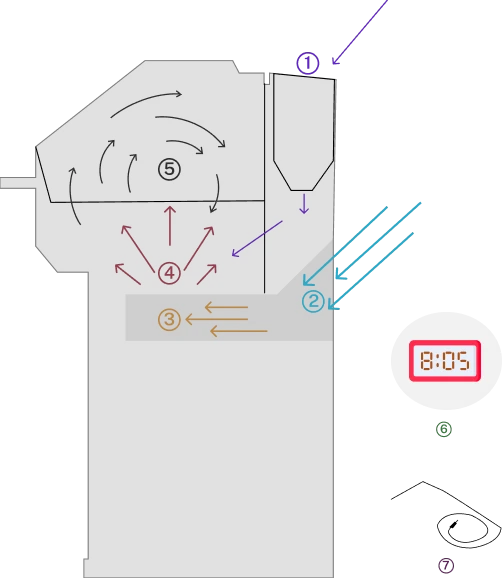
Image by Memphis Wood Fire Grills, distributed under a CC-BY 3.0 license.
The Process Of
A Pellet Grill
To get into the reasons why your pellet grill produces such excellent food, let’s take a tour through how this grill takes pellets, energy, and ignition, and turns them into a great atmosphere for cooking. Feel free to reference the handy diagram above to illustrate the process!
As an overview, a pellet smoker grill burns hardwood pellets of food-grade quality to create both the indirect heat and volumes of smoke that are distributed by inductor fans evenly across the cooking surface of the grill itself. But let’s dig a bit deeper.

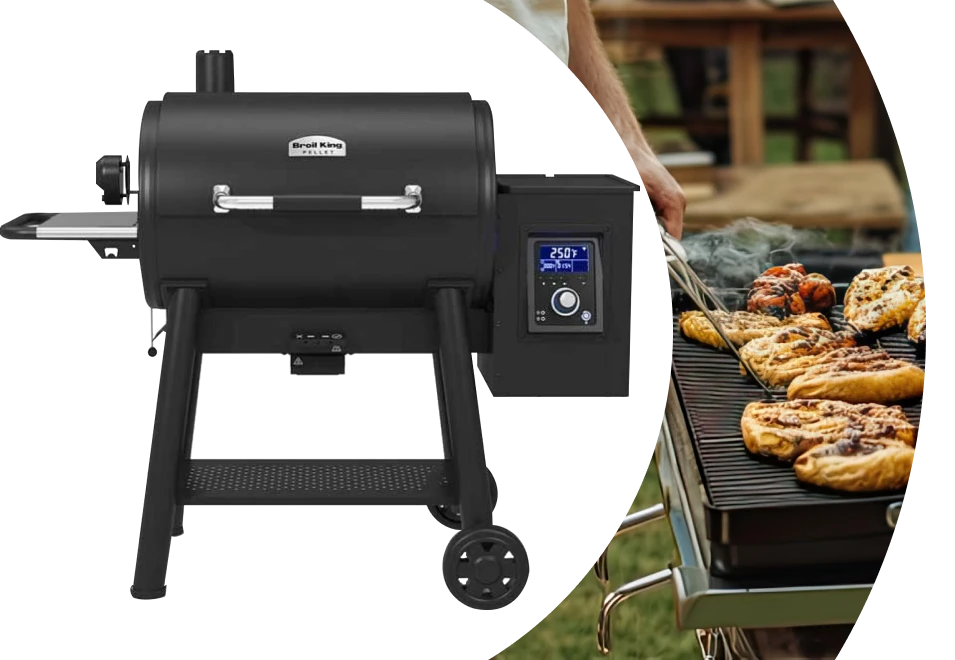
More About
Wood Pellets
It shouldn’t be a surprise that your wood pellet barbeque grill needs the best possible pellets to grill and smoke to the full extent of its capabilities.
And when it comes to the specifics of what to look for when seeking fuel for a pellet fired grill, we have you covered— read on for wood pellet information for this type of grill in particular.
A Good Quality Product
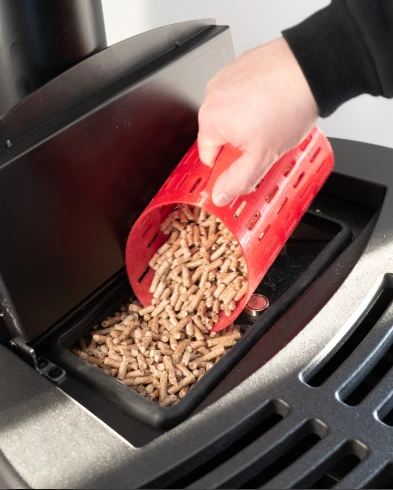
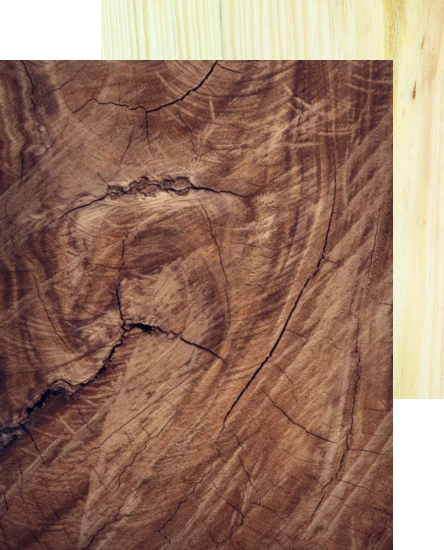
One of the biggest aspects of selecting the right pellet is the quality and food safety of the product. Your pellet grill should only be run with 100% hardwood and food-quality pellets that are specifically made for this purpose.
Clean Burning
Because wood pellets made for pellet grills and smokers are made with such high-quality goods, you will find them much easier to tidy up after, and that the cooking process produces a cleaner burn than other barbeque combustion types.

In fact, the best smoke from these hardwood pellets is generally produced at around 250°F, where an incredible smokey flavor attaches to the grilling meat.
Flavor And Smoking
The beauty of using hardwood pellets for this type of grill lies not only in the clean burn and the great heat production but also in the smoke flavoring that makes cooking on a pellet fired grill so special and unique.
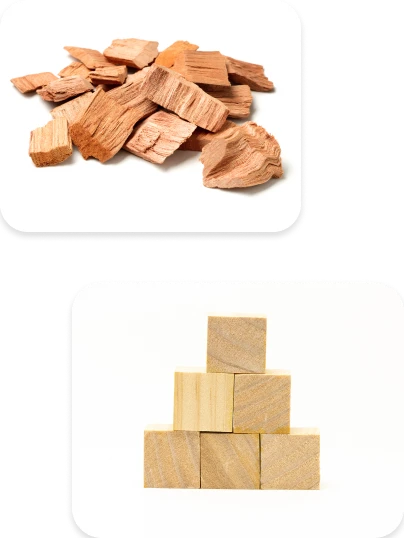
Choose between different hardwood pellet types to get slightly different aromas that will complement your grilled food, including apple, hickory, maple, and even pecan. Though the variation in flavor might not be incredibly noticeable, it can change the base taste of meat and vegetable dishes in a delicious, subtle way.
What Not To Use
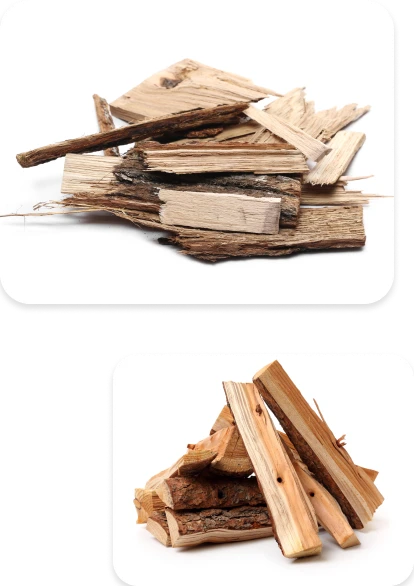
While your pellet grill smoker is certainly quite versatile, it’s important to only use the correct wood pellet types for cooking.
For instance, avoid home heating pellets completely when shopping for your pellet fuel— they might look similar to the grilling ones, but can be full of additives, chemicals, and binders that are not healthy to cook with or add to your food.
They are also commonly made from softwoods that are not as good for achieving maintained grilling heat, so it’s best to just stay well away from heating pellets, even if they appear to be the cheaper option!
Pros & Cons
Of Pellet Grills
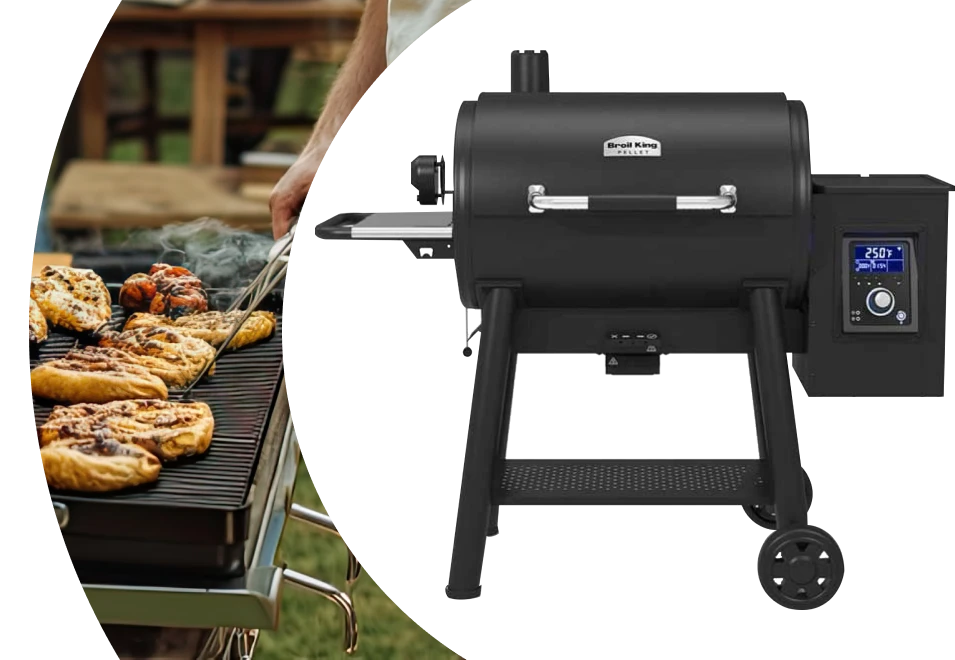
You might be entirely intrigued at this point, and all ready to start searching for “how to buy a pellet grill” online so that you can get your grill on.
However, before you press the return button, it’s important to understand the advantages and disadvantages of a wood pellet grill and smoker— especially if you only have experience with traditional barbeque grills or wood smokers.
The Pros
You are likely familiar with the adage that “the pros outweigh the cons”, and that saying is particularly applicable when it comes to pellet grills versus other types of outdoor cooking appliances. Let’s take a closer look at the advantages of using a pellet BBQ grill!
- The Wind And Cold
- Many Sizes And Styles
- Average Costs
- Easy To Use
- Fewer Flame Flare-Ups
- Flexibility
- Rich Flavor
- Quick To Heat Up
Because pellet grills do not rely on direct flame contact, using them during cold or windy weather is still an option.

With the wide variety of pellet grills out there, virtually anyone can find a unit that fits their requirements, no matter your budget, available outdoor space, or ideal cooking capacity.

When compared to its gas-powered counterparts, the pellet grill is much cheaper to operate. Pellets will cost you less over time than either the natural gas or propane needed to power the other type of grill.

The grill does virtually all the work for you, making this unit one of the simplest to cook with. Just plug it in, load the hopper, and let the grill heat up before you pop your meat or vegetables on. Plus, you only need to check on the food’s progress every now and then; no flipping, adjusting, or watching food like a hawk is required!

Because this grill is designed to produce indirect, radiated heat, the flames don’t get nearly as high as a gas grill. Additionally, the grease removal system in pellet grills means you won’t have to deal with flare-ups caused by drippings.

Do you want to roast a turkey? No problem. What about baking some stuffed peppers? Your pellet BBQ grill can handle that, too. As an all-in-one unit, you can do just about any type of cooking on this type of grill!

Adding different layers of flavor to your dishes has never been easier, particularly when you start experimenting with the wide variety of hardwood types that can impart unique taste profiles to whatever you are grilling.

No need to wait for your fire to spark or charcoal briquettes to get hot enough; pellet grills are fully automated and once you turn it on, the process of getting the unit heated up and ready to go is quite swift.

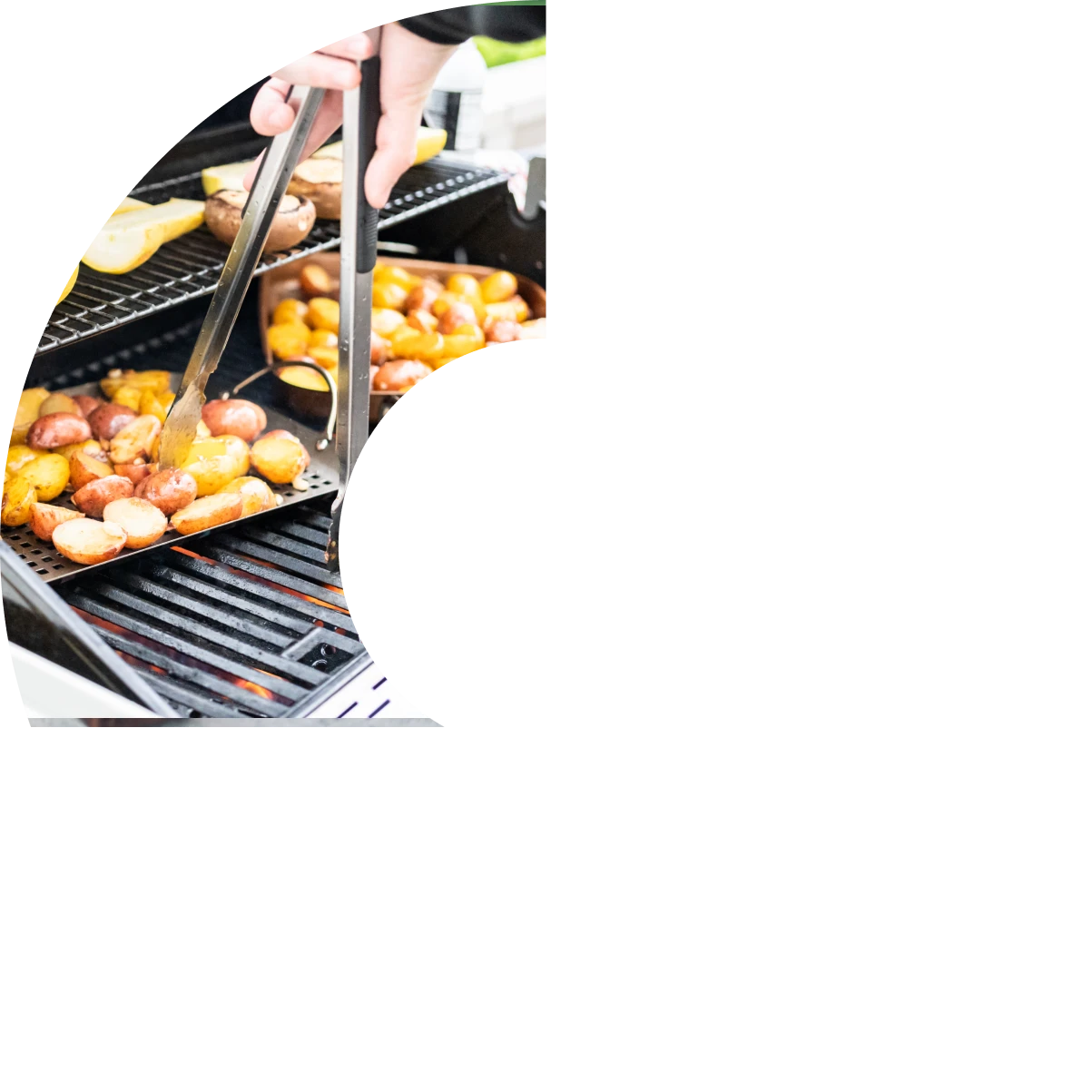
The Cons
It’s an impressive list of benefits that are offered by using a pellet grill smoker for your culinary creations, but let’s balance it out by checking some of the disadvantages that can be experienced by owners of a pellet grill.
Due to the lack of direct flames within this type of grill, the one form of cooking that your pellet burning grill cannot accomplish is searing.
This process requires direct heat to the surface of the meat, which is not supplied by the process of wood pellet smoking and indirect heat radiation.

Some people find pellet grills to come with a higher initial price tag than other types of outdoor cookers, such as natural gas, propane, or charcoal barbeques, which is something to keep in mind.

One thing you will always need for your BBQ pellet grill is a reliable electrical source. This hampers its mobility and placement options, as well as risks the necessity of repairs if the unit’s cord mount or outlet gets damaged somehow.

Because a pellet grill runs off of burning wood, it’s not advisable to use this grill in wet weather conditions. The wood pellets will simply disintegrate or form large clumps inside the hopper that the auger cannot break apart and transport to the burn pot.

Gas barbeques usually have several levels and accessories that make the most of your cooking space; however, pellet grills tend to have a smaller surface grilling area, as the smoke and indirect heat work better in a more confined space.


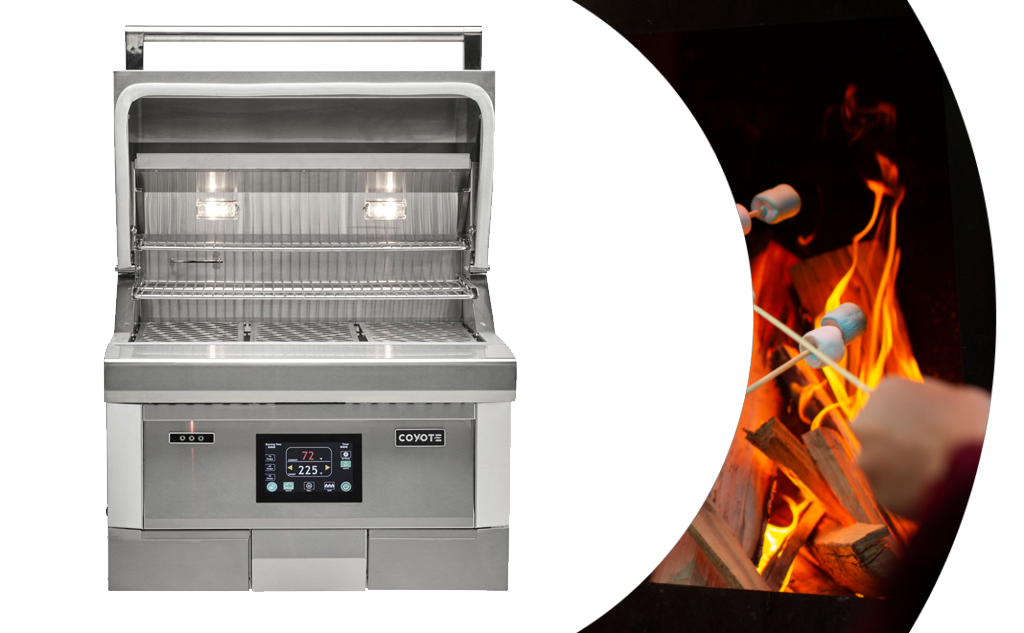
20 Tips
For Beginners
You may have just invested in the best pellet smoker grill for your outdoor cooking area, but you also need to make sure you are ready to be the best griller you can be!
Read on for 20 of our top tips for pellet grill beginners on how to elevate your grilling game to the next level.

Amply Season It
Before using your new pellet grill, make sure to season it properly by following the manufacturer’s direction booklet to remove any factory residue.

Be Patient
These grills are a type of low, long, and slow-burn cooker, so don’t expect your meats or vegetables to be done quickly!

Careful Grill Placement
Always make sure your pellet grill is placed a safe distance away from your house and any flammable structures, materials, or plants within the yard— generally about 6 feet.

Find The Hot Spots
Virtually every grill has hot spots. So, take white bread slices and apply them to your preheated grill top, noting where the bread is darker after leaving them for a few minutes.

Have Fun With Flavors
Take advantage of your pellet grill’s ability to infuse food with flavor and experiment with different types of hardwood that will subtly alter the taste.

Don’t Oversmoke Things
It’s tempting to overuse your smoker, but be cautious with adding too much until you get the hang of this grill’s flavor profile abilities.

Heap Up The Hopper
Avoid letting the hopper run out of wood pellets when in use— this will pause your cooking process and throw off the grill’s temperature.

Invest In A Meat Thermometer
While pellet grills have heat sensors of their own, it’s wise to add a good meat thermometer to your grilling arsenal to ensure the quality of cooking.

It’s Not Just For Meat
Don’t forget that your new BBQ pellet grill is not just for meat lovers; there are a wide variety of vegetable dishes and sides to prepare as well!

Keep It Clean
Cleanliness is key when it comes to pellet grills. Scrub the grill itself often with a bristle brush or scraper, and keep the grease pan and exhaust chute clean, too.

Layer The Foil
To make the eventual cleanup process easier, always lay heavy-duty foil within the grease tray before using the grill.

Low Temperature, High Smoke
Remember that scorching temperatures within your pellet grill are not always necessary—when the heat is low, the smoke quality and flavor are better.

Never Grill At Room Temperature
There is some contention in the cooking and grilling community about this, but it’s wise to avoid letting meat come to room temperature before popping it onto the grill. Meat is quick to go off when not kept cold or being cooked, so just put it right into your pellet grill.

Practice Makes Perfect
Try not to get frustrated if your first attempts at a perfectly grilled meal go astray. Practice with some cheaper cuts of meat and easy recipes until your skills build!

Oven Functions
Because of the radiating and indirect heat within a pellet grill, it’s essentially an outdoor convection oven with smoke, so don’t be afraid to use it as such.

Preheat Your Pellet Grill
Always make sure your pellet burning grill has heated to the right temperature before adding your food products. The display panel will keep you apprised of internal heat.

Store Pellets Safely
To avoid your wood pellets getting wet due to weather or spills, make sure the extra pellets are kept somewhere safe and out of reach by small children.

Utilize All The Grill Levels
If your pellet grill has an upper level for thinner or more delicate cuts of meat, make sure to use it. Alternatively, purchase an after-market grill level to add more space.

Reverse Sear For A Great Finish
Though pellet grills cannot generally achieve a traditional seared finish, you can use a combination of low cooking heat and high temperatures in a griddle pan to achieve the same effect and flavor with the reverse sear method.

Use The Hot Stuff Settings
Though they don’t use direct heat, some pellet grills can still sear— somewhat. This happens when the maximum temperature can be cranked to over 500°F and your meat can develop a nice outer crust.
What To Cook
On Pellet Grills
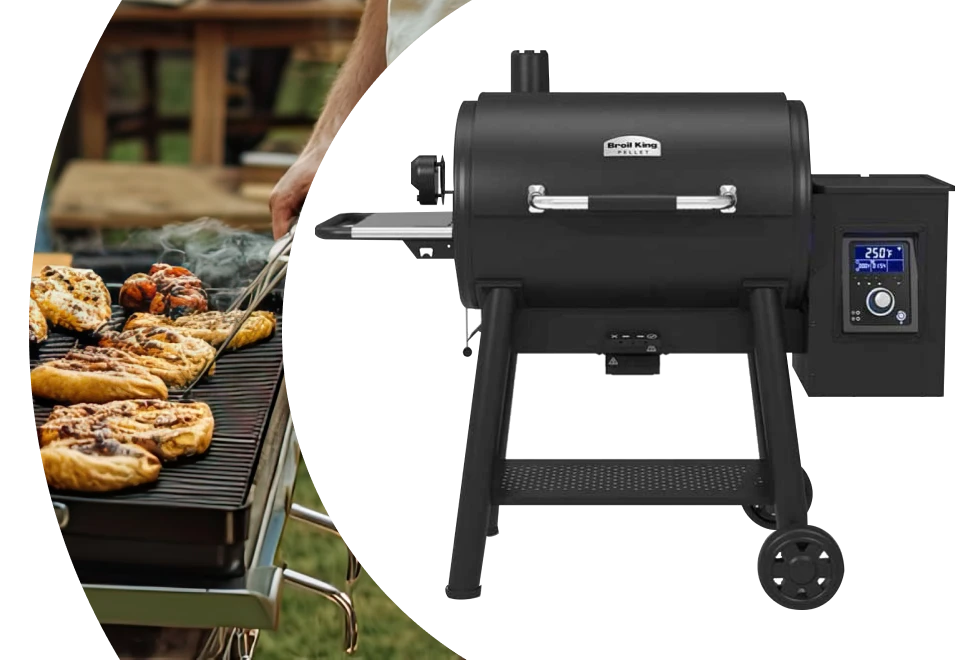
Now that we are very familiar with all the inner workings, pros, and cons of the pellet grill, it’s time to discover some options for what you can cook on it. Here are just a few of the things that you can make with a pellet grill and smoker, based on some cooking categories that we previously touched upon.
Baking
Pellet grills are not just for crisping up meat dishes! You can also use the convection aspect of your pellet grill and its excellent heat radiation to bake a variety of foods, like the following:
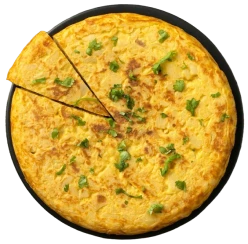


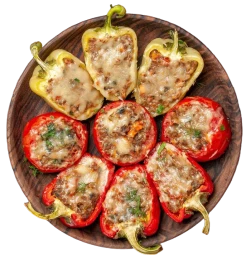
Peppers
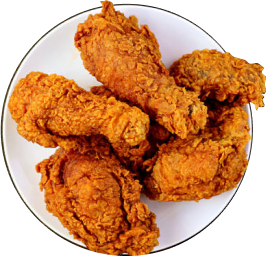

Desserts
Low And Slow
The pellet grill’s specialty tends to be foods cooked at a low but consistent temperature to give them the best flavor, including such dishes as:
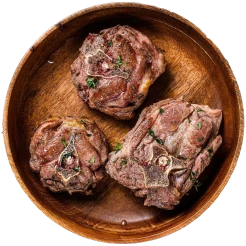
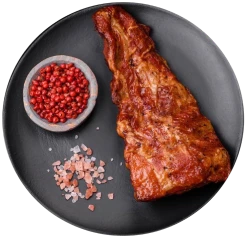
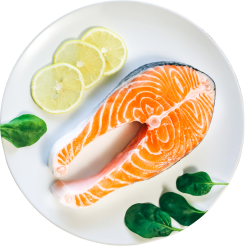
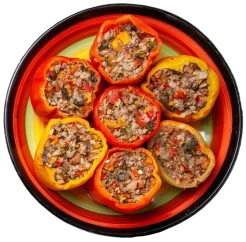
Peppers
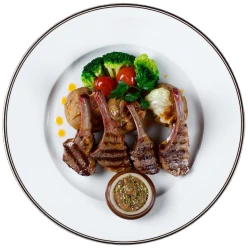
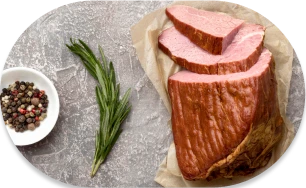
Ham
Roasting
Finally, you can use your pellet grill’s great smoke and indirect flame dispersion to achieve a perfectly roasted meat or vegetable dish! For instance, you can make:
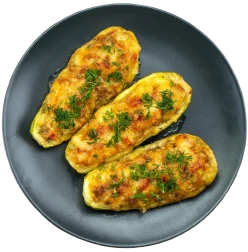
Yellow Squash
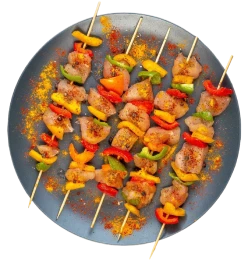
Skewers
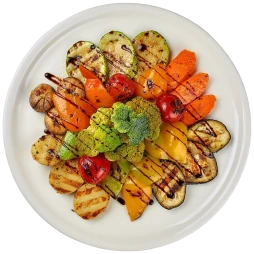
Medleys
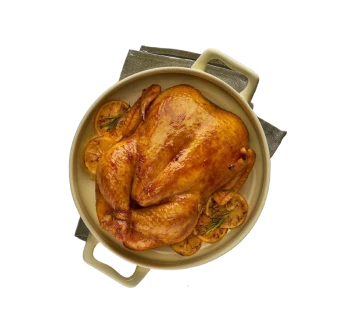
Chicken
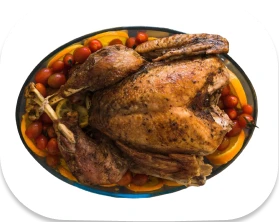
While this is just a handful of the many, many available recipes for your pellet grill, there are more to find and try. You can use the internet to find plenty of recipes or invest in a good pellet grilling cookbook to expand your horizons. Then, pull on your apron, plug in the pellet grill, and get to work grillin’!
Conclusion
In the world of outdoor grilling and cooking, the pellet grill is one of the best options you can buy, and will increase both the flavor profile of dishes and your cooking ability impressively!
It’s like having a smoker and barbeque in one great unit, and people everywhere are making the pellet grill more popular than ever. So, add a pellet grill and smoker to your backyard culinary setup today and you won’t look back!